


Beyond the Abdomen: Endometriosis in the Diaphragm and Nerves
Discover rare symptoms of endometriosis involving the diaphragm and nerves. Understand the importance of accurate diagnosis and emerging research.
9 minute read
Read moreDiscover how Lotus can guide you toward lasting relief.
Explore why patients choose Lotus
Search expert-written answers, browse by topic, or find information based on where you are in your journey.
Explore All KnowledgeReach out and start your healing journey.
Schedule an AppointmentEvidence-based guides to diagnosing and treating endometriosis on the diaphragm, covering hallmark symptoms (cyclical chest/shoulder pain), causes, imaging, and surgical vs. medical options to help you seek timely, effective care.
Diaphragmatic endometriosis occurs when endometrial‑like tissue implants on the diaphragm, most often on the right side. Hallmark clues include cyclical pain in the shoulder, chest, or right upper abdomen that worsens around menstruation, sometimes with neck or trapezius pain, shortness of breath, or hiccups. It frequently coexists with pelvic disease and forms part of the deep infiltrating endometriosis spectrum, so coordinated evaluation helps map all involved sites.
Diagnosis relies on the symptom pattern plus targeted imaging. Pelvic and diaphragmatic MRI with dedicated sequences can show plaques, nodules, or fenestrations, while Ultrasound helps assess accompanying pelvic disease; imaging can miss small lesions, making laparoscopy both a diagnostic and therapeutic step. Management ranges from hormonal suppression to reduce bleeding‑driven inflammation to laparoscopic excision when nodules cause persistent pain or thoracic complications. Guidance spans how imaging findings shape decisions, when to involve a thoracic surgeon, and what recovery entails, with related resources in Deep Infiltrating Endometriosis, Surgery, and Excision Surgery.
Yes—endometriosis can occur outside the pelvis, and it has been reported in distant parts of the body. That said, brain involvement is extremely rare compared with pelvic disease or even other extra‑pelvic locations like the diaphragm and chest.
When people worry about “endo in the brain,” it’s often because they’re experiencing neurologic symptoms (headaches, nerve-type pain, numbness/weakness) that seem to flare with their cycle. Sometimes those symptoms are related to endometriosis affecting nerves or areas higher in the abdomen/chest rather than the brain itself, and the cyclical timing can be an important clue. If you have unusual symptoms that track with menstruation, our team can help you think through the full-body picture, determine what’s most likely, and map out next steps for accurate diagnosis and treatment—including minimally invasive excision when appropriate.
Diaphragmatic endometriosis is frequently missed before surgery because it sits outside the “typical” pelvic areas most exams and standard imaging focus on. Even high-quality ultrasound or MRI isn’t a simple yes/no detector—some lesions are small, superficial, or positioned in a way that makes them hard to visualize, and some people have little to no diaphragm-specific symptoms. When symptoms do happen, they’re often mistaken for non-gynecologic issues unless the timing is clearly cyclical (for example, right upper abdominal, chest, or shoulder-tip pain that flares around periods).
Surgery is often when it’s finally identified because minimally invasive laparoscopy/robotic surgery allows direct inspection of the diaphragm, which can reveal implants that scans and routine pelvic evaluation don’t “map.” This is also why surgical planning matters: diaphragm excision requires specific skill and careful decision-making, since the diaphragm is thin and disease can, in rarer cases, extend toward the chest. If your diaphragm endometriosis wasn’t recognized until surgery, it doesn’t mean it wasn’t real earlier—it usually reflects the limits of pre-op testing and how easily this location can be overlooked. If you’re still having cyclical chest/shoulder/rib pain or breathing-related flares, our team can help review your history, imaging, and operative findings and plan next steps with the right expertise in place.
Yes—endometriosis can cause breathing-related symptoms in a small subset of patients when disease involves the diaphragm, the lining around the lungs, or (more rarely) the lungs themselves. This is often discussed under the umbrella of thoracic endometriosis syndrome, and it can show up as shortness of breath, chest tightness or pain, shoulder pain, or even a recurrent collapsed lung. A major clue is timing: symptoms that reliably flare just before or during your period are more suspicious for endometriosis-related chest involvement than symptoms that are random.
Because imaging doesn’t always clearly “show” thoracic or diaphragmatic endometriosis, diagnosis often depends on your symptom pattern plus a careful whole-body evaluation and, in some cases, minimally invasive surgery to confirm and treat disease. If you’re noticing cyclical chest or breathing symptoms—especially if you also have pelvic pain, heavy bleeding, bowel/bladder symptoms, or infertility—our team can help connect the dots, coordinate appropriate workup, and discuss treatment options that may include targeted hormonal suppression and/or planned excision with the right surgical team (including thoracic expertise when needed).
Extra-pelvic endometriosis is uncommon overall. In the vast majority of people, endometriosis is confined to the pelvis (ovaries, pelvic peritoneum, bladder/ureters, rectum), and when it extends beyond that, it more often shows up higher in the abdomen—such as on the bowel or diaphragm—rather than far outside the abdomen.
Truly distant “extra-pelvic” disease (for example, inside the chest cavity or lungs—often grouped under thoracic endometriosis syndrome) is considered rare, even though it’s the most common of the rare extra-pelvic presentations. Because these cases can be overlooked, the pattern matters: symptoms that reliably flare with your cycle—like right-sided upper abdominal/shoulder/chest pain, shortness of breath, or recurrent lung collapse around menstruation—can be a clue that endometriosis may not be limited to the pelvis. If this sounds familiar, our team can help you think through your symptom pattern and plan the right evaluation and surgical strategy, including inspecting areas like the diaphragm when it’s appropriate.
Shoulder pain that predictably shows up around your period can be a “referred pain” pattern—meaning irritation somewhere else is felt in the shoulder. One important (and often overlooked) explanation is endometriosis on or near the diaphragm, the muscle that separates your abdomen from your chest. When endometriosis involves the diaphragm, symptoms can include right-sided shoulder or arm pain, upper abdominal or chest discomfort, and pain that may worsen with deep breathing or coughing, often clustering around menstruation.
Because diaphragm and thoracic (chest) involvement are less common, they’re frequently missed—especially if pelvic symptoms get all the attention or if imaging doesn’t clearly show the cause. In rare situations, endometriosis can extend into the chest and be associated with cyclical chest pain, shortness of breath, or even recurrent lung collapse around periods. If your shoulder pain is cyclical—especially if it’s right-sided or comes with chest/upper-abdominal symptoms—our team can help you connect the pattern, evaluate for diaphragmatic or thoracic involvement, and discuss options such as targeted imaging and, when appropriate, minimally invasive surgical evaluation and excision by an experienced team.
Yes. While endometriosis most often involves pelvic structures, it can also affect organs above the pelvis in the abdomen—such as the intestines—and in rarer cases it can appear much farther away in the body, including the diaphragm and even the lungs.
When endometriosis is outside the pelvis, symptoms often look “unrelated” at first but may follow a menstrual pattern. Examples include upper abdominal or rib pain, shoulder-tip or chest pain that flares with periods, shortness of breath around bleeding, or bowel symptoms that worsen cyclically. If your symptom story doesn’t fit the typical pelvic endometriosis picture, our team can help connect the dots, evaluate for broader disease patterns, and discuss whether advanced imaging and/or minimally invasive excision surgery is the right next step for you.
Diaphragmatic endometriosis can be difficult to confirm because symptoms may be subtle (or absent) and imaging doesn’t always “see” superficial implants. We start with your full symptom story and patterning—especially cyclical right upper abdominal, rib, chest, shoulder, or arm pain that flares around your period or with deep breaths/coughing—then pair that with a targeted exam and a careful review of prior workups so we don’t miss look-alike or coexisting conditions.
Imaging such as MRI (and sometimes CT, depending on the situation) can help raise suspicion, map anatomy, and guide surgical planning, but a normal scan does not rule it out. The most reliable way to diagnose diaphragmatic endometriosis is minimally invasive surgery (laparoscopy or robotic surgery) with deliberate inspection of the diaphragm and confirmation by removing suspicious lesions for pathology when appropriate.
If symptoms suggest disease may extend into the chest (thoracic endometriosis), diagnosis may require coordination with a thoracic surgeon and, in select cases, a chest procedure such as VATS in addition to laparoscopy. Our team plans this proactively when your history or imaging points in that direction, so you’re not left with an incomplete evaluation or a surgery that isn’t equipped to address the full extent of disease.
Yes. A chest CT can miss thoracic endometriosis because many endometriosis implants are small, superficial, or blend in with normal tissues—especially when there isn’t an obvious finding like a pneumothorax (collapsed lung) or fluid. CT may show the effects of thoracic endometriosis (air or blood around the lung, transient nodules), but it often doesn’t clearly identify endometriosis itself.
When symptoms are strongly cyclical—chest or shoulder pain, shortness of breath, recurrent pneumothorax, or coughing blood that predictably flares around menstruation—normal imaging doesn’t rule it out. The most definitive way to confirm thoracic endometriosis is surgical visualization (often VATS for the chest, sometimes paired with laparoscopy/robotic surgery to evaluate and treat diaphragmatic disease), with pathology when possible.
If you suspect a cycle-linked chest pattern, our team can help you connect the clinical story with the right diagnostic plan and coordinate care that includes diaphragmatic excision when indicated, and thoracic surgery involvement if lung or pleural disease is suspected.
Discover rare symptoms of endometriosis involving the diaphragm and nerves. Understand the importance of accurate diagnosis and emerging research.
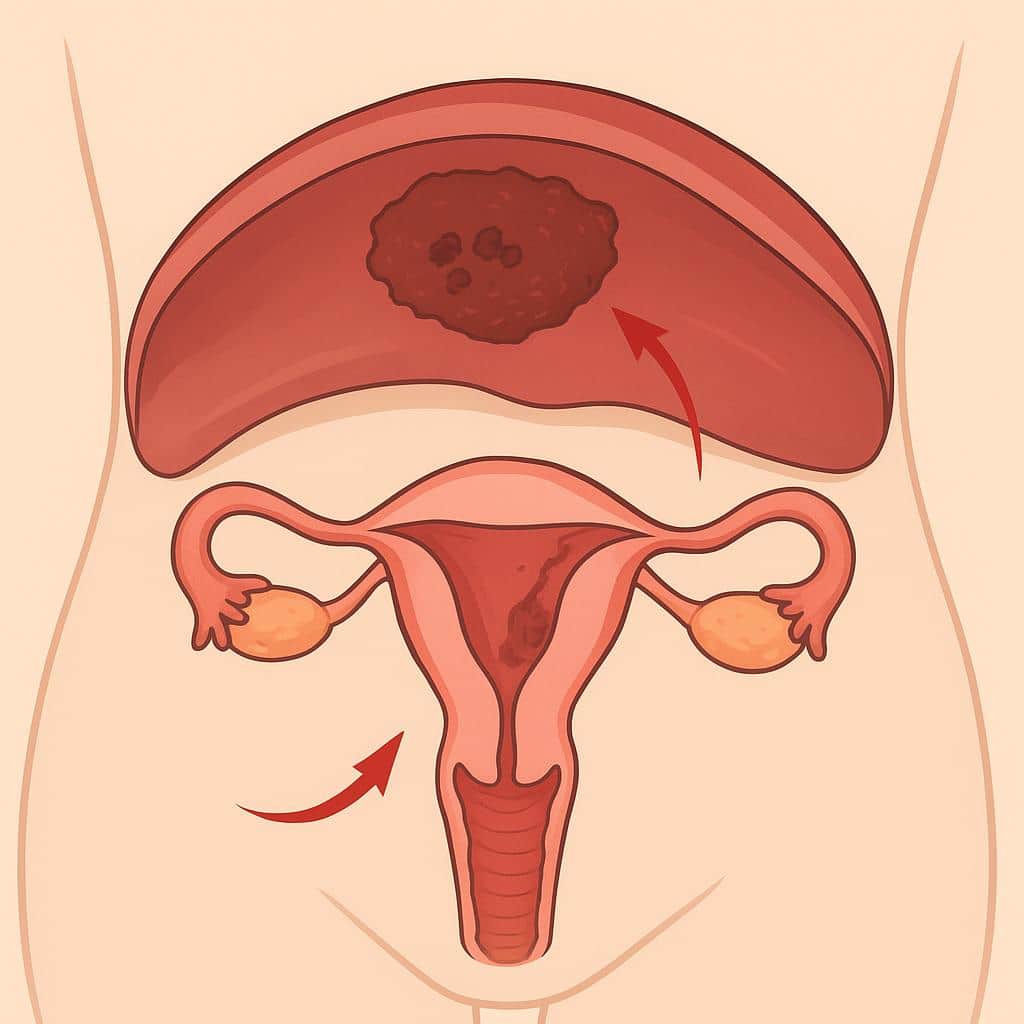
Learn what diaphragmatic endometriosis is, how it affects the diaphragm, key symptoms, causes, diagnosis options, treatments, and potential complications.
Lotus Endometriosis Institute provides California-based surgical evaluation and advanced excision care for patients with suspected endometriosis, adenomyosis, complex pelvic pain, and related conditions.
Many patients contact us from outside California to learn whether traveling for in-person evaluation and possible surgery may be appropriate.
2121 Santa Monica Blvd, Santa Monica, CA 90404
8am - 5pm
Monday - Friday
154 Traffic Way, Arroyo Grande, CA 93420