

You suspect you may have endometriosis or adenomyosis
What does adenomyosis mean?
Adenomyosis means that tissue similar to the uterine lining grows into the muscle wall of the uterus (the myometrium). Because this tissue still responds to hormonal cycles, it can swell and bleed with your period—but it’s trapped in the uterine muscle, which can trigger inflammation and pain.
For many people, adenomyosis shows up as heavy or prolonged bleeding, severe cramps, pelvic pressure, or fertility challenges, and the uterus may become enlarged and tender. Unlike endometriosis, adenomyosis stays within the uterus (though it can be diffuse throughout the muscle or more localized as an adenomyoma). If your symptoms fit this pattern, our team can help you make sense of imaging findings and discuss options that match your goals—whether that’s symptom control, fertility planning, or definitive treatment.

Related Symptoms
Related Procedures
Learn More

Do My Symptoms Mean Adenomyosis or Endometriosis?
Discover the truth about endometriosis and adenomyosis symptoms. Understand how common they really are, and gain insights for effective advocacy.

Focal Adenomyosis: What Your Diagnosis Means and Next Steps
Learn what a focal adenomyosis diagnosis means, how TVUS and MRI confirm it, and your options—from medical therapy to uterus‑sparing procedures and hysterectomy.

Diffuse Adenomyosis: Diagnosis and Treatment You Can Act On
A clear guide to diffuse adenomyosis: what it means, how TVUS and MRI diagnose it, and practical treatments, from hormonal IUDs to uterus-sparing options.
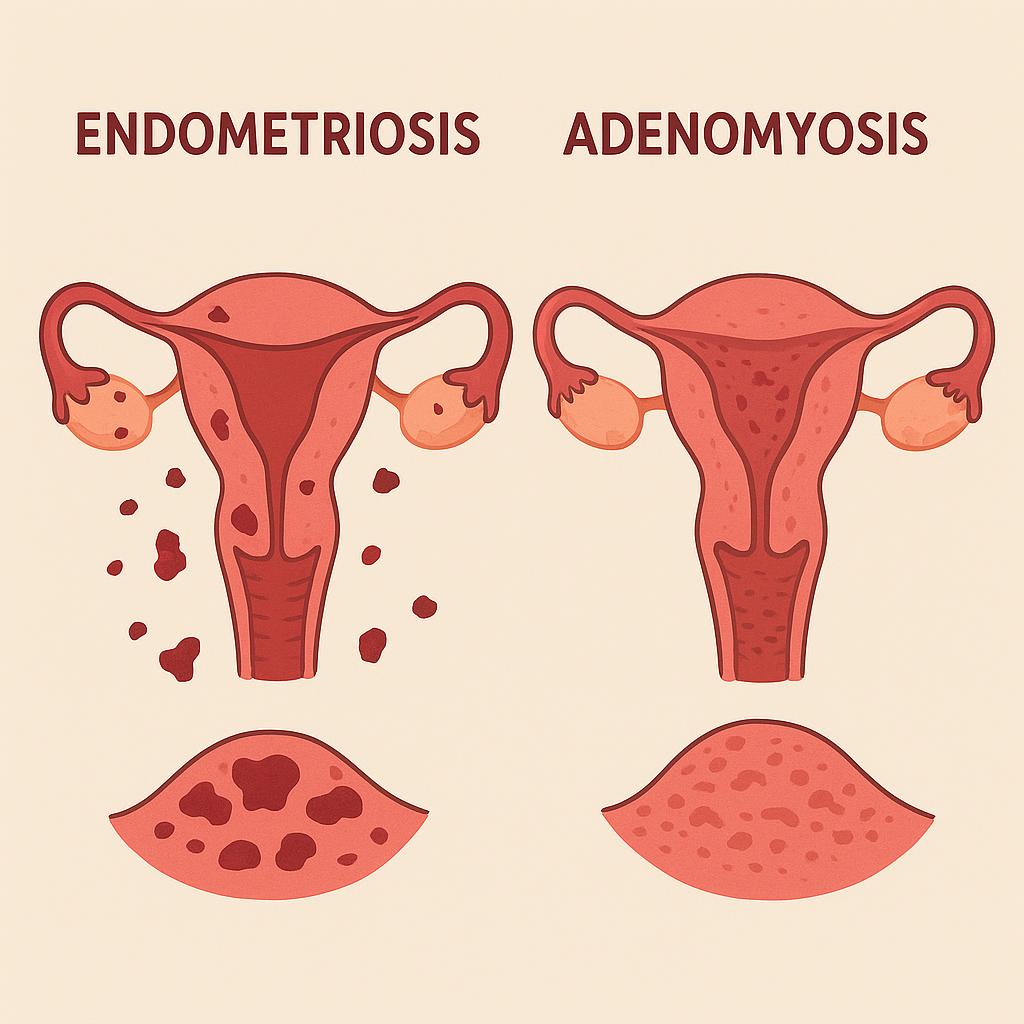
Endometriosis and Adenomyosis: How They Drive Pelvic Pain
Compare endometriosis and adenomyosis: similarities, differences in location and prevalence, diagnosis methods, and treatment options for pelvic pain.
Think You Might Have Endometriosis?
If you suspect endometriosis or adenomyosis may be causing your symptoms, our specialists can provide expert evaluation and guidance on next steps.
Schedule a Consultation