

Pelvic Pain
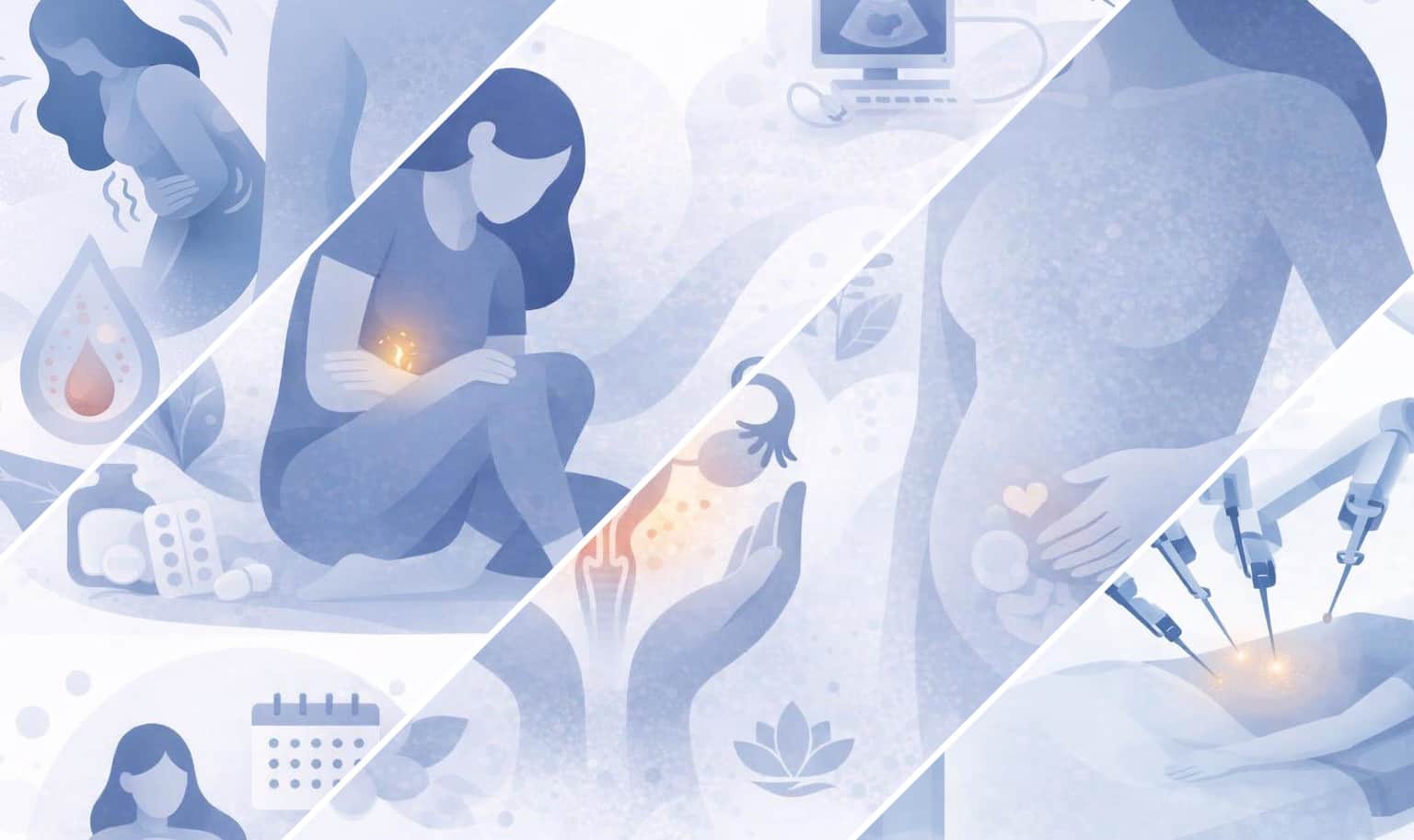
Pelvic pain can be a hallmark symptom of both endometriosis and adenomyosis—often chronic, often cyclical, and sometimes severe enough to disrupt work, relationships, sleep, and daily functioning. Understanding the “why” behind pelvic pain is the first step toward targeted treatment and lasting relief.
Overview
Pelvic pain is pain felt anywhere in the lower abdomen/pelvis—often described as aching, cramping, pressure, stabbing, or burning. In people with suspected or known endometriosis, pelvic pain may be cyclical (worse around periods or ovulation) or persistent throughout the month. With adenomyosis, pain is commonly strongest during menstruation and may occur alongside heavy bleeding and a “boggy” or enlarged uterus.
In endometriosis, endometrial-like tissue can grow outside the uterus (for example on the ovaries, pelvic sidewalls, bowel, bladder, or behind the uterus). These implants can trigger inflammation, scarring, and adhesions that restrict normal organ movement and irritate nearby nerves—creating pain that can flare with hormonal shifts and sometimes persist even between cycles. In adenomyosis, endometrial tissue grows into the uterine muscle, which can cause the uterus to contract more painfully and contribute to deep, heavy cramping and pelvic pressure.
Pelvic pain can overlap with other conditions, which is one reason endometriosis often takes years to diagnose. Symptoms may mimic IBS, bladder pain syndrome/interstitial cystitis, pelvic floor dysfunction, fibroids, or musculoskeletal issues. A key clue is a pattern of cyclical flares, pain with sex, bowel movements, urination, or worsening pain despite “normal” routine testing—but any pattern deserves a thoughtful evaluation. A specialist-led workup through an experienced team can help identify endometriosis and common look‑alikes or coexisting issues (see Evaluation & Diagnosis and Related Conditions).
Living with chronic pelvic pain can be isolating and exhausting. It may affect concentration, physical activity, intimacy, mood, and confidence in your body—especially when pain is minimized or mislabeled as “normal period pain.” You deserve to be taken seriously, and effective care is possible with a plan that addresses both symptom relief and root causes.
What It Feels Like
Pelvic pain can feel different from person to person—even among people with the same diagnosis. Many describe a deep, low ache or heaviness in the pelvis, cramping that feels “labor-like,” sharp stabbing pains, or a pulling sensation that worsens with movement, bowel movements, urination, or intercourse. Some people notice pressure in the rectum or vagina, or pain that radiates into the lower back, hips, or thighs.
A common endometriosis pattern is flares that intensify in the days leading up to a period and during bleeding, but pain can also spike mid‑cycle (around ovulation) or after physical activity. With adenomyosis, pain is often centered in the uterus—deep, intense menstrual cramps and pelvic tenderness—and may be accompanied by a feeling of pelvic fullness or bloating.
Over time, persistent inflammation and nerve sensitization can make pain less tied to the cycle and more constant. Some people develop “good days and bad days,” where stress, sleep loss, certain foods, or pelvic floor muscle tension amplify symptoms. If your pain is escalating, spreading, or becoming less predictable, that’s a sign you may need a more comprehensive evaluation and a multi‑layer treatment approach.
How Common Is It?
Pelvic pain is one of the most common reasons people seek evaluation for endometriosis. Endometriosis affects about 10% of women of reproductive age, and chronic pelvic pain is a frequent presenting complaint—though the exact proportion varies by study and by how pelvic pain is defined.
In adenomyosis, pelvic pain—especially severe period pain—is also common, often alongside heavy menstrual bleeding. Many people have both adenomyosis and endometriosis, which can intensify pain and broaden symptom patterns (uterine cramping plus pain from lesions/adhesions elsewhere in the pelvis).
Importantly, pain severity does not reliably match “stage” or how much disease is seen on imaging or at surgery. Some people have extensive disease with modest pain, while others have severe pain with minimal visible lesions—especially when deep disease, adhesions, pelvic floor dysfunction, or nerve involvement are present.
Causes & Contributing Factors
In endometriosis, pelvic pain is driven by a combination of inflammation, scarring, and nerve involvement. Endometrial-like tissue outside the uterus can bleed and inflame surrounding structures, releasing inflammatory chemicals that irritate nerves and increase pain sensitivity. Over time, the body may form adhesions (scar tissue bands) that tether organs, making normal movement—like bowel filling, bladder emptying, or intercourse—painful.
Deep infiltrating endometriosis can involve tissues rich in nerves and create pain with specific functions (for example, bowel movements or urination). Endometriomas (ovarian cysts associated with endometriosis) can contribute to aching or sharp pain, especially with activity or around the cycle.
In adenomyosis, endometrial glands within the uterine muscle can lead to thicker, more reactive uterine tissue and stronger uterine contractions during menstruation. This can cause intense cramping, pelvic pressure, and tenderness. Adenomyosis-related inflammation may also amplify pain signaling and contribute to fatigue.
Other factors can worsen pelvic pain even when the underlying disease is stable: pelvic floor muscle spasm/guarding, central sensitization (a “wound-up” nervous system), coexisting bladder or bowel conditions, and stress-related changes in pain processing. That’s why many patients benefit most from a plan that addresses both the disease and the pain system (see Pain Management).
Treatment Options
Treatment for pelvic pain usually works best when it targets both symptom control now and long-term drivers (endometriosis lesions, adenomyosis, adhesions, and nervous system sensitization). Options are individualized based on your goals (pain relief, fertility, avoiding hormones, avoiding hysterectomy), severity, and whether adenomyosis and endometriosis coexist.
Medical options may include anti-inflammatory medications (like NSAIDs), nerve-pain–targeted medications for neuropathic components, and hormonal suppression to reduce cyclical inflammation and bleeding. Hormonal approaches (such as continuous birth control, progestins, or other suppressive therapies) can reduce flares for some patients, though they don’t remove endometriosis tissue and may not be tolerated by everyone. Learn more about medication approaches in Hormonal Therapy and symptom-focused care in Pain Management.
Surgical treatment is often considered when pain is persistent, progressive, or not responding to medical management—or when imaging/exam suggests deep disease, endometriomas, or significant adhesions. For endometriosis, excision surgery (removing lesions at the root) is widely regarded as the gold standard because it aims to remove disease rather than burn the surface. At Lotus, advanced minimally invasive approaches are central to care; explore Surgery & Advanced Excision and learn about surgeon expertise with Dr. Steven Vasilev. Adenomyosis treatment may range from hormonal therapy and uterine-sparing options to hysterectomy in select cases, depending on symptoms and fertility goals (see adenomyosis).
Pelvic floor physical therapy can be a game-changer when muscles tighten in response to chronic pain (a common, treatable pain amplifier). Therapy may focus on down-training/relaxation, trigger point release, breathing mechanics, and gentle strengthening—often improving pain with sex, bowel movements, and daily activity (see Pelvic Floor PT and Pelvic Floor Dysfunction).
Lifestyle and integrative supports can complement medical/surgical care: heat, TENS, pacing and flare plans, anti-inflammatory nutrition strategies, sleep support, stress reduction, and selected supplements when appropriate. These tools won’t “cure” endometriosis or adenomyosis, but they can reduce suffering and improve function while you pursue definitive diagnosis and treatment (see Integrative Medicine & Lifestyle Care and At-Home Remedies). What to expect: meaningful improvement is possible, but it may take a layered plan and time—especially if pain has been present for years.
When to Seek Help
Seek urgent care immediately if pelvic pain is sudden and severe (especially one-sided), accompanied by fainting, shoulder pain with dizziness, fever, persistent vomiting, heavy bleeding soaking pads hourly, black/tarry stools, blood in urine, or if you could be pregnant (to rule out ectopic pregnancy or other emergencies). Also seek urgent evaluation for new neurologic symptoms (leg weakness/numbness) or inability to pass urine.
Schedule a specialist evaluation if pelvic pain is chronic (most days for 3+ months), repeatedly causes missed school/work, worsens around your period, or occurs with sex, bowel movements, urination, or infertility concerns. If you’ve been told imaging is “normal” but your symptoms persist, that does not rule out endometriosis—many cases require expert assessment and, when appropriate, surgical diagnosis.
To make your visit more effective, bring a symptom timeline (cycle days, triggers, bowel/bladder symptoms, medications tried, and functional impact). If you’re ready for a deeper evaluation and a clear plan, you can schedule a consultation with Lotus. Our team focuses on thoughtful diagnosis and individualized care for both endometriosis and adenomyosis (see Evaluation & Diagnosis).
Frequently Asked Questions
How is multi-organ endometriosis treated without organ removal?
In many multi-organ cases, the goal is conservative surgery: removing endometriosis while preserving the organs themselves. That typically means meticulous excision of disease from surfaces and deeper planes around the bowel, bladder, ureters, ovaries, and pelvic sidewalls—freeing organs from scar tissue and restoring normal anatomy without taking the organ out. Because endometriosis can hide in distorted or “frozen” anatomy, the safest way to preserve organs is often a highly precise approach that can dissect around vital structures.
In our practice, we use robotic excision to improve visualization and fine-control dissection, which is especially helpful when disease involves multiple compartments or has been operated on before. When endometriosis is close to structures like the ureters, bowel, diaphragm, or certain nerves, treatment planning may include coordinated work with other surgical specialists so the disease can be fully addressed in one operation while still prioritizing organ-sparing techniques.
Organ removal is usually considered only when an organ is severely damaged, there are multiple large endometriomas that can’t be safely managed with tissue-sparing techniques, fertility-safety concerns arise (like a badly damaged tube), or there’s concern for tumor or malignant change. If you’re trying to avoid organ removal, we can help map likely disease sites, clarify your priorities (pain relief, function, fertility), and outline what organ-preserving excision could realistically look like in your specific case—then build a surgical plan around that.
How much time off work do I need after endometriosis surgery?
Most people need about 2–3 weeks off work after minimally invasive endometriosis excision, especially if your job is mainly desk-based and you can ease back in. With robotic excision, patients often go home the same day or next day, start walking comfortably within about a week, and many feel ready for a gradual return to typical daily routines in that 2–3 week window.
The exact time off depends less on the incision size and more on what we need to treat during surgery—for example, ovarian endometriomas, bowel/bladder/ureter involvement, extensive scar tissue (“frozen pelvis”), or additional procedures like appendix removal or adenomyosis-related surgery. More complex, multi-organ cases can mean more fatigue, more activity restrictions, and a higher chance of needing an overnight stay, which can extend the time you’ll want to plan away from work.
In most straightforward recoveries, many patients are back to full activity by about a month. If you tell our team what you do for work (lifting, long shifts, travel, on-your-feet all day vs remote/desk), we can help you plan a realistic time-off request and a safer return-to-work ramp based on the surgical plan we’re building for you.
Why do I have painful urination and pelvic cramping between periods?
Painful urination with pelvic cramping between periods can happen when the bladder, ureters, uterus, pelvic floor, or nerves are being irritated—sometimes in a way that still follows a subtle cycle pattern even if you’re not actively bleeding. Endometriosis can contribute by affecting the bladder wall or tissues around the bladder and ureters, and symptoms don’t have to include visible blood in the urine. Importantly, urinary tract endometriosis isn’t always “obviously urinary,” and ureter involvement can be quiet while still significant, which is why we take these symptoms seriously.
These symptoms can also come from conditions that overlap with (or mimic) endometriosis, such as bladder pain syndrome/interstitial cystitis, pelvic floor overactivity, adenomyosis-related uterine cramping, or other pelvic pain drivers. In our evaluation process, we focus on your full flare pattern—what triggers it, how it relates to your cycle, and whether urine tests have been repeatedly negative—then use targeted exam and the right imaging (often expertly interpreted ultrasound and/or MRI) to map what’s actually going on.
If you’re noticing recurring burning with urination, pressure, cramping, or symptoms that predictably flare mid-cycle or before your period, that pattern is useful diagnostic information—not something to dismiss. You can explore our urinary symptom and diagnostic evaluation resources to see how we approach “UTI-like” symptoms with negative cultures, and you’re welcome to reach out to schedule a consultation so our team can help you sort out whether this is bladder/ureter endometriosis, a look-alike condition, or a combination.
When is hysterectomy recommended for adenomyosis?
A hysterectomy is typically considered for adenomyosis when symptoms are severe and clearly uterus-driven—most often heavy bleeding (sometimes with anemia), intense cramping, pelvic pressure, and daily quality-of-life disruption—and you’re not planning future pregnancy. It’s the most definitive option because adenomyosis lives within the uterine muscle, so removing the uterus removes the source of the problem.
In practice, we usually weigh hysterectomy most strongly when conservative options haven’t brought acceptable relief, aren’t tolerated, or don’t fit your goals. The decision also depends on the pattern and extent of disease (diffuse adenomyosis versus a more focal adenomyoma that may be removable while preserving the uterus) and whether endometriosis may also be present. If endometriosis is part of the picture, it’s important to know that hysterectomy alone doesn’t treat disease outside the uterus—durable symptom relief depends on addressing all pain generators.
If you’re wondering whether you’re at the point where hysterectomy makes sense, our team can help clarify what’s most likely driving your symptoms, review imaging, and walk you through uterus-preserving versus definitive surgical paths so you can choose the option that best matches your relief and fertility priorities.
Which adenomyosis symptoms most affect daily life?
Adenomyosis symptoms that most disrupt quality of life usually come from two main issues: how the uterus bleeds and how it hurts. Many patients describe heavy or prolonged periods that interfere with work, school, travel, and sleep—sometimes with flooding, frequent pad/tampon changes, and fatigue that can follow significant blood loss. Severe period pain (often more than “normal cramps”) is also common, and it can feel deep, aching, or pressure-like, sometimes accompanied by an enlarged, tender uterus and a sense of pelvic heaviness or bloating.
Outside of the period itself, adenomyosis can contribute to chronic pelvic pain, pain with sex for some people, and bowel or bladder discomfort—especially when symptoms flare around the menstrual cycle. It can also overlap with endometriosis, and when both are present symptoms may intensify or become harder to tease apart. If your day-to-day life is being shaped by bleeding, pain, pressure, or fertility stress, our team can help you sort out whether adenomyosis, endometriosis, fibroids, or more than one condition may be driving the pattern—and what next-step options make sense for your goals.
Why do I look pregnant from bloating with constant pelvic pressure?
Feeling so bloated you “look pregnant” along with constant pelvic pressure usually points to more than simple gas—often it’s a pelvic condition creating inflammation, swelling, or a sense of bulk. Endometriosis can irritate the bowel and pelvic lining, trigger scarring that tethers organs, and create the classic “endo belly” sensation that comes and goes (sometimes not perfectly cyclical). Pelvic pressure can also happen when endometriosis involves deeper tissues or nearby organs like the bladder, ureters, or rectum.
Just as important: these symptoms can be driven by endometriosis neighbors or coexisting conditions, especially adenomyosis and fibroids, which can make the uterus feel heavy, full, or “bulky” and add pressure on the bladder and bowel. Ovarian cysts and other benign pelvic findings can contribute, and IBS-like bowel sensitivity can overlap so closely that symptoms alone don’t reliably sort out what’s causing what. Our team focuses on mapping the full picture—uterus, ovaries, bowel, bladder, and pelvic support structures—so treatment targets the true driver(s), not just the most obvious diagnosis.
If this pressure/bloating is persistent, worsening, or changing your ability to eat, move your bowels, or urinate comfortably, it’s a strong reason to pursue a deeper evaluation rather than being told it’s “normal.” You can explore our educational content on bowel symptoms, bladder symptoms, and overlapping conditions, and reach out to schedule a consultation so we can review your history, imaging, and symptom pattern and outline a plan aimed at lasting relief.
Why does ovarian cyst pain keep coming back?
Ovarian cyst pain can feel “recurrent” for a few different reasons. Some cysts are functional (they form with ovulation and then resolve), so the pain returns in a similar spot month after month even though it’s not the exact same cyst. In other cases, the cyst itself can come back or persist—especially if it’s an endometrioma (an ovarian cyst caused by endometriosis), which can behave differently than a simple cyst and may be associated with deeper pelvic disease.
Another common reason is that the cyst isn’t the whole story: endometriosis on the pelvic sidewall, uterosacral ligaments, bowel, bladder, or around the ovary can irritate the same nerves and tissues and make it feel like “my cyst is back” when the driver is actually inflammatory disease nearby. Adhesions (scar-like bands) can also tether the ovary and cause recurring pulling or sharp pain, even when imaging doesn’t show a large cyst. If your pain cycles, escalates, returns quickly after a “normal” ultrasound, or keeps recurring despite prior treatment, our team can help you map the pattern, interpret imaging with an endometriosis lens, and decide whether targeted evaluation and—when appropriate—excision surgery is the next best step.
Why do I get low back and leg pain during my period?
Low back and leg pain that predictably flares with your period can happen when pelvic inflammation irritates pain pathways that “refer” into the back, hips, buttocks, and down the leg. In some patients, endometriosis can be part of that story—either indirectly (pelvic inflammation and scarring increasing pressure and sensitivity around nearby nerves) or more directly if disease is affecting areas close to major nerves.
When period-related leg pain resembles sciatica—deep buttock pain, tingling, burning, or pain radiating down the back of the thigh—it raises the possibility of endometriosis-related sciatic irritation or pelvic floor involvement (often described as piriformis-type pressure on the nerve). These symptoms may start before bleeding, peak during the period, and linger afterward, and in more significant cases can be associated with weakness or changes in walking.
Because back and leg pain can also come from the spine, hips, or muscles, the key is the pattern and the full symptom “constellation,” including pelvic pain, bowel/bladder symptoms, or pain with sex. Our team can help you sort out whether your pain fits an endometriosis/adenomyosis pattern and, if needed, plan next-step evaluation such as targeted imaging and a strategy focused on lasting relief rather than temporary suppression.
Related Articles
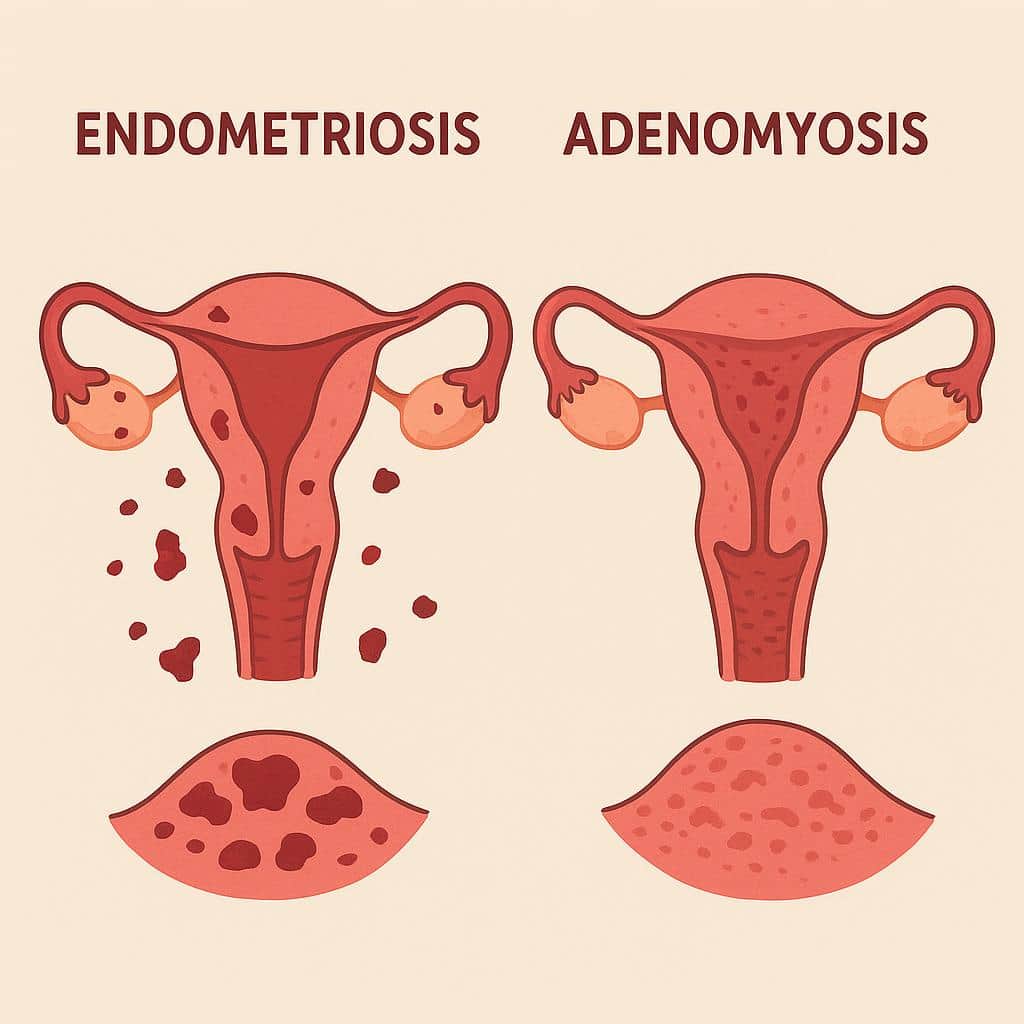
Endometriosis and Adenomyosis: How They Drive Pelvic Pain
Compare endometriosis and adenomyosis: similarities, differences in location and prevalence, diagnosis methods, and treatment options for pelvic pain.
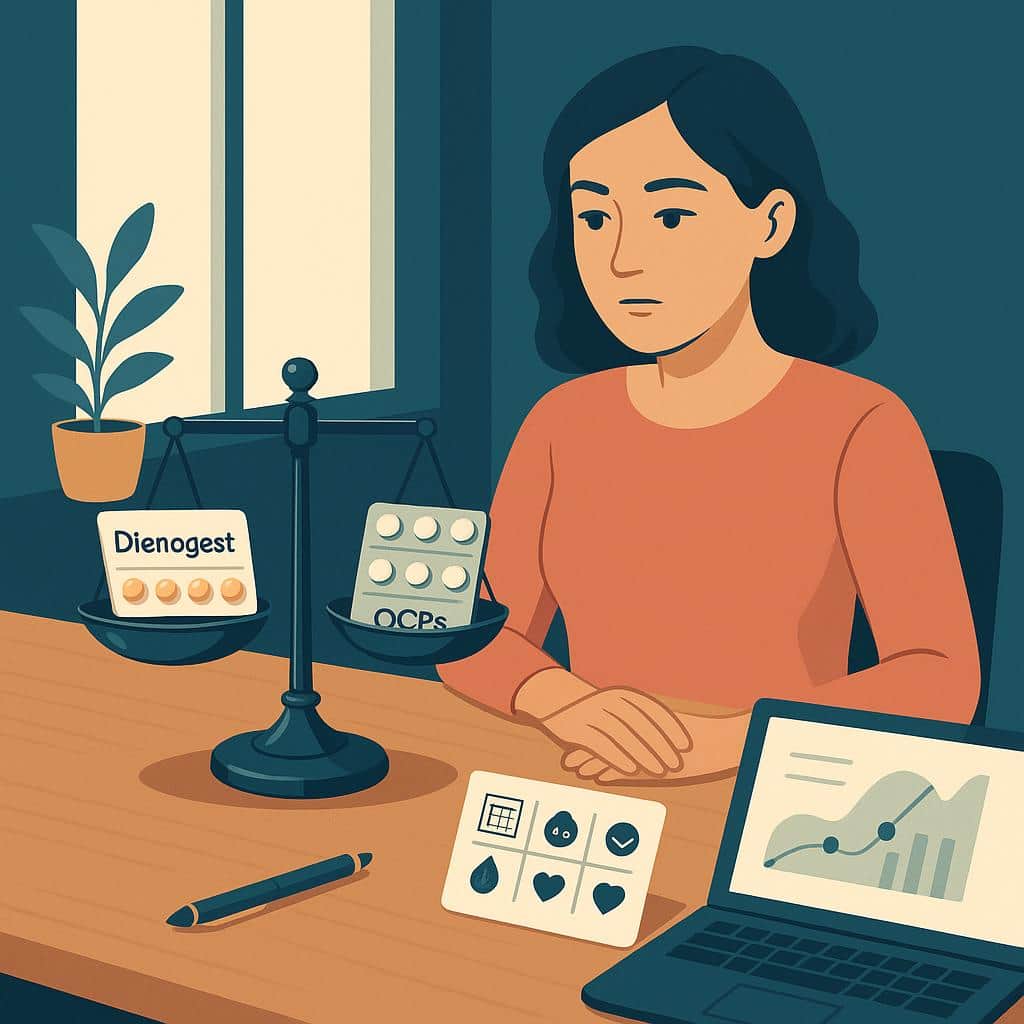
Dienogest vs. Combined Oral Contraceptives for Endometriosis Pain: What a 2025 Meta-Analysis Found
A 2025 meta-analysis of dienogest vs OCPs for endometriosis pain: dienogest helps generalized pain; OCPs help pelvic pain/dyspareunia. Similar side effects.
Different Types of Endometriosis Pain Explained
Explore types of endometriosis pain, evaluation, and evidence-based treatments, including triggers, pelvic floor therapy, CNS sensitization, and adenomyosis.
Post-Orgasm Pain in Endometriosis: Causes and Management
Why orgasms can trigger endometriosis pain: how to ease post-sex discomfort. Causes, symptoms, meds, pelvic floor therapy, surgical options, and sex tips.

Natural Approaches to Managing Endometriosis Pain
Learn how TENS, diet changes, CBD, turmeric, meditation, yoga, and acupuncture can complement care and help relieve pelvic pain from endometriosis.
Experiencing Pelvic Pain?
If you're dealing with this symptom, our specialists can help determine if endometriosis may be the cause and discuss your treatment options.
Schedule a Consultation