Robotic Surgery

Related Posts

Robot-assisted laparoscopy for endometriosis: what it treats, how 3D magnified vision enables precise excision, and how it compares with ablation. Evidence-based guidance on candidacy, risks, recovery, and reducing recurrence.

Overview

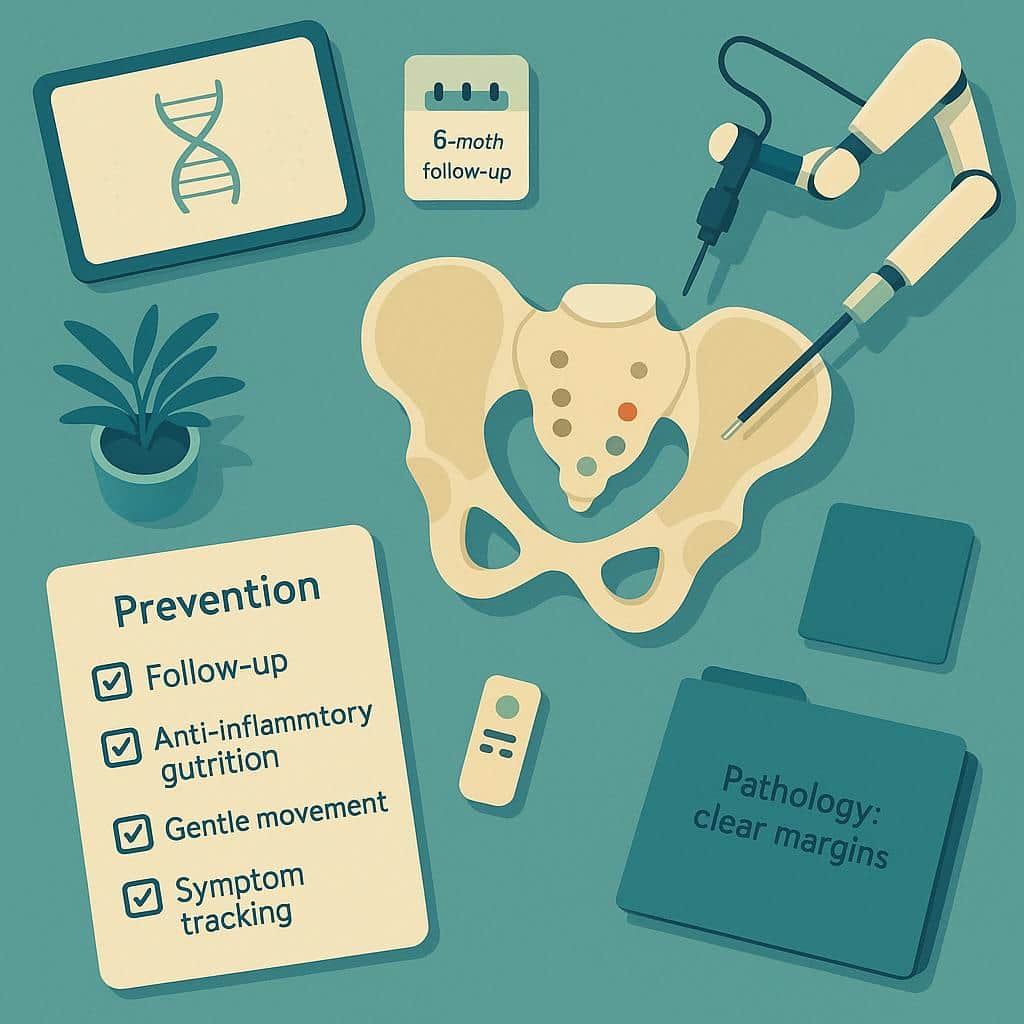
Robotic surgery is a form of minimally invasive laparoscopy where the surgeon operates from a console using wristed instruments and a high‑definition 3D view. For endometriosis—especially deep disease near the bowel, bladder, ureters, or pelvic nerves—the enhanced dexterity, tremor filtration, and precise suturing can support organ‑sparing excision. Robotics can also be used in selected combined procedures when adenomyosis care is planned, but the platform itself is a tool; outcomes depend most on an expert team experienced in endometriosis excision and reconstruction.


Learn when a robotic platform may be chosen over conventional Laparoscopy, how mapping with Imaging for Surgery informs candidacy, and what to expect for port placement, anesthesia time, and length of stay. Clarify where robotics may add value—such as complex repair or higher BMI—and where benefits are comparable to other approaches for pain, fertility, and complications. Practical guidance highlights risks, cost considerations, and how robotic‑assisted excision fits into comprehensive care alongside Excision Surgery planning and expectations for Postoperative Recovery.

Is robotic surgery better than standard laparoscopy for endometriosis?

High‑quality studies show similar symptom relief, fertility outcomes, and complication rates when surgery is performed by expert teams, regardless of platform. Robotics may offer advantages in complex deep disease requiring fine suturing, but it often involves longer operative time and higher cost.

Who is a good candidate for robotic‑assisted endometriosis surgery?

Candidates often include those with deep infiltrating disease or anticipated reconstructive steps involving bowel, bladder, or ureter, and some patients with higher BMI. The decision is individualized based on disease mapping from Imaging for Surgery and the surgeon’s expertise and available resources.

Does robotic surgery lower recurrence or improve fertility compared with other approaches?

Recurrence and fertility outcomes are driven by the completeness and quality of excision, not by the robotic platform itself. For family‑building planning and expectations after surgery, see Fertility & Reproductive Health.

What risks or downsides are specific to robotic surgery?

Risks are similar to other laparoscopy—bleeding, infection, and injury to nearby organs—with added considerations of longer anesthesia time, rare equipment issues, and positioning‑related discomfort. Conversion to open surgery is uncommon in experienced hands but remains a possibility.

How does recovery compare to other minimally invasive options?

Recovery is typically similar to standard laparoscopy, with small incisions, gas‑related shoulder pain, and a gradual return to activity. Detailed timelines, pain control, and activity guidance are outlined in Postoperative Recovery.

Reach Out

Have a question?

We understand that healthcare can be complex and overwhelming, and we are committed to making the process as easy and stress-free as possible.

Santa Monica, CA

2121 Santa Monica Blvd, Santa Monica, CA 90404

Operating Hours

9:00 am - 5:00 pm
Monday - Friday

Arroyo Grande, CA

154 Traffic Way, Arroyo Grande, CA 93420