Laparoscopy

Related Posts

Clear, evidence-based guidance on minimally invasive surgery for endometriosis—excision vs ablation and robotic vs conventional—covering indications, risks, outcomes, and recovery to help you choose the right approach with your care team.

Overview

Laparoscopy is the standard minimally invasive surgery used to diagnose and treat endometriosis through a few small incisions and a high‑definition camera. It allows surgeons to map lesions, free adhesions, and restore pelvic anatomy, often improving pain and fertility. Decisions to operate are individualized based on symptoms, failed conservative care, fertility goals, and imaging; high‑quality ultrasound or MRI can help plan the procedure and team, especially for deep disease. See related guidance in Diagnostics & Imaging and Imaging for Surgery.


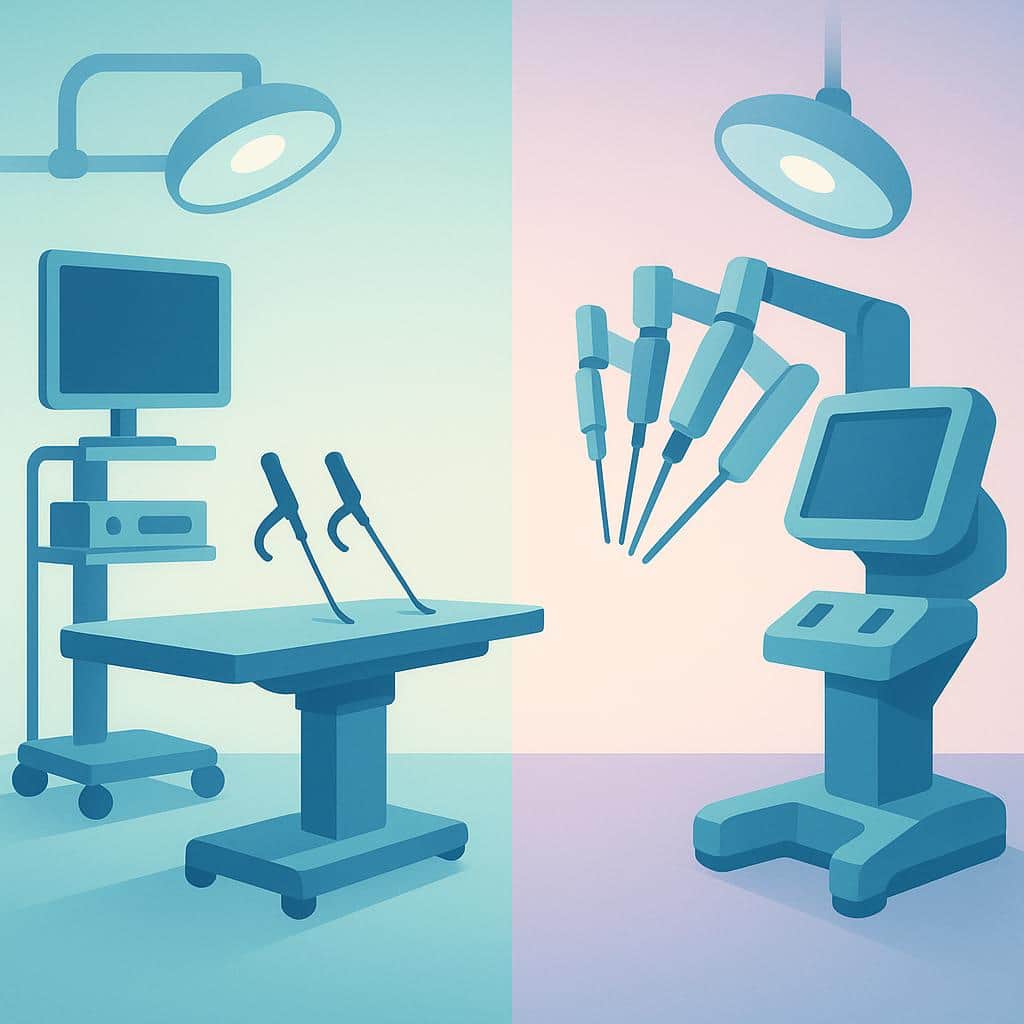
During laparoscopy, surgeons may remove disease by excision or ablate superficial lesions; the choice depends on lesion depth, location, and your priorities. For durable pain relief and complex or deep disease, evidence generally favors excision; superficial disease may be ablated in selected cases. Robotic versus conventional approaches mainly reflect surgeon preference and case complexity, with outcomes driven by expertise. Laparoscopy does not diagnose adenomyosis, though laparoscopic hysterectomy or uterus‑sparing procedures may address it; see Adenomyosis and Surgical Options. Expect outpatient surgery and a graded recovery with specific guidance in Postoperative Recovery.

When is laparoscopy recommended for suspected endometriosis?

Surgery is considered when pain persists despite medical and integrative care, when fertility is affected, or when imaging suggests deep or organ‑involving disease where treatment could change outcomes. Preoperative ultrasound or MRI helps determine timing and whether a multidisciplinary team is needed; see Diagnostics & Imaging for how results guide decisions.

What’s the difference between excision and ablation during laparoscopy?

Excision removes lesions in full thickness and allows pathology confirmation, which tends to yield more durable pain relief and lower recurrence, especially for deep disease. Ablation destroys surface lesions and can help selected superficial cases but may leave deeper components behind; learn more in Excision Surgery.

Do I need robotic rather than conventional laparoscopy?

For most patients, outcomes depend more on the surgeon’s expertise than the platform. Robotics may aid precision in complex deep infiltrating disease or reoperative pelvis, but it does not inherently guarantee better results; see details in Robotic Surgery.

Is laparoscopy useful for adenomyosis?

Laparoscopy does not diagnose adenomyosis, which is best assessed by MRI or high‑quality ultrasound. Surgical treatment for adenomyosis may include laparoscopic hysterectomy or carefully selected uterus‑sparing procedures based on symptoms and fertility plans; see Adenomyosis and Surgical Options.

What are the main risks and how are they minimized?

Complications are uncommon but include bleeding, infection, and injury to the bowel, bladder, ureters, or blood vessels, as well as blood clots and anesthesia risks. Careful preoperative imaging, experienced surgeons, and multidisciplinary planning lower these risks and improve safety; individualized recovery guidance is covered in Postoperative Recovery.

Reach Out

Have a question?

We understand that healthcare can be complex and overwhelming, and we are committed to making the process as easy and stress-free as possible.

Santa Monica, CA

2121 Santa Monica Blvd, Santa Monica, CA 90404

Operating Hours

9:00 am - 5:00 pm
Monday - Friday

Arroyo Grande, CA

154 Traffic Way, Arroyo Grande, CA 93420