
Symptoms
How is adenomyosis back pain different?
The short answer
Adenomyosis back pain often comes from an inflamed, sometimes enlarged uterus and can feel like deep, intense cramping that radiates into the low back. Many patients notice flares during heavier bleeding days, and it can come with pelvic heaviness or pressure.
Adenomyosis-related back pain often comes from an inflamed, sometimes enlarged uterus and can feel like deep, intense cramping that radiates into the low back. Many patients notice it flares most during heavier bleeding days and can come with pelvic heaviness or pressure, rather than muscle soreness alone.
On exam, the uterus may feel tender and boggy, which can help distinguish pain from the uterus from spine or joint issues. Because adenomyosis frequently coexists with endometriosis, the pattern can be mixed: cyclical uterine cramping layered on top of other pelvic pain triggers. If your back pain predictably tracks your cycle or comes with heavy bleeding and pelvic pressure, our team can help evaluate whether adenomyosis is contributing and review next steps with you.
Where to go from here
Understand it, compare it with what you're feeling, then talk it through with us.
Speak with Us
Struggling with Deep Back Pain?
Adenomyosis can cause intense, cramping back pain linked to your uterus. Our specialists understand these unique symptoms and can help pinpoint and relieve your discomfort.
Questions people ask next
All symptoms questionsCan adenomyosis cause back pain?
Yes, adenomyosis can cause back pain, especially low back or sacral aching that flares with your cycle. The uterus can become enlarged and tender, and deep pelvic pain can spread into the back, often alongside heavy bleeding, severe cramping or pelvic pressure.
Can endometriosis cause lower back pain?
Yes, endometriosis can cause lower back pain. Inflammation and scarring from endometriosis can irritate tissues and nerves in the back of the pelvis, or cause referred pain, where the source is pelvic but the pain is felt in your lower back.
When is adenomyosis more likely than endometriosis?
Adenomyosis often rises to the top of the list when periods are heavy and painful, with deep, crampy uterine pain that can linger between cycles. An enlarged, tender uterus or certain ultrasound or MRI findings may support it, but endometriosis can also be present.
How is endometriosis different from adenomyosis?
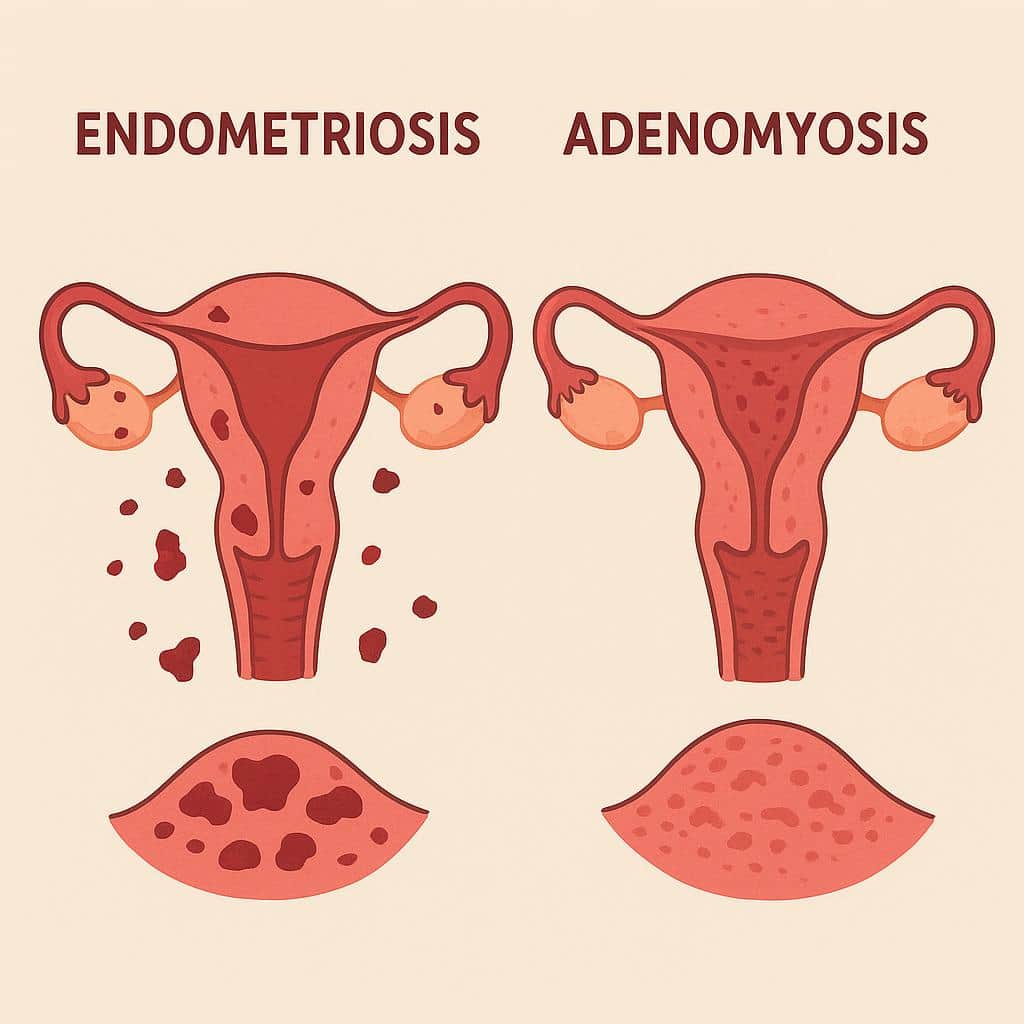
Endometriosis involves tissue similar to the uterine lining growing outside the uterus; adenomyosis involves that tissue growing into the uterus's muscle wall. They can occur together, and when they do, symptoms may feel more severe and fertility can be affected.
Further reading
Do My Symptoms Mean Adenomyosis or Endometriosis?
Discover the truth about endometriosis and adenomyosis symptoms. Understand how common they really are, and gain insights for effective advocacy.
Endometriosis and Adenomyosis: How They Drive Pelvic Pain
Compare endometriosis and adenomyosis: similarities, differences in location and prevalence, diagnosis methods, and treatment options for pelvic pain.
Different Types of Endometriosis Pain and What Helps
Learn how endometriosis pain can feel, what may drive each pattern, and which assessment and treatment options to discuss with your doctor.