
Symptoms
Why am I passing large blood clots during my period?
The short answer
Large period clots usually mean bleeding is heavy enough for blood to pool and clot in the uterus before it exits. Some clotting can be normal, but frequent or large clots can signal abnormally heavy bleeding from causes such as adenomyosis or fibroids.
Passing large clots during your period usually means the bleeding is heavy enough for blood to pool in the uterus and clot before it exits. Some clotting can be normal, but frequent or large clots (especially with flooding, severe cramps, pelvic pressure, or fatigue) can be a sign that something is causing abnormally heavy uterine bleeding rather than just a bad period.
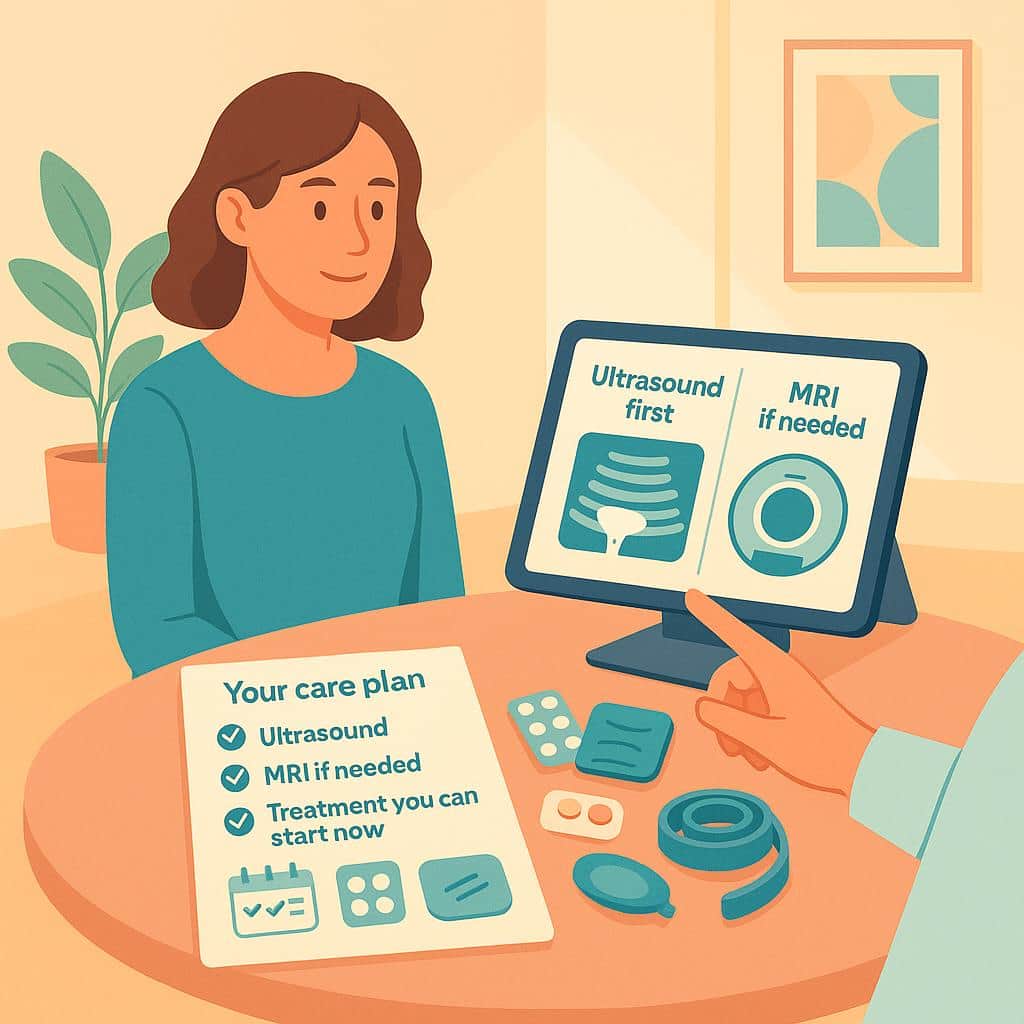
Two common causes we evaluate for are adenomyosis (endometrial-like tissue within the uterine muscle, often linked with heavy bleeding and painful periods) and fibroids. Adenomyosis can also overlap with endometriosis and intensify symptoms. Because the right treatment depends on the cause, our team considers your full symptom pattern and uses expertly interpreted ultrasound and, when helpful, MRI to look for adenomyosis and other pelvic conditions that can be missed or mislabeled.
If you’re passing clots larger than a quarter, soaking through protection quickly, feeling lightheaded, or finding that your bleeding disrupts daily life, it’s worth a deeper workup, not dismissal. Reach out to schedule a consultation so we can map out what’s most likely in your case and which options (medical, procedural, or surgical) make sense for your goals, including fertility and long-term relief.
Where to go from here
Understand it, compare it with what you're feeling, then talk it through with us.
Compare
Symptoms it can relate to
Speak with Us
Worried About Large Period Clots?
Passing large clots can signal heavy bleeding caused by conditions like adenomyosis or fibroids. Our specialists can diagnose the cause and tailor treatments to ease your symptoms and improve your quality of life.
Questions people ask next
All symptoms questionsHow do I know if my bleeding is too heavy?
Your flow may be heavier than expected if you change a pad or tampon every 1–2 hours, bleed longer than 7 days, pass large clots, or frequently bleed through clothes or bedding. Fatigue, weakness or dizziness can also be signs of low iron or anemia.
Can adenomyosis cause clots and heavy flooding?
Yes, adenomyosis can cause very heavy menstrual bleeding with flooding (sudden gushes) and clots, especially when blood pools in the uterus before it exits. These symptoms can also have other causes, and severe bleeding can lead to iron deficiency and fatigue.
Can endometriosis cause large menstrual blood clots?
Yes, endometriosis can be associated with heavier menstrual bleeding for some people, and heavier flow can come with larger clots. Large clots aren’t specific to endometriosis; adenomyosis and fibroids can also drive heavy or prolonged bleeding.
Should I see an endometriosis specialist for heavy bleeding?
An endometriosis specialist can help evaluate heavy bleeding, especially when it comes with pelvic pain, severe cramps, pain with sex, or bowel or bladder symptoms. This pattern raises the possibility of endometriosis or adenomyosis, which can overlap.
Further reading
Do My Symptoms Mean Adenomyosis or Endometriosis?
Discover the truth about endometriosis and adenomyosis symptoms. Understand how common they really are, and gain insights for effective advocacy.
Why Endometriosis and Fibroids Often Show Up Together—And What That Means for You
Explore why endometriosis and fibroids often coexist, their symptoms, and what it means for your health. Get informed on your care options.
Diffuse Adenomyosis Diagnosis and Treatment That Fit Your Goals
What diffuse adenomyosis means, how ultrasound and MRI guide diagnosis, and which treatments may fit your bleeding, pain, and fertility goals.