

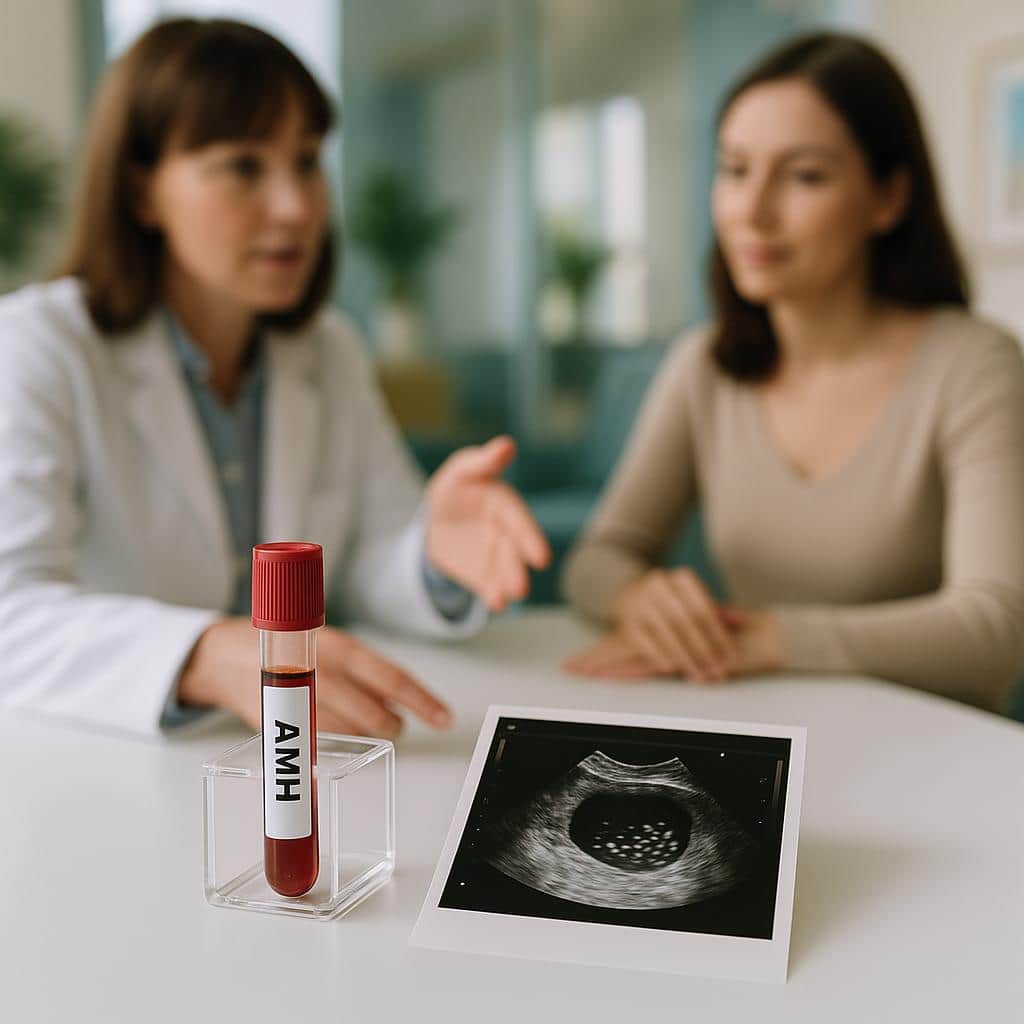
AMH Or Follicle Count Which Matters More For Endometriomas
How AMH and antral follicle count behave with unilateral or bilateral endometriomas, the impact of cyst size, and practical guidance for your next appointment.
4 minute read
Read moreDiscover how Lotus can guide you toward lasting relief.
Explore why patients choose Lotus
Search expert-written answers, browse by topic, or find information based on where you are in your journey.
Explore All KnowledgeReach out and start your healing journey.
Schedule an AppointmentExplore genetic, proteomic, hormonal, and microbiome markers that aim to enable earlier, less invasive diagnosis, stratify risk, guide therapy, and monitor response.
Biomarkers are measurable signals in blood, urine, saliva, menstrual effluent, or tissue that may reflect the presence or activity of endometriosis. Researchers are studying proteins (such as CA-125 and cytokines), small RNAs, cell-free DNA, and microbiome patterns to enable earlier, less invasive detection, classify subtypes, and track treatment response. These tools are designed to complement clinical assessment and imaging, not replace them.
Right now, no single biomarker is accurate enough for routine diagnosis. Combination panels may perform better, and promising work includes menstrual effluent testing and multi-omics paired with machine learning. Learn what common labs can and cannot tell you today, how signals may vary across deep disease and endometriomas, and how results could integrate with Ultrasound and MRI. Because microbes and immune pathways are part of this story, the microbiome’s role connects with Gut Health, while inherited risk relates to Genetics. Stay informed as investigational tests move toward clinical use within New Treatments.
CA-125 is not a reliable tool for fertility planning in endometriosis. It’s a nonspecific inflammation marker that can be elevated with endometriosis, but it doesn’t consistently reflect disease subtype, lesion location, or the biologic factors that influence egg quality, tubal function, or implantation. For many patients, a “normal” CA-125 doesn’t rule out meaningful endometriosis, and a “high” value doesn’t tell us what your next fertility step should be.
When fertility is the goal, we focus on information that directly guides decisions—your full symptom story and flare pattern, expert imaging when appropriate, and ovarian reserve and ovarian-specific data (often including AMH and ultrasound follicle counts, especially if endometriomas are present). We also consider common overlapping issues that can complicate fertility, because endometriosis-related infertility is often more than just anatomy. If you’d like, our team can help you build a personalized evaluation plan so you’re not chasing one lab value that can’t answer the question you’re really trying to solve.
CA-125 can be elevated in some people with endometriosis, but it’s not a reliable way to diagnose it. The main limitation is that CA-125 is nonspecific: it can be normal even when endometriosis is present, and it can be high for other reasons (including other pelvic conditions and benign inflammation). Because of that, a CA-125 result—whether “normal” or “high”—usually doesn’t answer the question patients actually need answered: is endometriosis the driver of your symptoms, where is it, and what else might be contributing?
In our evaluation process, we focus on your symptom patterns, a careful exam, and expertly interpreted imaging when appropriate, while also staying alert to look-alike or coexisting conditions (and, in selected cases, more serious concerns like pelvic masses). If you’ve been offered CA-125 testing, we can help you understand what it can and can’t mean in your specific situation, and map out a clearer diagnostic pathway based on the full clinical picture. If you’re ready, you can reach out to schedule a consultation with our team.
Yes—adenomyosis can be associated with a raised CA-125. CA-125 is a nonspecific marker that can rise with inflammation and irritation in the pelvis, and adenomyosis involves endometrial-like tissue within the uterine muscle that can drive chronic inflammation, heavy bleeding, and pain.
That said, an elevated CA-125 does not diagnose adenomyosis on its own, and it also doesn’t tell you how severe adenomyosis is. CA-125 can be elevated for a range of gynecologic and non-gynecologic reasons, and it may also be higher when adenomyosis overlaps with endometriosis (which is common).
If you’ve had a high CA-125 and symptoms like heavy periods, severe cramps, or ongoing pelvic pressure, our team can help you put that result in context and focus on the right next step—typically a symptom-driven evaluation with high-quality imaging (ultrasound and/or MRI) and a plan tailored to your goals, including fertility and long-term relief.
At this time, blood tests cannot reliably diagnose endometriosis. While markers like CA-125 may be elevated in some people, they’re not specific enough to confirm endometriosis or rule it out, so they aren’t considered a validated diagnostic test.
Research into more accurate biomarkers and molecular testing is active and promising, but these tests aren’t yet ready for routine clinical use. If you’re trying to understand whether endometriosis could be driving your symptoms, our team can walk you through a thorough evaluation and discuss what diagnostic approaches make the most sense for your situation.
Several non-invasive approaches are getting closer, including biomarker panels from blood, urine, saliva, and menstrual fluid. Many are promising in early studies, but none have consistently met the accuracy needed to reliably diagnose endometriosis on their own.
Right now, the most dependable path is still a careful symptom history paired with targeted imaging—most often expert ultrasound and sometimes MRI—with surgery reserved for situations where diagnosis and treatment are needed. In the near term, we expect biomarkers to be most useful as an add-on tool to support clinical decision-making rather than a full replacement for expert imaging or laparoscopy. If you’re wondering what the most up-to-date diagnostic options mean for your specific symptoms, our team can review your history and help you plan a clear next step.
No—there isn’t currently an FDA-cleared blood test that can reliably diagnose (or rule out) endometriosis. Tests sometimes discussed online, such as CA-125 or newer inflammatory and microRNA-based panels, can be influenced by the menstrual cycle and many other conditions, so results are not specific enough to confirm endometriosis on their own.
In our practice, diagnosis starts with a careful review of symptoms and medical history, a focused pelvic exam when appropriate, and targeted imaging such as ultrasound or MRI to look for signs like endometriomas or deep disease. Because imaging can miss superficial disease, a normal scan does not exclude endometriosis—so if your symptoms persist, our team can help you understand what further evaluation (including whether surgery makes sense) might look like for your situation.
Biomarkers are promising, but they’re not yet a reliable way to choose a specific endometriosis treatment or to measure, in real time, how well a therapy is working. In research settings, multi-marker panels may eventually help stratify inflammation or disease activity and support more individualized decisions about hormonal suppression, pain management strategies, or the timing of excision.
Right now, the most dependable way we monitor response is still how you feel and function over time, paired with clinical evaluation and imaging when appropriate. In select situations—such as monitoring a large endometrioma—your team may follow a lab like CA-125 as one piece of the picture, but it’s not specific enough to use alone. If you’re interested in whether biomarker testing could add value in your case, our team can walk you through what’s available, what it can and can’t tell us, and how we’d use it alongside symptoms and imaging.
Testing menstrual fluid (menstrual effluent) for cellular material, proteins, or microRNAs is an exciting research direction for identifying endometriosis without surgery. These approaches aim to detect biological “signals” associated with the disease using what’s naturally shed during a period.
Right now, menstrual-blood-based tests are not validated or widely available for routine clinical diagnosis, and they shouldn’t be used as a stand-alone answer. In our practice, diagnosing and mapping suspected endometriosis still relies on your symptom pattern, a detailed history and exam, and targeted imaging when appropriate. If you’re exploring testing options and want clarity on what’s available today—and what it can and can’t tell you—our team can help you plan a thoughtful diagnostic path and discuss next steps.
How AMH and antral follicle count behave with unilateral or bilateral endometriomas, the impact of cyst size, and practical guidance for your next appointment.

Learn how genetics shapes endometriosis—familial clustering, gene mapping, GWAS, and genomics—and what this means for diagnosis, treatment, and monitoring.
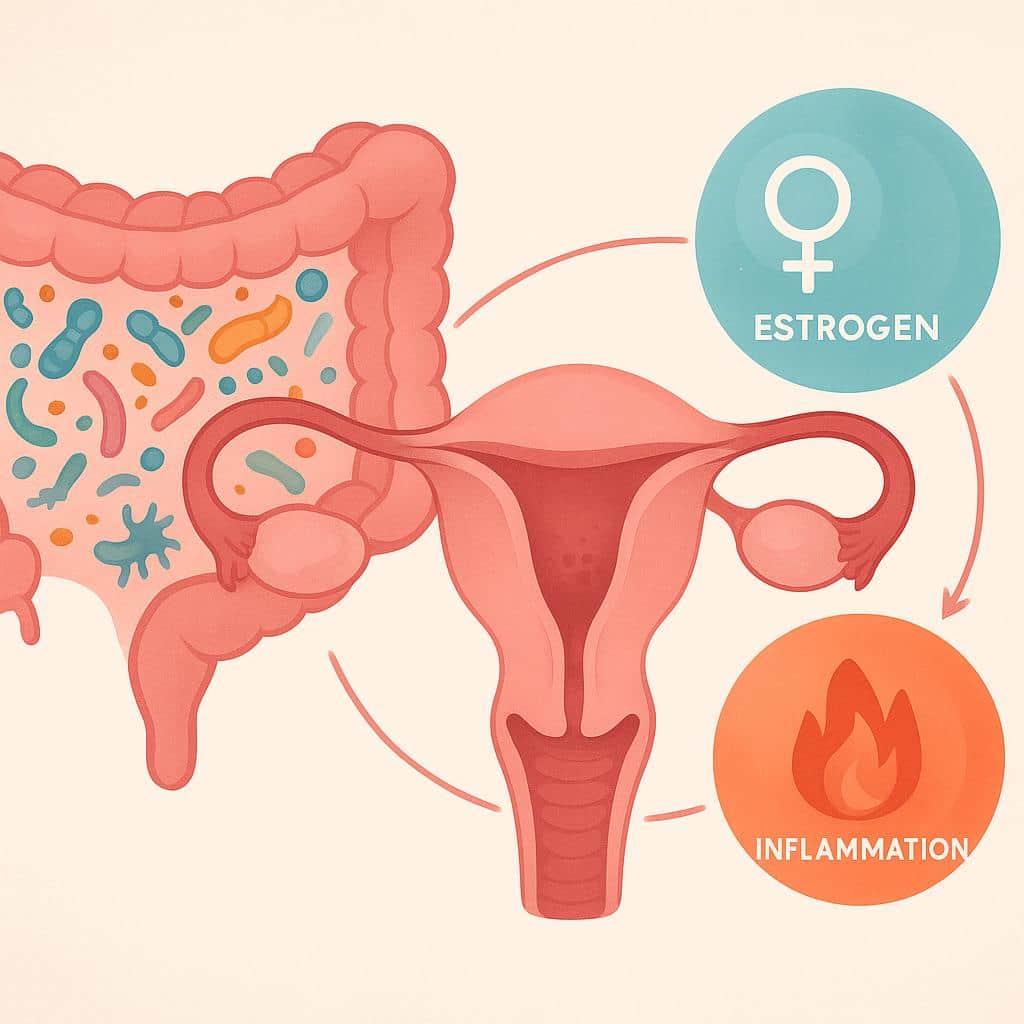
Explore how the microbiome may shape inflammation and estrogen metabolism in endometriosis, and what emerging research means for diagnosis and new therapies.
Lotus Endometriosis Institute provides California-based surgical evaluation and advanced excision care for patients with suspected endometriosis, adenomyosis, complex pelvic pain, and related conditions.
Many patients contact us from outside California to learn whether traveling for in-person evaluation and possible surgery may be appropriate.
2121 Santa Monica Blvd, Santa Monica, CA 90404
8am - 5pm
Monday - Friday
154 Traffic Way, Arroyo Grande, CA 93420