



AMH Or Follicle Count Which Matters More For Endometriomas
Interpreting AMH and antral follicle count when endometriomas complicate ovarian reserve
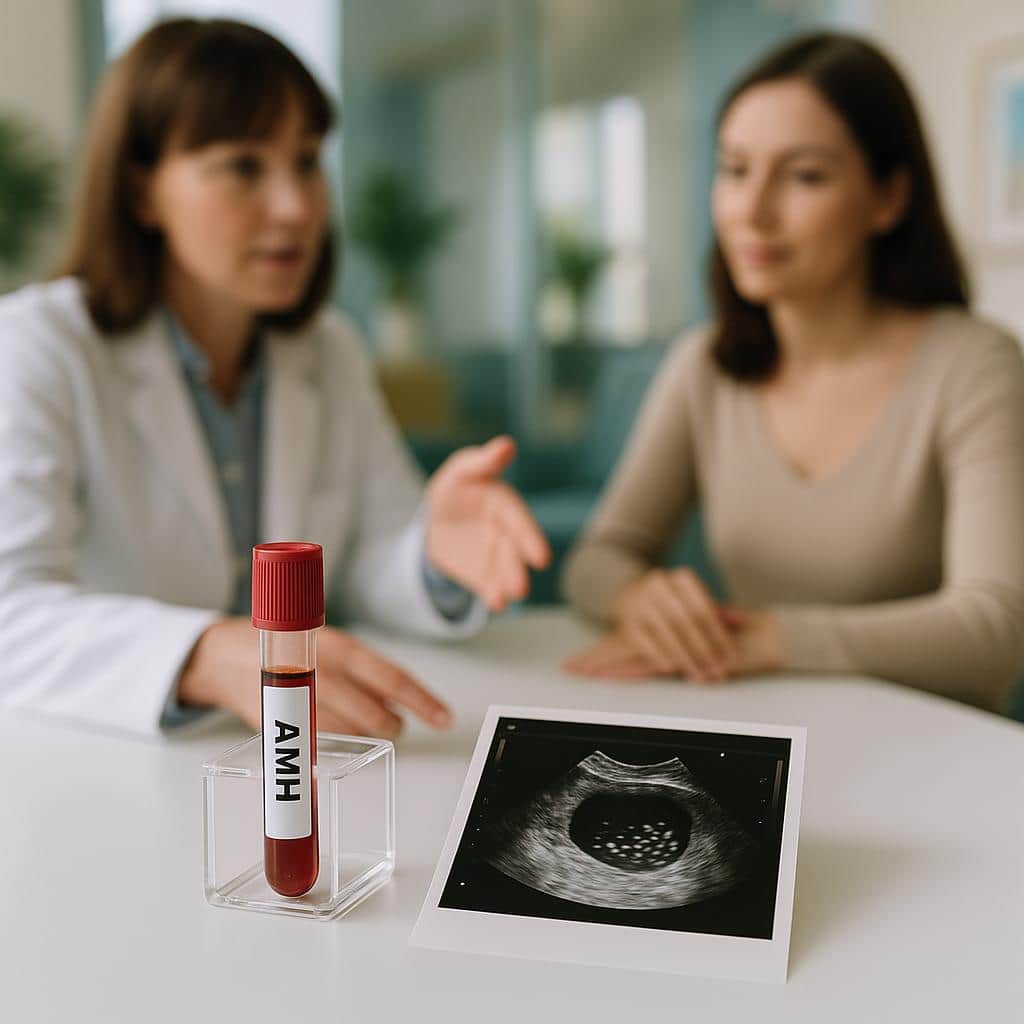
When you’re worried about fertility, numbers can feel like destiny
If you have an ovarian endometrioma (“chocolate cyst”), you’ve probably been offered ovarian reserve testing—most commonly a blood test called AMH (Anti Mullerian Hormone) and an ultrasound count called AFC (antral follicle count). It can be scary to see a low number and wonder: “Is my time running out? Did the cyst damage my ovary? Should I rush into surgery or IVF?”
Here’s the tricky part: with endometriomas, different tests may tell slightly different stories. Recent evidence suggests that AFC (what’s happening in each ovary on ultrasound) may capture the “local” impact of an endometrioma more clearly than AMH does—especially when the cyst is on one side or when cyst size varies.
This matters because the goal isn’t just collecting results. The goal is using the right information to choose the next step that best protects your quality of life and your reproductive options.
What are AMH and AFC in plain language?
AMH (Anti-Müllerian Hormone) is a blood test that roughly reflects how many small follicles you have across both ovaries combined. It’s convenient and commonly used in fertility planning and IVF.
AFC (Antral Follicle Count) is an ultrasound-based count of small resting follicles (usually 2–10 mm) seen in each ovary. It can be more “granular,” because it shows what’s happening ovary-by-ovary, not just the overall picture.
In real life, clinicians often use both, because each has strengths and blind spots—especially in endometriosis.
If your endometrioma is on one side, the affected ovary may look “lower reserve” on ultrasound
One of the most immediately relevant findings for patients: when women had a unilateral (one-sided) endometrioma, the ovary with the cyst had a lower AFC than the other, “healthy” ovary.
What this can mean for you:
- If your ultrasound report says the ovary with the endometrioma has fewer follicles, you’re not imagining things—and you’re not alone.
- It also means a single AMH number may not reflect the imbalance between ovaries. You could have one ovary doing relatively well while the other is being affected.
This can be especially important if you’re deciding between monitoring vs surgery, or planning IVF—because stimulation outcomes can depend on how each ovary responds.
Bilateral endometriomas may reduce total follicle count even when AMH looks similar
If you have endometriomas on both ovaries, you may be more likely to see lower AFC counts overall compared with having only one-sided disease. But in this dataset, AMH did not clearly differ between unilateral and bilateral groups.
What this can mean in practice:
- If you have bilateral cysts and your AMH looks “okay,” it may still be worth asking: “What is my total AFC and what is the AFC per ovary?”
- If AFC is low but AMH isn’t dramatically low, you deserve a careful, individualized interpretation—not dismissal. Sometimes the “average” (AMH) can hide meaningful side-to-side changes (AFC).
Cyst size may matter for AFC, even if AMH doesn’t change much
Another patient-relevant takeaway: larger cyst diameter was linked with lower AFC in the corresponding ovary. Meanwhile, AMH was not correlated with cyst size in the same way.
Why you should care:
- If your endometrioma is growing, the ultrasound follicle count in that ovary may trend down as size increases.
- If your AMH stays relatively stable, you might still be experiencing a “local” effect that AMH isn’t sensitive enough to reflect—especially if your other ovary is compensating.
This doesn’t prove the cyst causes the decline (this kind of research can’t fully prove cause and effect), but it supports a very practical point: tracking cyst size and AFC over time may give you more actionable information than AMH alone.
Worried About Your Ovarian Reserve?
Our specialists are here to help you understand your condition and explore your treatment options.
Schedule Your ConsultationAMH and AFC usually move together—just not perfectly
In this dataset, AMH and AFC were positively correlated, and the relationship between AMH and total AFC was moderate (not perfect).
Your real-world takeaway:
- If AMH and AFC match (both reassuring or both low), decisions may feel clearer.
- If they don’t match (for example, AMH is okay but AFC is low on the affected side), that mismatch is a reason to slow down and interpret results carefully with someone experienced in endometriosis and fertility.
So… should you trust AFC more than AMH if you have an endometrioma?
If your main question is, “How is this cyst affecting this ovary?”—AFC may be more informative, because it can detect side-specific differences and appears more linked to cyst size.
If your main question is, “What is my overall ovarian reserve picture right now?”—AMH is still useful, especially when combined with AFC, age, symptoms, and your goals.
A helpful way to think about it:
- AFC = local map (per ovary)
- AMH = overall weather report (whole system)
Many patients benefit from using both—then making decisions based on the full picture, not a single number.
Practical takeaways for your next appointment
Bring your goals (pain control? pregnancy soon? preserving options?) and use your test results to get clear on next steps. Consider asking:
- “Can you tell me my AFC in each ovary, not just total?” If one ovary is doing most of the work, that changes planning.
- “Has my endometrioma size changed, and how does that relate to my AFC?” If size is increasing and AFC is falling on that side, you may want a time-sensitive plan.
- “Given my numbers and symptoms, should we monitor, use medical suppression, consider egg freezing/IVF, or consider surgery—and in what order?”
- “If surgery is on the table, what is your plan to minimize ovarian tissue loss, and how might this affect my AFC/AMH afterward?” (This is crucial with endometriomas.)
- “How does recurrence history affect my risk of declining reserve or needing repeat treatment?” In this dataset, recurrence history was the only factor linked with AMH in multivariable analysis—worth discussing even though it’s not definitive.
Reality check: what this does not mean
It’s understandable to read “lower AFC in the affected ovary” and feel panic. But a few grounding points matter:
First, correlation isn’t destiny. This type of evidence can’t prove that cyst growth directly causes follicle loss in every person. It tells you what tends to travel together in real patients.
Second, AMH isn’t “useless” in endometriosis—it’s just not always sensitive to what’s happening on one side or to cyst size.
Third, low reserve markers don’t automatically mean you can’t get pregnant, and they don’t measure egg quality perfectly. They mainly help predict how you might respond to ovarian stimulation and how urgently you may want to preserve fertility options.
Finally, your best plan depends on your full context: pain severity, age, cyst growth pattern, prior surgeries, fertility timeline, and whether you have access to an endometriosis-experienced surgeon and/or fertility specialist.
References
Feng H, Li W, Zhan C, Li X, Ye Q. Archives of Gynecology and Obstetrics. 2025. (Retrospective cohort study examining AMH, AFC, laterality, and cyst size in ovarian endometrioma patients.) DOI: 10.1007/s00404-024-07517-y
Quick Answers
Why does ovarian cyst pain keep coming back?
Ovarian cyst pain can feel “recurrent” for a few different reasons. Some cysts are functional (they form with ovulation and then resolve), so the pain returns in a similar spot month after month even though it’s not the exact same cyst. In other cases, the cyst itself can come back or persist—especially if it’s an endometrioma (an ovarian cyst caused by endometriosis), which can behave differently than a simple cyst and may be associated with deeper pelvic disease.
Another common reason is that the cyst isn’t the whole story: endometriosis on the pelvic sidewall, uterosacral ligaments, bowel, bladder, or around the ovary can irritate the same nerves and tissues and make it feel like “my cyst is back” when the driver is actually inflammatory disease nearby. Adhesions (scar-like bands) can also tether the ovary and cause recurring pulling or sharp pain, even when imaging doesn’t show a large cyst. If your pain cycles, escalates, returns quickly after a “normal” ultrasound, or keeps recurring despite prior treatment, our team can help you map the pattern, interpret imaging with an endometriosis lens, and decide whether targeted evaluation and—when appropriate—excision surgery is the next best step.
How do I choose an adenomyosis specialist or surgeon?
Choosing an adenomyosis specialist starts with matching the team’s focus to your goal: controlling heavy bleeding and anemia, reducing pain/pressure, preserving fertility, or pursuing definitive treatment. Because adenomyosis often can’t be confirmed with absolute certainty unless the uterus is examined by a pathologist after hysterectomy, the right clinician is someone who is comfortable working with an “imaging + symptoms” diagnosis and can clearly explain how that uncertainty affects your options. You should feel that your plan is individualized—not a one-size-fits-all default to hormones, or a reflex straight to hysterectomy.
When surgery is on the table, look for a surgeon who routinely performs minimally invasive complex pelvic surgery and can describe what they do when adenomyosis overlaps with endometriosis, adhesions, fibroids, or bladder/bowel/ureter involvement. Ask how they decide between uterus-preserving strategies versus hysterectomy, how they plan to protect organs and manage bleeding risk, and what they do to reduce repeat procedures. Our team takes a coordinated approach—careful pre-op planning, meticulous minimally invasive technique when appropriate, and clear goal-based decision-making—and you can explore our approach on the site or reach out to schedule a consultation to review your symptoms, imaging, and priorities.
Are ruptured ovarian cysts linked to endometriosis?
Yes—sometimes. People with endometriosis can develop ovarian endometriomas (“chocolate cysts”), and those cysts can leak or rupture and cause sudden, intense pelvic pain and inflammation. Endometriosis can also distort pelvic anatomy and irritate the ovary, which may make cyst-related pain feel more frequent, more severe, or harder to distinguish from an endometriosis flare.
That said, a ruptured ovarian cyst isn’t automatically endometriosis—functional cysts can happen in anyone, and imaging doesn’t always clearly tell what type of cyst ruptured. If you’ve had recurrent “ruptured cyst” episodes, complex cysts, or ongoing pain between events, it’s worth exploring whether an endometrioma or other endometriosis subtype is part of the bigger picture.
Our team can help you sort out what’s most likely based on your symptom pattern, ultrasound/MRI findings, and fertility goals—and when appropriate, discuss options like strategic minimally invasive excision and other ovary-sparing approaches for endometriomas. If you’re looking for clarity after a rupture (or repeat scares), reach out to schedule a consultation so we can map out a plan tailored to you.
How do I know if an ovarian cyst has burst?
A ruptured ovarian cyst often causes a sudden, sharp pain on one side of the lower abdomen or pelvis, sometimes after exercise, sex, or around ovulation. The pain may then shift into a deeper, persistent ache over the next hours, and you can also notice bloating, nausea, or pain that worsens with movement. Some people have light vaginal spotting, but others have no bleeding at all—so the pattern and intensity of the pain matter more than spotting.
Because pelvic pain can have more than one driver (including endometriosis, an endometrioma, torsion, fibroids, or even bladder or bowel conditions), the only way to know for sure is an evaluation that matches your symptoms with imaging and a focused exam. If you’re having severe or escalating pain, dizziness/fainting, shoulder-tip pain, fever, or heavy bleeding, that can signal significant internal bleeding or another urgent problem—and we want you assessed right away. If you’re dealing with recurrent “cyst rupture” episodes or ongoing one-sided pelvic pain, reach out to schedule a consultation with our team so we can look at the whole picture and build a plan that fits your goals.
Can I fly with a large endometrioma?
Yes—many people can fly with an endometrioma, even a large one, but “safe” depends on your individual risk profile and symptoms. The main in-flight concern with a larger ovarian cyst is an acute complication like torsion (the ovary twisting) or, less commonly, rupture—events that can happen on any day, but feel especially stressful when you’re far from care. Cabin pressure changes aren’t known to make endometriomas expand, but dehydration, constipation, prolonged sitting, and limited access to pain control can make a pelvic pain flare much harder to manage mid-flight.
If you’re having escalating one-sided pelvic pain, significant nausea/vomiting, fevers, dizziness/faintness, or pain that suddenly becomes severe, we generally want you evaluated before you travel—those can be warning signs that change the plan. If you do fly, think through logistics that reduce strain: choose an aisle seat if possible, plan for gentle movement and hydration, and have a clear pain plan for the travel day so you’re not improvising at 30,000 feet. If the endometrioma is growing, very symptomatic, or affecting fertility planning, our team can help you map next steps—whether that’s careful monitoring, symptom control while you travel, or discussing targeted treatment options designed to treat the disease rather than just chasing flares.