Symptoms
Is my leg pain from endometriosis or a back/disc problem?
The short answer
There is no perfect at-home test, but endometriosis-related leg pain often tracks with your cycle, while back or disc pain is more likely to change with spine movements. These conditions can overlap, and a pelvic and musculoskeletal evaluation can help sort them out.
There isn’t a perfect at-home test, but your symptom pattern can offer clues. Endometriosis- or adenomyosis-related leg pain often tracks with your cycle (worse before or during periods) and may occur alongside pelvic symptoms like cramping, painful intercourse, or bowel or bladder discomfort. Some patients notice flares with prolonged sitting or certain pelvic positions, especially when pelvic nerves or muscles are irritated.
Back or disc-related pain is more likely to change with spine movements (bending, twisting, coughing, or sneezing) and may follow a classic shooting path down the buttock and leg. Red flags for a spine or nerve-root problem include progressive weakness, worsening numbness, or loss of function. Because these conditions can overlap and some people have both, our team can help sort this out with a targeted pelvic and musculoskeletal evaluation and discuss next steps based on your specific symptom pattern.
Where to go from here
Understand it, compare it with what you're feeling, then talk it through with us.
Compare
Symptoms it can relate to
Speak with Us
Is Leg Pain Linked to Endometriosis?
If your leg pain worsens with your menstrual cycle or pelvic symptoms, our specialists can help determine if endometriosis or adenomyosis is the cause. We’ll guide you through proper diagnosis and personalized treatment options.
Questions people ask next
All symptoms questionsCan endometriosis cause sciatica or leg pain?
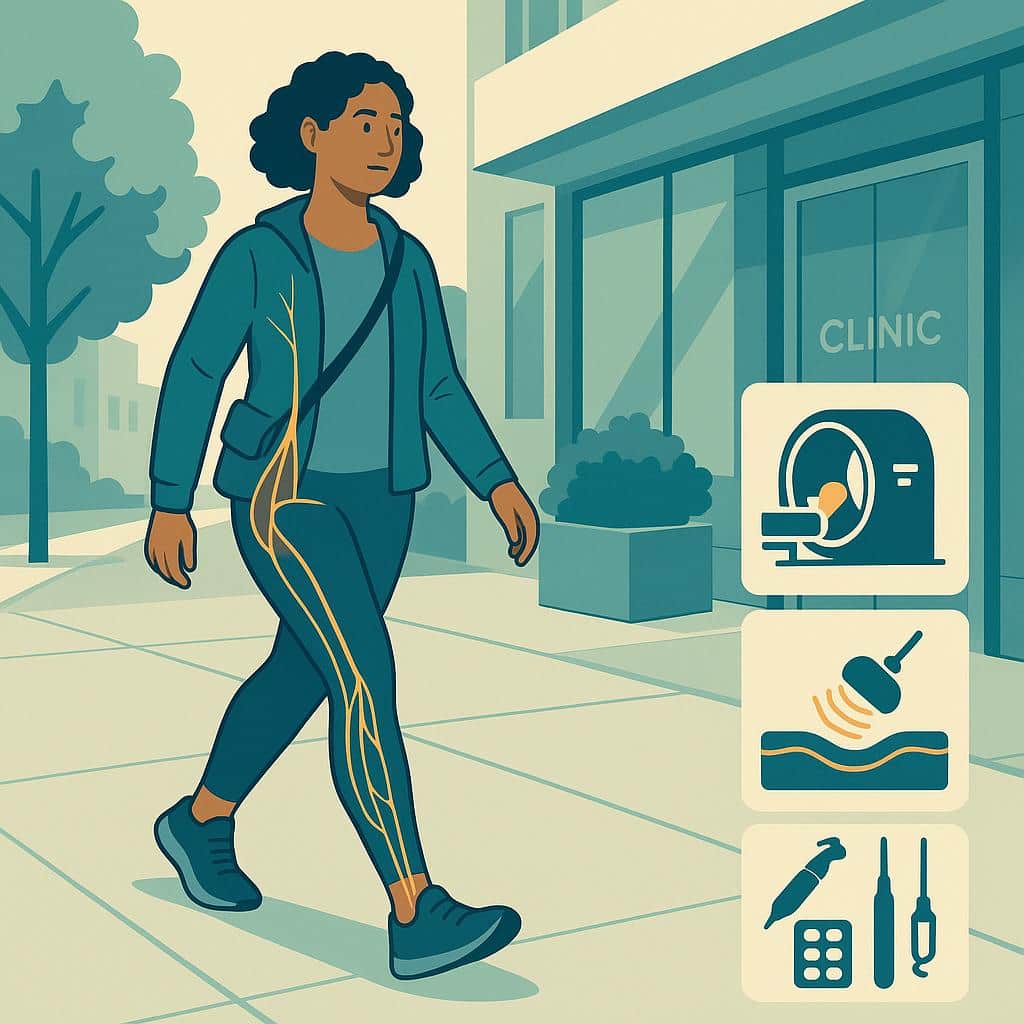
Yes, endometriosis can cause sciatica-like symptoms and leg pain in some patients by growing in or near the sciatic nerve or causing inflammation and scarring that create nerve pressure. Pain may worsen before or during a period, but it doesn’t have to be cyclical.
When should I see an endometriosis specialist for leg pain?
It’s worth considering an endometriosis specialist if leg pain keeps coming back, is disabling, follows a monthly pattern, or flares with pelvic symptoms. Concern is also higher if sciatica treatments haven’t found a clear cause or brought meaningful improvement.
How can I tell if my pain is nerve-related?
Burning, electric, sharp, or shooting pain is often more consistent with nerve-related pain than cramping or pressure. Many people describe it as traveling from the pelvis into the hip, buttock, groin, or down a leg, or as tingling, numbness, or sensitivity to touch.
Can adenomyosis cause leg pain, or is it only endometriosis?
Both adenomyosis and endometriosis can contribute to leg pain. With adenomyosis, intense uterine cramping and pelvic pressure can send pain into the hips, thighs, or legs, often alongside pelvic floor muscle tightening that amplifies symptoms.
Further reading
Sciatic Nerve Endometriosis: Diagnosis and Treatment
Sciatic nerve endometriosis explained: key symptoms, how it's diagnosed (exam, MRI), and effective treatments including medication, PT, and surgical excision.
What Else Could It Be? Ruling Out Other Causes
Explore essential insights on endometriosis and other causes of pelvic pain. Learn about differential diagnoses and effective treatment options.
Different Types of Endometriosis Pain and What Helps
Learn how endometriosis pain can feel, what may drive each pattern, and which assessment and treatment options to discuss with your doctor.