
Deep Disease
What is deep infiltrating endometriosis (DIE) and how is it treated?
The short answer
Deep infiltrating endometriosis (DIE) grows deeper into tissue and can affect organs like the bowel or bladder. Treatment depends on its location and effects; when surgery is appropriate, carefully removing the disease at its roots is the gold-standard approach.
Deep infiltrating endometriosis (DIE) is endometriosis that grows deeper into tissue, often described as more than ~5 mm below the surface. It commonly involves structures like the uterosacral ligaments, rectovaginal space, bowel, bladder, or ureters. Because it can inflame, scar, tether, or even narrow or obstruct nearby organs, DIE may cause non-gynecologic symptoms such as bowel or urinary pain, painful sex, nerve-type pelvic pain, or symptoms that don’t match a routine pelvic exam.
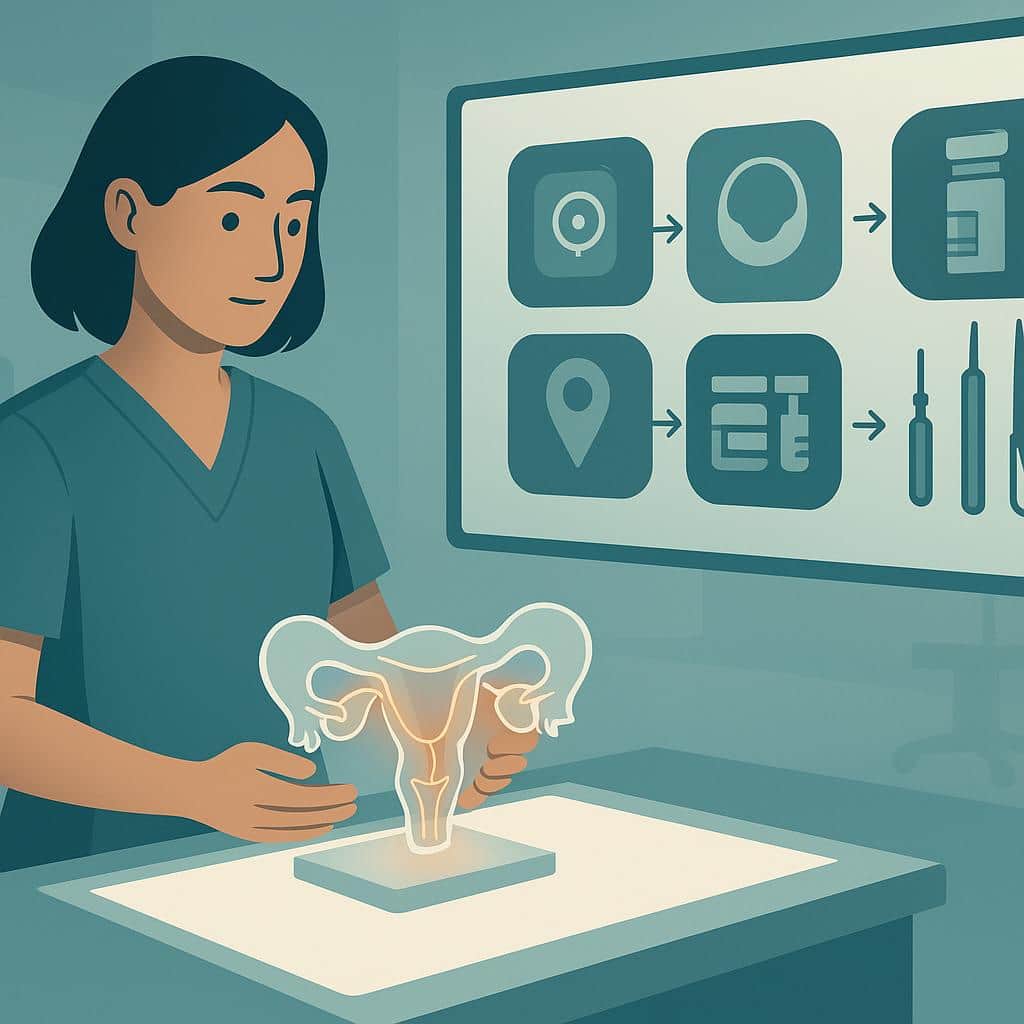
Treatment depends on where the disease is and what it’s affecting, but DIE is the subtype most likely to require specialized surgical planning. When surgery is appropriate, meticulous excision (removing disease at its roots rather than burning the surface) is the gold-standard approach for durable symptom relief and addressing organ involvement. In complex cases, this can include careful work around the bowel, bladder, and ureters. Our team focuses on advanced, precision excision, often using robotic technology, with a tailored plan that prioritizes safety, completeness, and your goals, whether that’s pain relief, fertility, or protecting organ function.
Because DIE can be missed on basic exams and even normal imaging, evaluation often requires a higher index of suspicion and the right strategy for mapping disease before any procedure. If DIE sounds like it could explain your symptoms, explore our detailed resources on deep disease and excision, or reach out to schedule a consultation so we can review your history, imaging, and next steps together.
Where to go from here
Understand it, compare it with what you're feeling, then talk it through with us.
Step 1 · Understand
Understand the condition
Step 2 · Compare
Symptoms it can relate to
Step 3 · Speak with Us
Struggling with Deep Endometriosis?
Deep infiltrating endometriosis can cause complex symptoms beyond the usual pain. Our specialists tailor treatments to target deep tissue involvement and improve your quality of life.
Questions people ask next
All deep disease questionsWhat surgery treats deep infiltrating endometriosis (DIE)?
The primary surgery for deep infiltrating endometriosis (DIE) is laparoscopic excision, sometimes with robotic assistance, to remove deep nodules. The goal is thorough removal while protecting nearby organs and pelvic nerves whenever possible.
Can medication alone treat deep infiltrating endometriosis?
Medication alone may reduce pain and bleeding-related symptoms from deep infiltrating endometriosis, but it does not remove deep lesions or scar tissue. Surgery is often part of definitive treatment if organs are affected or symptoms persist despite medication.
How is deep infiltrating endometriosis diagnosed without surgery?
Deep infiltrating endometriosis is evaluated without surgery using specialized imaging, mainly an expert-performed transvaginal ultrasound. Pelvic MRI can add detail about the depth and extent of suspected lesions and their relationship to nearby organs.
How does deep infiltrating endometriosis affect fertility?
Deep infiltrating endometriosis can make conception harder by distorting pelvic anatomy and limiting how freely the ovaries, tubes, and uterus function. Inflammation and scarring may reduce tubal mobility, even when the ovaries are still producing eggs.
Further reading
Deep Infiltrating Endometriosis: Current and Future Treatments
Deep infiltrating endometriosis: symptoms, causes, diagnosis and treatment. Medical therapy, ICG-guided surgery, stenting, pathology, and future outlook.
Why Multidisciplinary Care is Essential for Complex Endometriosis
Discover why multidisciplinary care is vital for managing complex endometriosis and enhancing quality of life. Learn more in our latest research overview.
What is Deep Infiltrating Endometriosis? Understanding the Basics
Discover deep infiltrating endometriosis, its symptoms, and diagnosis. Learn how it differs from other types of endometriosis for better management.