


You suspect you may have endometriosis or adenomyosis
Why don’t ER doctors take endometriosis seriously?
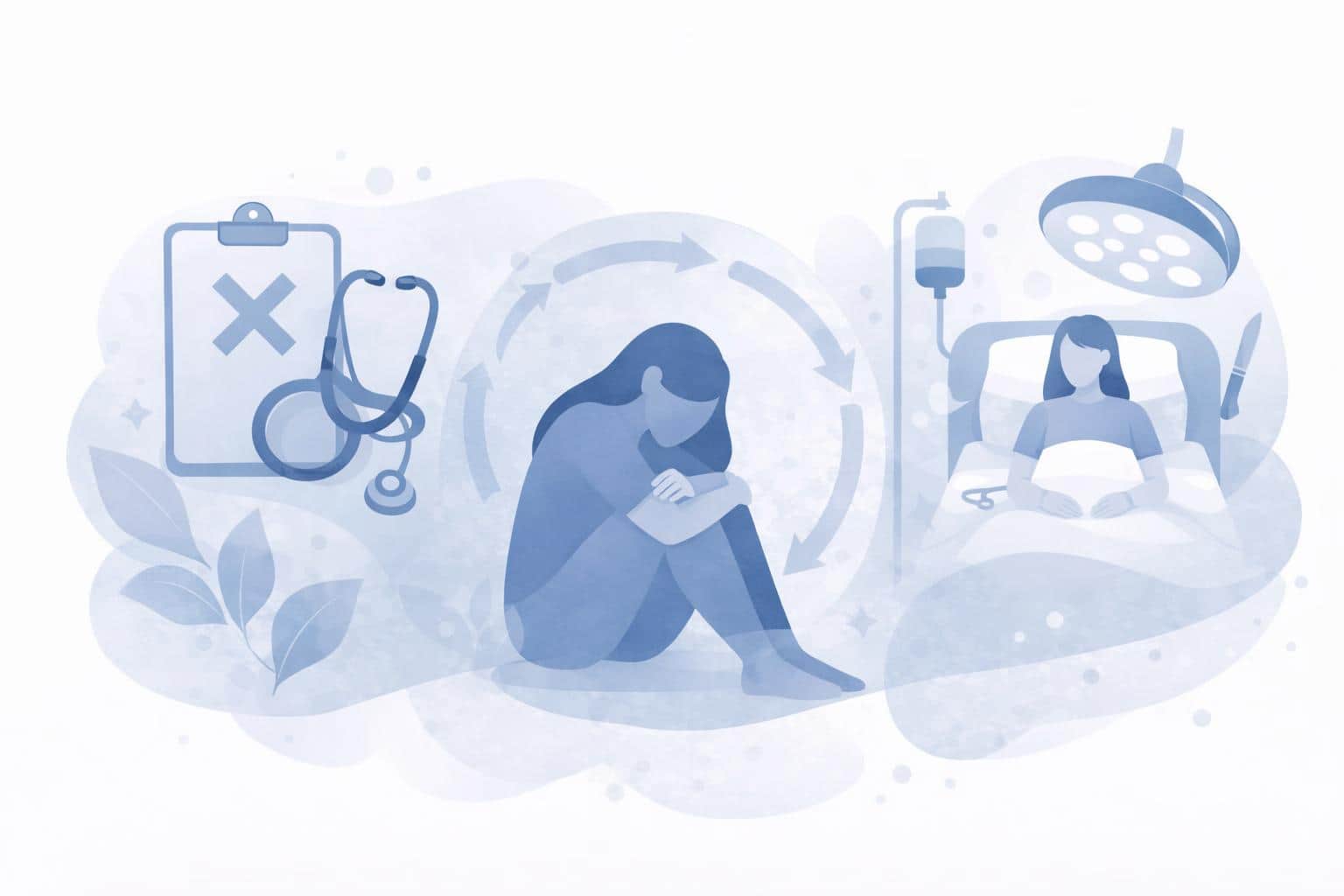
Emergency rooms are designed to triage for what’s immediately dangerous—things like appendicitis, ectopic pregnancy, ovarian torsion, severe infection, or bleeding—so the system tends to prioritize ruling out “can’t-miss” diagnoses over explaining a chronic, pattern-based condition like endometriosis. Endometriosis pain can be severe even when basic labs, CT, or ultrasound look “normal,” and in the ER that can mistakenly get translated into “nothing is wrong” instead of “we ruled out an emergency today.” Add rushed timelines, limited access to your full history, and symptom overlap with GI or urinary conditions, and it becomes easier for the real pattern to get missed.
There’s also a long-standing cultural problem: period pain and pelvic pain have been normalized, and many patients have been trained (and sometimes pressured) to downplay symptoms—especially if pain isn’t accompanied by an obvious finding on imaging. When no single clinician “owns” the longer diagnostic process, people can get bounced between explanations like IBS, UTIs, stress, or “chronic pelvic pain” without a clear next-step pathway.
In our care, we slow this down and rebuild the story from the ground up—tracking flare patterns, looking for endometriosis and adenomyosis but also for common look-alike or coexisting conditions that can amplify pain, and using expert interpretation of imaging when it’s appropriate. If you’ve had ER visits where you felt dismissed or left without a plan, reach out to our team for a comprehensive evaluation that’s built around diagnostic clarity, not just ruling out emergencies.
You deserve to be believed.
ER visits often rule out emergencies, not explain chronic endometriosis or adenomyosis pain—even when tests look “normal.” Our specialists can review your history, validate your symptoms, and build a clear plan for diagnosis and treatment.
Schedule a consultRelated Symptoms
Related Procedures
Learn More

What to Do When Your Endometriosis Concerns Are Dismissed
Feeling dismissed with your endometriosis concerns? Discover expert insights on navigating healthcare while seeking validation and appropriate care.

Why Is Endometriosis So Often Missed by Doctors?
Discover why endometriosis is frequently misdiagnosed, the causes of delays, and how to advocate for better care. Get informed today!

What Else Could It Be? Ruling Out Other Causes
Explore essential insights on endometriosis and other causes of pelvic pain. Learn about differential diagnoses and effective treatment options.
Are These Symptoms Endometriosis? Recognizing the Early Warnings
Learn how to identify early signs of endometriosis—crucial for timely diagnosis and treatment. Don't dismiss your symptoms!
Related Pages
Evaluation & Diagnosis
At the Lotus Endometriosis Institute, evaluation begins with listening. Our diagnostic process uncovers the true source of pain and related conditions often missed elsewhere.
Endometriosis & Adenomyosis Services
Explore comprehensive endometriosis and adenomyosis services, including advanced diagnosis, robotic excision surgery, and integrative care at Lotus Endometriosis Institute.