
Symptoms
Why is my period heaviest on days 2–3?
The short answer
It’s very common for period flow to peak on days 2–3, when the uterus often contracts most strongly and sheds its lining fastest. A heavy peak can still be a clue to an underlying condition, especially with large clots, dizziness, or significant pelvic pain.
It’s very common for menstrual flow to peak on days 2–3 because that’s often when the uterus is contracting most strongly and the lining is shedding fastest. Many people notice a lighter start, a heavy middle, then a taper, without that automatically meaning something is wrong. That said, a short heavy peak can still be a clue, especially if you’re soaking through protection quickly, passing large clots, feeling dizzy, or getting unusually wiped out.
When heavy bleeding clusters in the middle days and comes with significant cramps, pressure, or pelvic pain, we think about conditions that can drive heavier, more inflammatory periods, particularly adenomyosis (endometrial-like tissue within the uterine muscle) and sometimes endometriosis or fibroids. Adenomyosis, in particular, can make the uterus more tender and reactive on the days when bleeding is strongest.
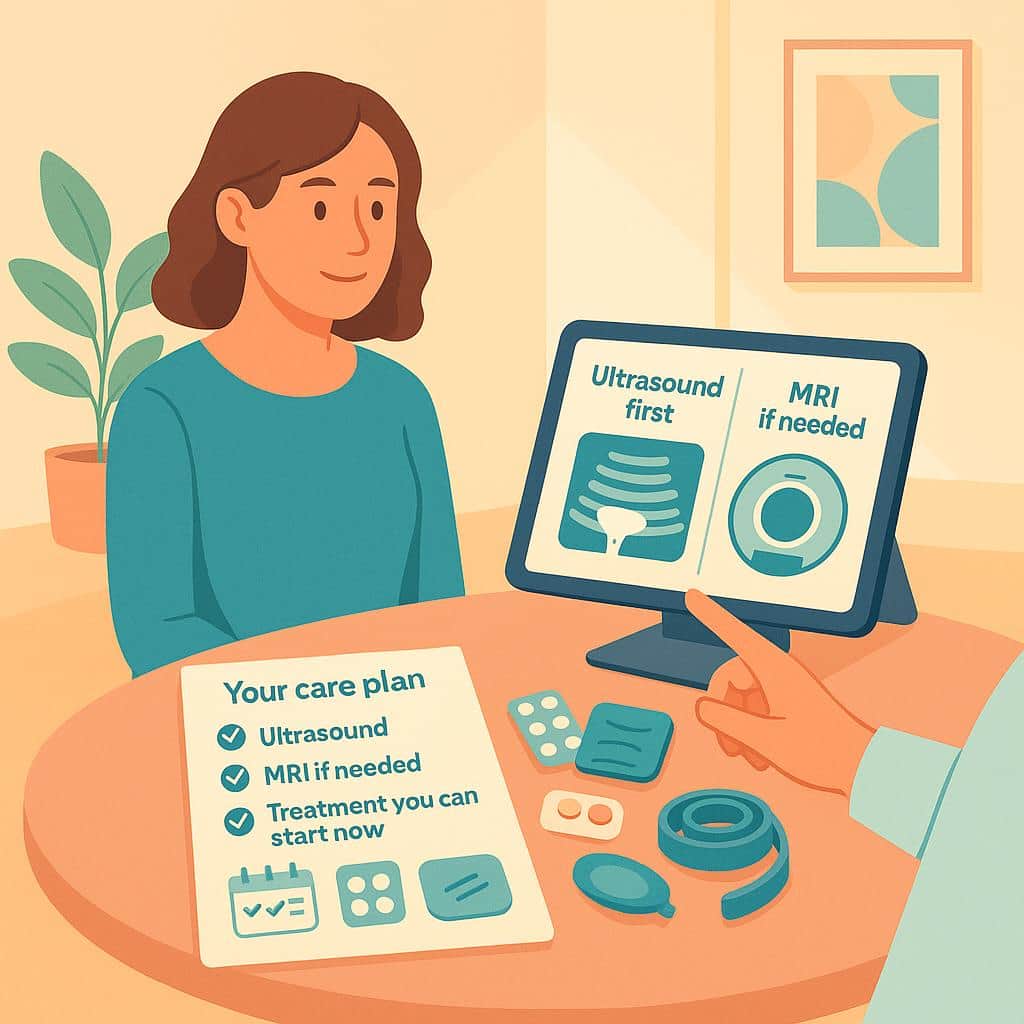
If this pattern is new for you, worsening over time, or affecting your daily life, our team can help you sort out what’s normal for you versus a sign of an underlying uterine or pelvic condition. A targeted history plus expertly interpreted ultrasound and, when needed, MRI can be very helpful in clarifying what’s driving the day-2/day-3 heaviness and building a plan that fits your goals.
Where to go from here
Understand it, compare it with what you're feeling, then talk it through with us.
Speak with Us
Heavy Mid-Period Bleeding? Let's Talk
It's common for flow to peak in the middle of your period, but if your bleeding is unusually heavy or painful, our specialists can help identify the cause and provide relief. Don’t suffer in silence—expert care is available for symptoms like yours.
Questions people ask next
All symptoms questionsHow do I know if my bleeding is too heavy?
Your flow may be heavier than expected if you change a pad or tampon every 1–2 hours, bleed longer than 7 days, pass large clots, or frequently bleed through clothes or bedding. Fatigue, weakness or dizziness can also be signs of low iron or anemia.
Why am I passing large blood clots during my period?
Large period clots usually mean bleeding is heavy enough for blood to pool and clot in the uterus before it exits. Some clotting can be normal, but frequent or large clots can signal abnormally heavy bleeding from causes such as adenomyosis or fibroids.
Are heavy periods always adenomyosis?
No, heavy periods can be a symptom of adenomyosis, but many people with heavy bleeding have a different underlying cause. Fibroids and other uterine conditions can also cause heavy bleeding and cramping, and it’s possible to have more than one issue at the same time.
Why can adenomyosis cause heavy menstrual bleeding?
Adenomyosis can cause heavy bleeding because tissue within the uterine muscle responds to monthly hormones, triggering swelling, bleeding and inflammation. The uterus may also enlarge, and muscle contractions can be disrupted, contributing to heavier or longer periods.
Further reading
Do My Symptoms Mean Adenomyosis or Endometriosis?
Discover the truth about endometriosis and adenomyosis symptoms. Understand how common they really are, and gain insights for effective advocacy.
Diffuse Adenomyosis Diagnosis and Treatment That Fit Your Goals
What diffuse adenomyosis means, how ultrasound and MRI guide diagnosis, and which treatments may fit your bleeding, pain, and fertility goals.
Why Endometriosis and Fibroids Often Show Up Together—And What That Means for You
Explore why endometriosis and fibroids often coexist, their symptoms, and what it means for your health. Get informed on your care options.