

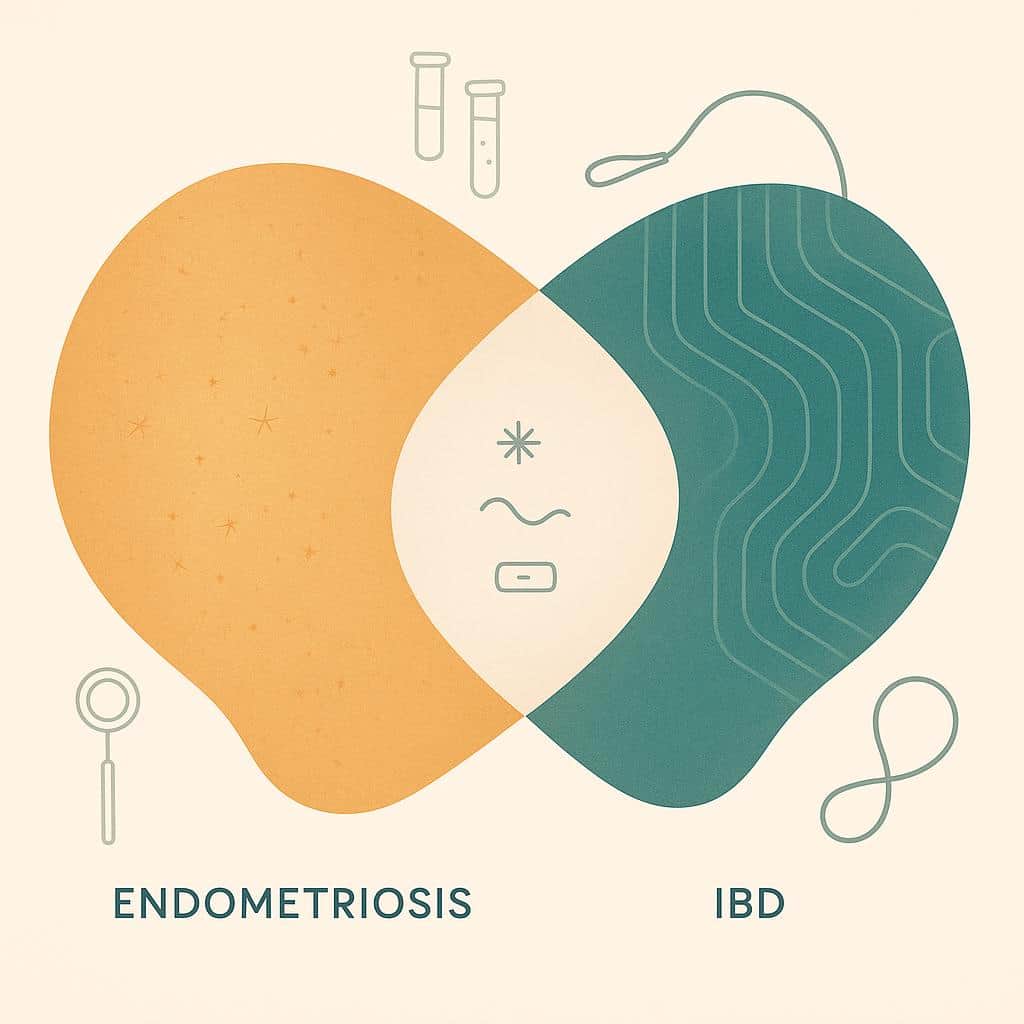
Endometriosis or Inflammatory Bowel Disease? The Key Differences
How endometriosis and inflammatory bowel disease differ and overlap. Symptoms, diagnostic challenges, epidemiology, treatment risks, and research gaps.
5 minute read
Read moreDiscover how Lotus can guide you toward lasting relief.
Explore why patients choose Lotus
Search expert-written answers, browse by topic, or find information based on where you are in your journey.
Explore All KnowledgeReach out and start your healing journey.
Schedule an AppointmentClarifies how irritable bowel syndrome (IBS) and inflammatory bowel disease (IBD) intersect with endometriosis—shared symptoms, key differences, diagnostic clues, comorbidity evidence, treatment risks, and when to seek gastroenterology care.
Irritable bowel syndrome (IBS) and inflammatory bowel disease (IBD) often overlap with endometriosis, creating similar symptoms such as bloating, cramping, diarrhea or constipation, and pelvic pain. IBS is a functional disorder without visible inflammation; IBD (Crohn’s disease and ulcerative colitis) is immune‑mediated inflammation that can cause rectal bleeding, weight loss, anemia, and nighttime diarrhea. Cyclical flares tied to menstruation can suggest endometriosis or Bowel Endometriosis, while continuous symptoms or red flags raise concern for IBD. Understanding these patterns helps prioritize testing and referrals to gastroenterology.
Expect practical guidance on distinguishing features, when fecal calprotectin, colonoscopy, or MRI enterography are useful, and how bowel‑focused care complements gynecologic treatment. Learn how medications for pain and hormones may affect the gut, risks of NSAIDs in IBD, and ways nutrition and the microbiome influence symptoms, with links to supportive strategies in Gut Health and targeted symptom care in GI Symptoms. The focus here is differentiating IBS/IBD from endometriosis and coordinating care; detailed management of endometriotic bowel lesions is covered in Bowel Endometriosis.
“Endo belly” is the common term patients use for the severe bloating and abdominal swelling that can happen with endometriosis. It’s often described as a belly that looks or feels suddenly distended—sometimes within hours—and may come and go in waves, frequently worsening around a period but not always. Importantly, this can mimic weight gain even when the underlying issue is swelling, fluid shifts, or gastrointestinal distension rather than true fat gain.
Endometriosis can irritate tissues in the pelvis and abdomen and can also affect (or “talk to”) the bowel, which helps explain why many people notice constipation, diarrhea, cramping, or a tight, pressured abdomen alongside pelvic pain. You can have significant digestive symptoms even when routine GI testing looks normal, because endometriosis often involves the outer surface or deeper layers around the bowel rather than the inner lining.
If endo belly is a major part of your symptom pattern—especially when it comes with painful bowel movements, cyclical flares, or persistent pelvic pain—our team can help you sort out what’s driving it and what treatment options are most likely to bring relief. Explore our educational resources, and if you’re ready, reach out to schedule a consultation so we can review your history and build a plan around your goals.
Yes and no. The evidence does support the idea that nutrition can influence pathways that matter in endometriosis—like inflammation, oxidative stress, hormone metabolism, and the microbiome—so diet can be a meaningful part of symptom support. What the research does not support (at least not yet) is a single, universally proven “endometriosis diet” that reliably treats the disease or works the same way for everyone.
Most of the strongest signals come from observational research, where higher overall diet quality and Mediterranean-style, anti-inflammatory patterns are associated with better reproductive health and lower likelihood of having endometriosis. That’s encouraging, but it isn’t the same as proof that changing your diet will prevent endometriosis, shrink lesions, or predictably improve pain or fertility for an individual. In our experience, nutrition tends to be most helpful when it’s tailored to your symptom pattern—especially if you have significant bloating, bowel symptoms, or IBS overlap.
If you’re trying to decide what’s worth your time, we recommend focusing on evidence-aligned, sustainable changes rather than long “forbidden food” lists or internet protocols that promise a cure. Our team integrates nutrition and lifestyle strategies into an overall endometriosis plan—so you’re not left experimenting endlessly, and you can evaluate what’s actually helping you.
Yes. Endometriosis can cause bloating even when you haven’t eaten, because the bloating isn’t always coming from food—it can come from inflammation, irritation, and tissue changes in the pelvis and abdomen. When endometriosis affects the bowel surface, bowel wall, or nearby structures, it can alter how the intestines move and expand, creating that swollen, distended “endo belly” feeling at any time.
Bloating that’s worse around your period or ovulation, comes with pelvic pain, constipation/diarrhea, cramping, or pain with bowel movements can be a clue that endometriosis (sometimes deeper disease) is contributing. It’s also common for GI workups like colonoscopy to look normal if the disease is on the outside of the bowel rather than the inner lining.
If this sounds familiar, our team can help you sort out whether your symptoms fit endometriosis, adenomyosis, bowel involvement, or overlapping conditions—and what next steps make sense, including thoughtful imaging review and, when appropriate, minimally invasive excision surgery. If you’re ready, reach out to schedule a consultation so we can map your symptoms and build a plan aimed at lasting relief.
Yes. Endometriosis can cause pain with bowel movements—often described as deep rectal pain, cramping, or pressure—especially around your period. This can happen when endometriosis involves the bowel (most commonly the rectum/sigmoid) or when inflammatory lesions and scar tissue irritate nearby pelvic structures, even without endometriosis growing directly into the bowel wall.
Because bowel symptoms can look a lot like IBS or even overlap with inflammatory bowel disease, we pay close attention to patterns like cyclical worsening, rectal bleeding, constipation/diarrhea swings, bloating, and whether pain persists despite typical GI approaches. Imaging such as ultrasound or MRI can help map disease for surgical planning, but normal imaging doesn’t reliably rule endometriosis out.
If bowel movements are a consistent trigger for your pelvic pain, our team can evaluate the full picture—endometriosis, bowel involvement, and common “neighbor” conditions that can keep symptoms going. Explore our resources on bowel symptoms and reach out to schedule a consultation so we can tailor a plan around your specific symptom pattern and goals.
Bowel endometriosis can cause digestive symptoms that often look like IBS and may fluctuate with your menstrual cycle. Common patterns include lower abdominal or pelvic pain, significant bloating (“endo belly”), constipation and/or diarrhea, nausea (sometimes vomiting), and pain with bowel movements—often worse during periods.
Some people also notice rectal bleeding, especially around menstruation, along with broader endometriosis symptoms such as chronic pelvic pain, painful sex, urinary discomfort, fatigue, or a heavy “pressure” feeling in the pelvis. Because bowel symptoms can come from inflammatory lesions near the bowel even without deep implants, imaging may help map disease but can’t reliably rule it out. If your symptoms sound cyclical or you’ve been treated for GI issues without clear answers, our team can help evaluate the full picture and discuss whether minimally invasive excision surgery is appropriate for both diagnosis and long-term relief.
Yes—IBS can cause pelvic pain that feels very similar to endometriosis, especially when bowel cramping, bloating, constipation/diarrhea swings, and pelvic floor muscle guarding are part of the picture. In real life, the symptom overlap is so strong that symptoms alone often can’t reliably separate “IBS pain” from endometriosis-related pain, particularly when pain flares around your cycle or alongside deep pelvic tenderness.
It’s also common for IBS-like bowel sensitivity and endometriosis to coexist. Endometriosis can involve the bowel itself in some patients, and even when it doesn’t, pelvic organs share nerve pathways—so irritation in the bowel can amplify pelvic pain signals and vice versa. If your pain pattern includes significant bowel symptoms (or persists despite endometriosis treatment), our team typically looks for the full set of contributors—endometriosis, adenomyosis, bladder pain syndromes, and GI conditions—so your plan addresses what’s actually driving your symptoms.
If you’re trying to sort out what’s behind your pelvic pain, explore our educational resources on bowel symptoms and overlapping conditions, and consider reaching out to schedule a consultation so we can review your history, imaging, and symptom pattern in a more targeted way.
Yes—adenomyosis can be associated with bowel symptoms, even though adenomyosis itself stays within the muscular wall of the uterus and does not grow on the bowel. When the uterus is enlarged, tender, and inflamed, it can contribute to pelvic pressure, cramping, and pain signaling that “spills over” to nearby organs, including the rectum and lower bowel—especially around your period.
Just as importantly, bowel symptoms can also come from overlapping conditions that commonly travel with adenomyosis, like endometriosis (which can involve the bowel) or IBS-like bowel sensitivity. Because symptoms can look very similar, we focus on the whole picture—timing with your cycle, pain patterns, bleeding history, and targeted evaluation—to understand what’s actually driving your bowel distress and build a plan that addresses the real source(s). If you’re dealing with cyclical constipation/diarrhea changes, painful bowel movements, or bloating alongside heavy or painful periods, reach out to schedule a consultation so our team can help you sort out adenomyosis versus common “neighbors” that may need different treatment.
Yes—adenomyosis can be associated with diarrhea for some patients, especially around the menstrual cycle. Even though adenomyosis stays within the uterine muscle (it doesn’t spread onto the bowel), the inflammation, cramping, and pelvic nerve cross-talk it creates can “spill over” and trigger IBS-like bowel urgency or loose stools.
That said, diarrhea isn’t specific to adenomyosis, and bowel symptoms are often a clue that more than one issue may be contributing—most commonly endometriosis (which can involve tissue outside the uterus) and/or bowel sensitivity patterns that overlap with pelvic pain conditions. If your diarrhea is cyclical, paired with heavy bleeding or severe cramping, or persists after other treatments, our team can help evaluate the full picture—uterus, pelvis, and bowel—so the treatment plan matches the true drivers of your symptoms. If you’d like, you can reach out to schedule a consultation with us to review your history and imaging and map out next steps.
How endometriosis and inflammatory bowel disease differ and overlap. Symptoms, diagnostic challenges, epidemiology, treatment risks, and research gaps.
Lotus Endometriosis Institute provides California-based surgical evaluation and advanced excision care for patients with suspected endometriosis, adenomyosis, complex pelvic pain, and related conditions.
Many patients contact us from outside California to learn whether traveling for in-person evaluation and possible surgery may be appropriate.
2121 Santa Monica Blvd, Santa Monica, CA 90404
8am - 5pm
Monday - Friday
154 Traffic Way, Arroyo Grande, CA 93420