
Diagnosis
How common is adenomyosis?
The short answer
Adenomyosis is often estimated to affect roughly 20–35% of women of reproductive age, and we believe the true number is likely higher. Rates depend on who is studied and how it is diagnosed, with higher rates in patients evaluated for related symptoms.
Adenomyosis is more common than many people are told. Among women of reproductive age, it’s often estimated to affect roughly 20–35%, and we believe the true number is likely higher because symptoms can be nonspecific and definitive confirmation has historically required examining uterine tissue after surgery.
Prevalence also depends on who’s being studied and how adenomyosis is diagnosed. Among patients being evaluated for symptoms like heavy bleeding, painful periods, pelvic pain, or fertility challenges, adenomyosis is found much more often, sometimes in about one in three patients or more. If your symptoms fit the pattern, exploring a focused evaluation with our team (often starting with high-quality ultrasound and, when needed, MRI) can help clarify whether adenomyosis may be contributing and what options make sense for your goals.
Where to go from here
Understand it, compare it with what you're feeling, then talk it through with us.
Speak with Us
Worried About Adenomyosis?
Adenomyosis affects many women more than you might expect. Our specialists can help clarify your symptoms and guide you toward a precise diagnosis and care plan.
Questions people ask next
All diagnosis questionsCan adenomyosis be diagnosed in young women?
Yes, adenomyosis can be suspected in adolescents and young adults, including those who haven’t been pregnant, especially when symptoms and imaging fit the pattern. Imaging typically supports a likely or suspected diagnosis rather than a definitive one, and some cases can be missed.
Which adenomyosis symptoms most affect daily life?
Heavy or prolonged periods and severe period pain usually cause the biggest disruption to daily life with adenomyosis. Bleeding can affect work, school, travel, and sleep, while fatigue, pelvic pressure, and pain with sex for some people can add to the burden.
Can you have both endometriosis and adenomyosis?
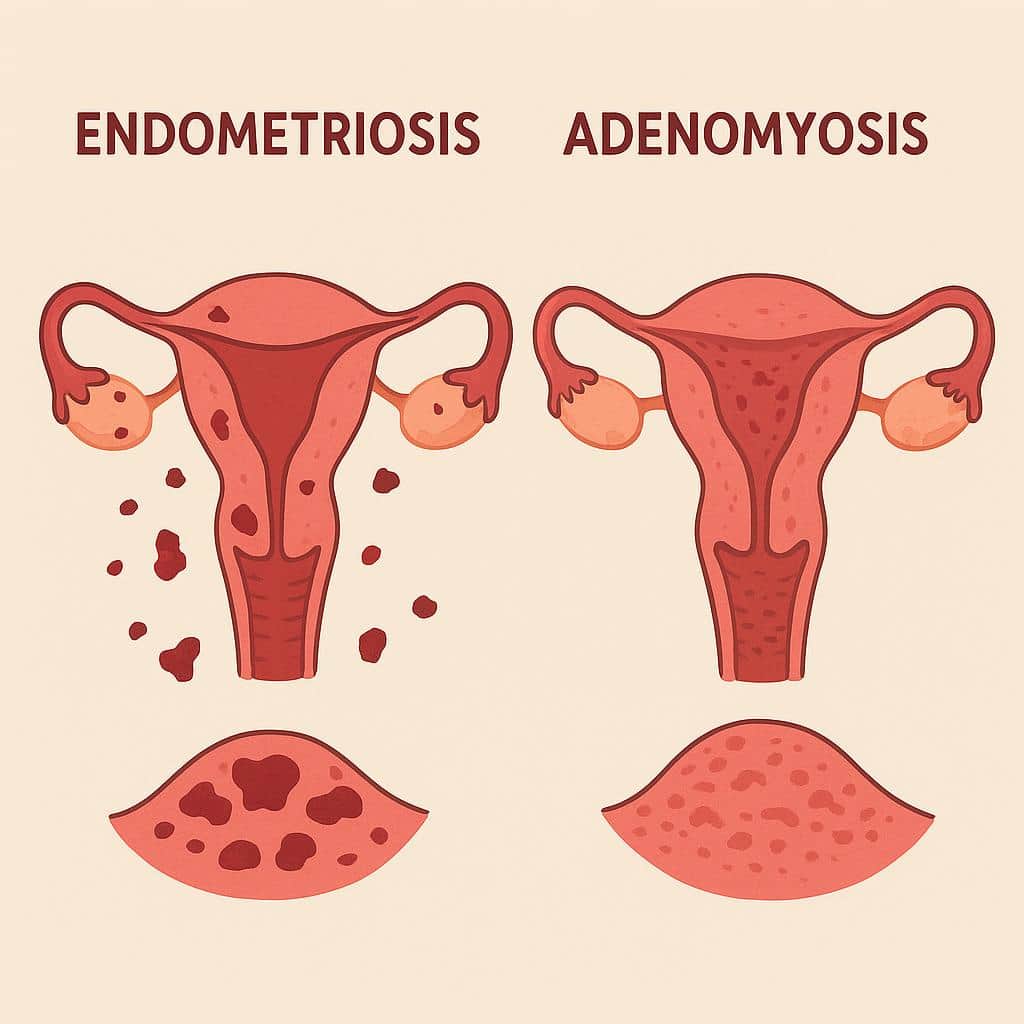
Yes, many patients can have both endometriosis and adenomyosis at the same time. Their symptoms may blend together, and having both can affect treatment planning because endometriosis is outside the uterus while adenomyosis is within the uterine muscle.
Can adenomyosis cause irregular periods?
Yes, adenomyosis can contribute to irregular periods, including heavier flow, prolonged periods, spotting between periods, or less predictable cycles. Irregular bleeding is not specific to adenomyosis, and fibroids or endometriosis can overlap.
Further reading
Do My Symptoms Mean Adenomyosis or Endometriosis?
Discover the truth about endometriosis and adenomyosis symptoms. Understand how common they really are, and gain insights for effective advocacy.
Adenomyosis Basics: What Is It and Why Is It Overlooked?
Discover what adenomyosis is, why it's often overlooked, and treatment options. Understand its symptoms and relation to endometriosis.
Endometriosis and Adenomyosis: How They Drive Pelvic Pain
Compare endometriosis and adenomyosis: similarities, differences in location and prevalence, diagnosis methods, and treatment options for pelvic pain.