

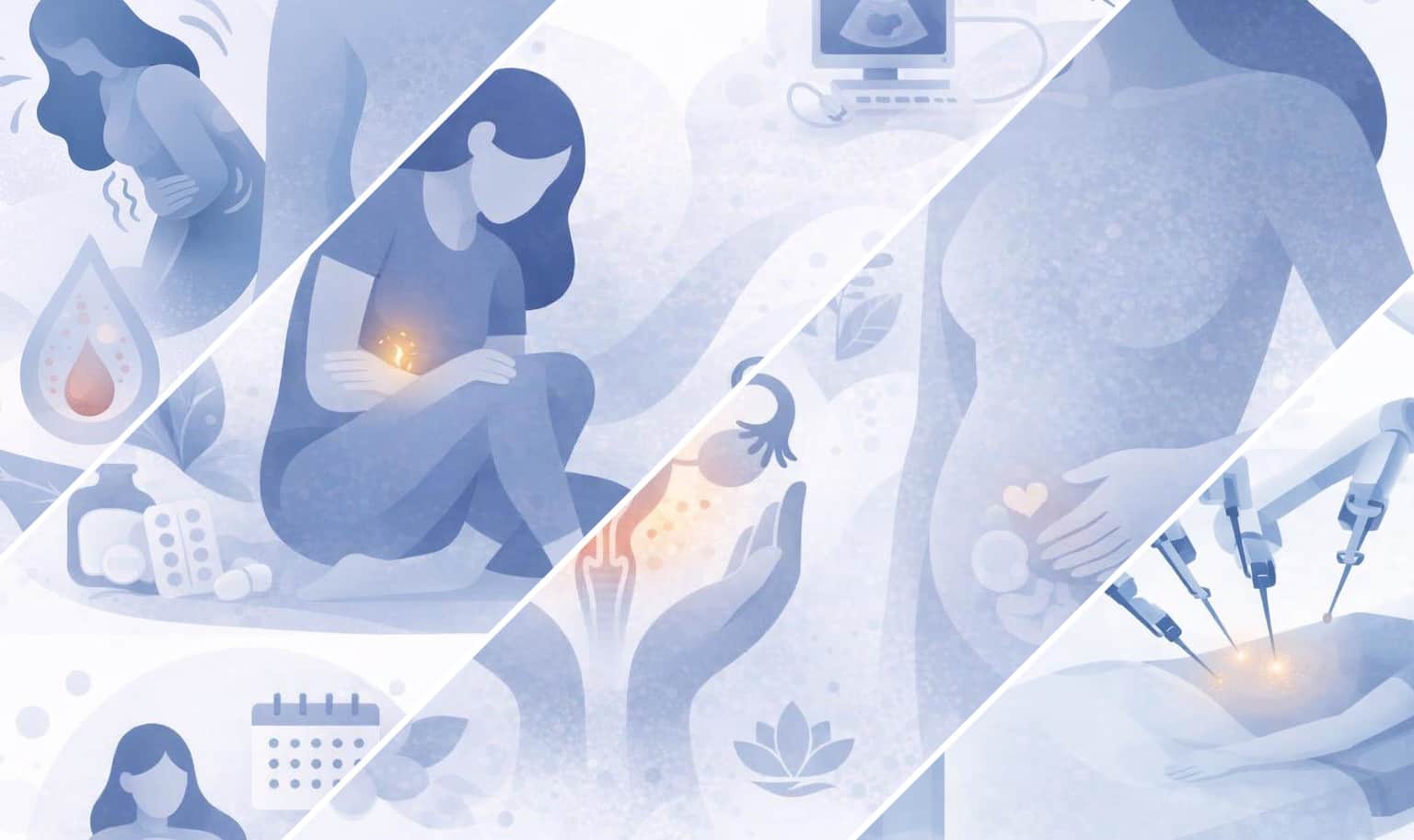
You suspect you may have endometriosis or adenomyosis
How does estrogen affect the endometrium?
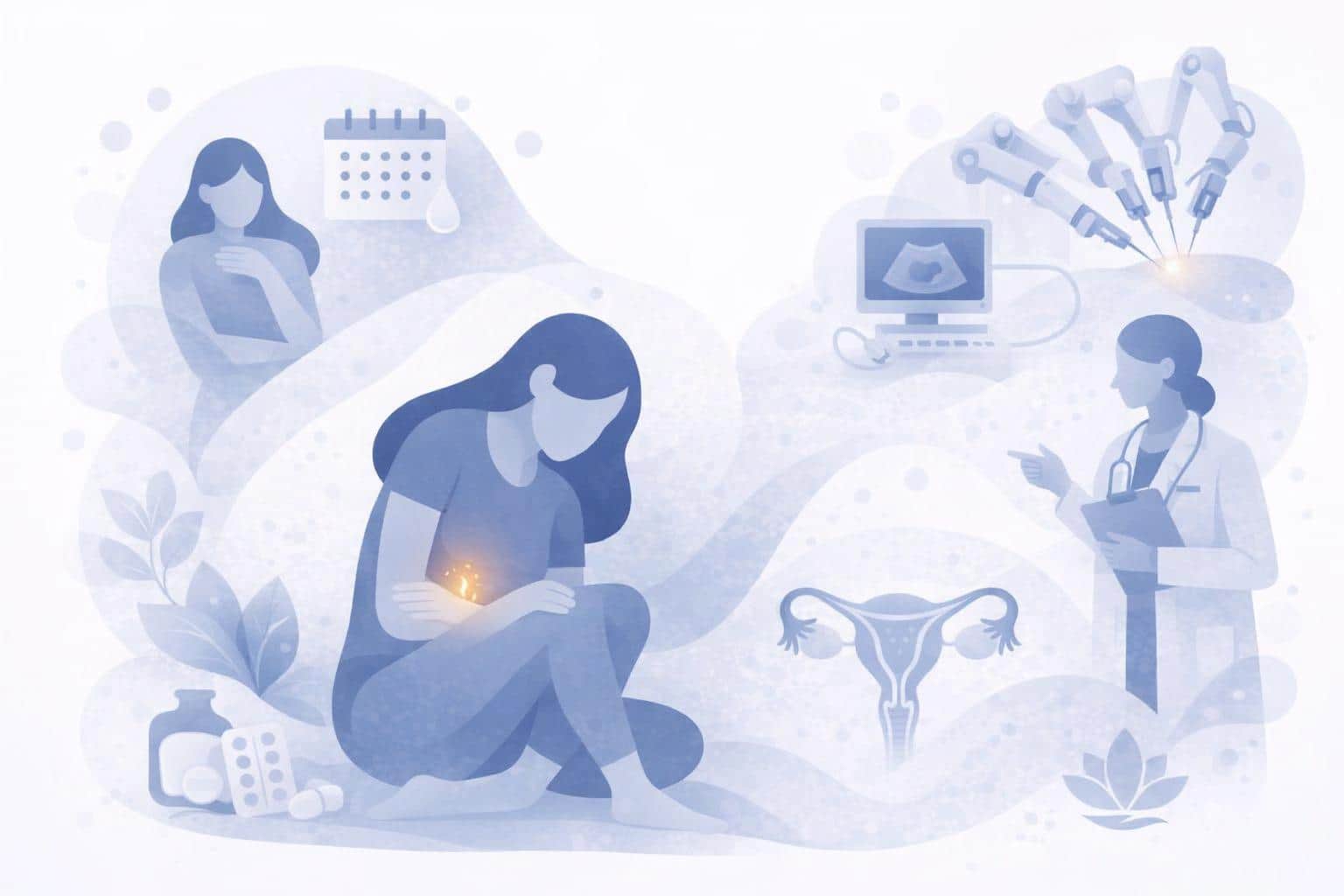
Estrogen is one of the main hormones that drives endometrial growth. In the first half of the menstrual cycle, rising estrogen signals the endometrium to thicken and rebuild after a period, preparing the uterus for a possible pregnancy. It also influences the local immune and inflammatory environment in the uterus, which is part of why hormonal shifts can change bleeding patterns and pain.
When estrogen’s growth signals are strong—and progesterone’s “calming” effect is weaker than expected (often described as progesterone resistance)—the endometrium can behave in a more persistently inflamed, reactive way. This hormone–inflammation pattern is especially relevant in estrogen-dependent conditions like adenomyosis and endometriosis, where tissue similar to the endometrium can contribute to ongoing symptoms. If you’re trying to make sense of heavy bleeding, severe cramping, or cycle-linked pelvic pain, our team can help you connect the hormonal biology to what you’re feeling and review next steps for diagnosis and treatment.
Get answers about estrogen and pain
If hormones are affecting your bleeding or pelvic pain, you don’t have to guess why. Our endometriosis & adenomyosis specialists can assess hormone-related symptoms and tailor a treatment plan that fits your cycle and goals.
Schedule a consultRelated Symptoms
Related Procedures
Learn More
Adenomyosis Basics: What Is It and Why Is It Overlooked?
Discover what adenomyosis is, why it's often overlooked, and treatment options. Understand its symptoms and relation to endometriosis.
Adenomyosis vs. Endometriosis: Are They Different or Related?
Explore the key differences between adenomyosis and endometriosis, their symptoms, overlap, and treatment options for better fertility outcomes.
Treating Adenomyosis: From IUDs to Surgery Explained
Explore adenomyosis treatment methods including IUDs and surgeries. Learn which approach is best for pain, bleeding, and fertility.
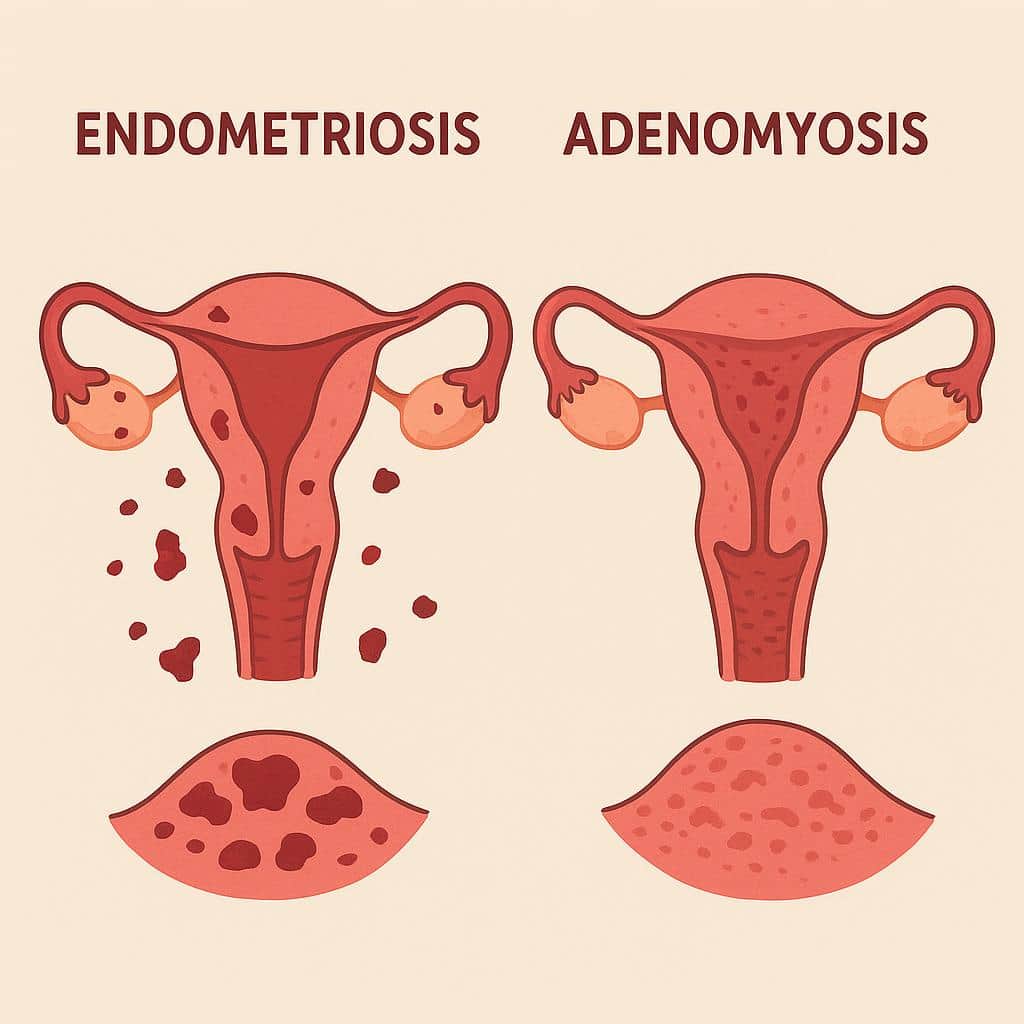
Endometriosis and Adenomyosis: How They Drive Pelvic Pain
Compare endometriosis and adenomyosis: similarities, differences in location and prevalence, diagnosis methods, and treatment options for pelvic pain.
Related Pages
Endometriosis
Endometriosis isn't just one disease — it's many. Our team tailors our approach to your unique condition, using evidence-based integrative support and world-class excision for lasting results.
Adenomyosis
Often missed or not considered, adenomyosis causes heavy bleeding, pain, and fertility challenges. Here’s how we diagnose and treat it.
Evaluation & Diagnosis
At the Lotus Endometriosis Institute, evaluation begins with listening. Our diagnostic process uncovers the true source of pain and related conditions often missed elsewhere.