Treatment Challenges
How often do endometriosis or adenomyosis symptoms recur after treatment?
The short answer
How often symptoms recur depends on the condition, how completely it was treated, and the biology driving symptoms. Endometriosis symptoms are more likely to return if disease is not fully removed, while adenomyosis symptoms can return after uterus-sparing treatment.
Recurrence after treatment depends on whether endometriosis or adenomyosis was treated, how completely the disease was addressed, and the underlying biology driving your symptoms. In endometriosis, symptoms are more likely to return when endometriomas are present, when surgery removes only what’s easy to see rather than fully excising disease, or when inflammation and hormonal drivers aren’t addressed after surgery.
With adenomyosis, symptoms can recur after uterus-sparing approaches because the condition involves the uterine muscle itself, which can continue to generate pain or heavy bleeding over time. We focus on thorough excision when surgery is appropriate and build a long-term plan that supports symptom control after treatment. If you’re concerned about recurrence, we can review your prior records, imaging, and goals to estimate your personal risk and outline next-step options in a consultation.
Where to go from here
Understand it, compare it with what you're feeling, then talk it through with us.
Compare
Symptoms it can relate to
Speak with Us
Worried About Symptom Recurrence?
Our specialists understand the challenges of persistent endometriosis and adenomyosis symptoms. We tailor advanced treatments to target underlying causes and improve your long-term well-being.
Questions people ask next
All treatment challenges questionsWhat does recurrence mean after endometriosis treatment?
Recurrence after endometriosis treatment can mean symptoms returning, lesions regrowing, or new lesions developing. It’s possible to have symptoms without clear lesion regrowth, and it’s also possible to have lesions without the same level of symptoms.
How can I lower the risk of endometriosis symptoms returning after surgery?
If pregnancy isn’t your goal right away, hormonal suppression after surgery can help reduce the chance of endometriosis symptoms returning. Pelvic floor physical therapy, gradual strength rebuilding, sleep, stress regulation, and anti-inflammatory eating can support recovery.
What if my pain returns after endometriosis surgery?
Pain returning after endometriosis surgery doesn’t automatically mean surgery failed. Endometriosis left behind, new lesions or another condition can cause pain, and re-evaluation may guide medical management, pelvic floor treatment or a surgical second-look when appropriate.
Do adenomyosis symptoms improve after menopause or return after treatment?
Adenomyosis symptoms often improve after natural menopause as estrogen declines, and adenomyosis does not come back after hysterectomy because the uterus is removed. Persistent or returning pelvic pain may reflect other conditions or muscular pain patterns.
Further reading
Reducing Your Risk of Endometriosis Recurrence
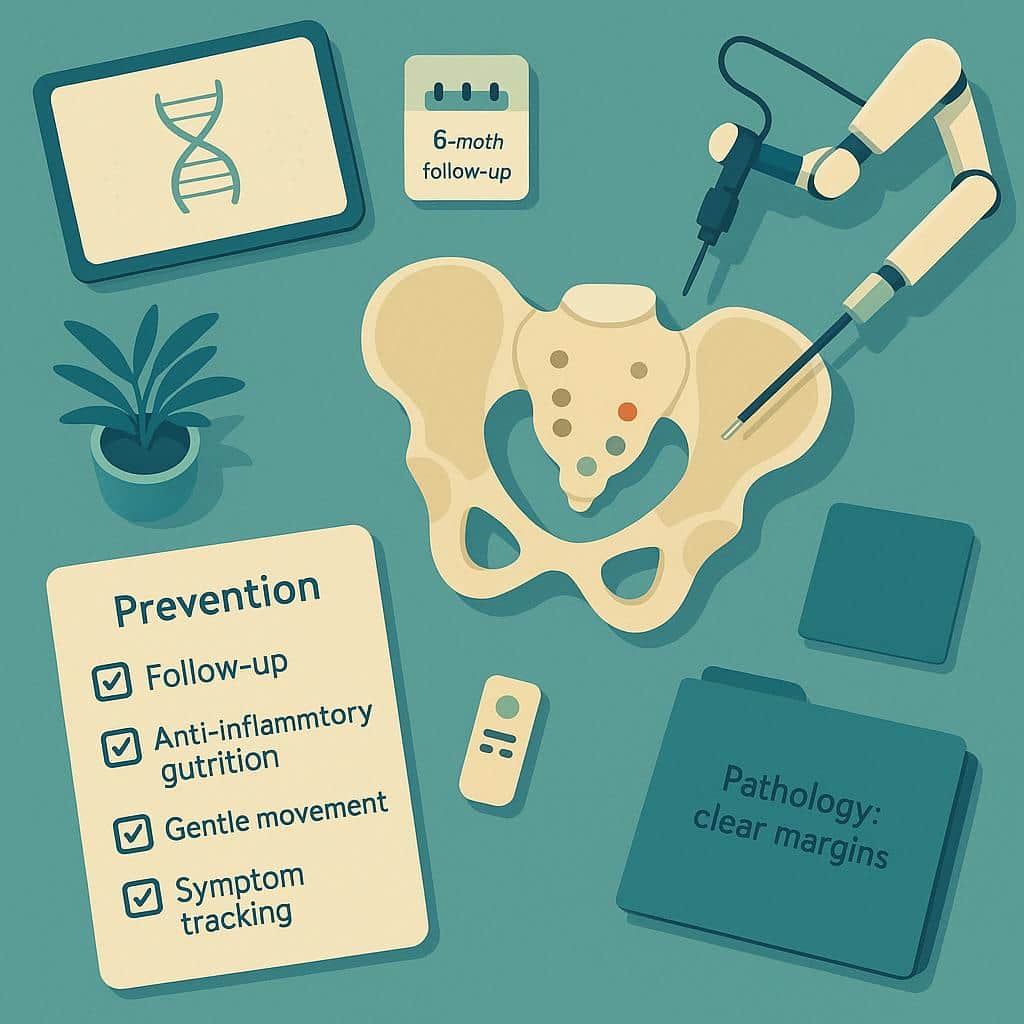
Learn why endometriosis recurs (incomplete excision, hormonal, immune, toxin and molecular factors) and how precise robotic surgery and 3D optics can reduce risk.
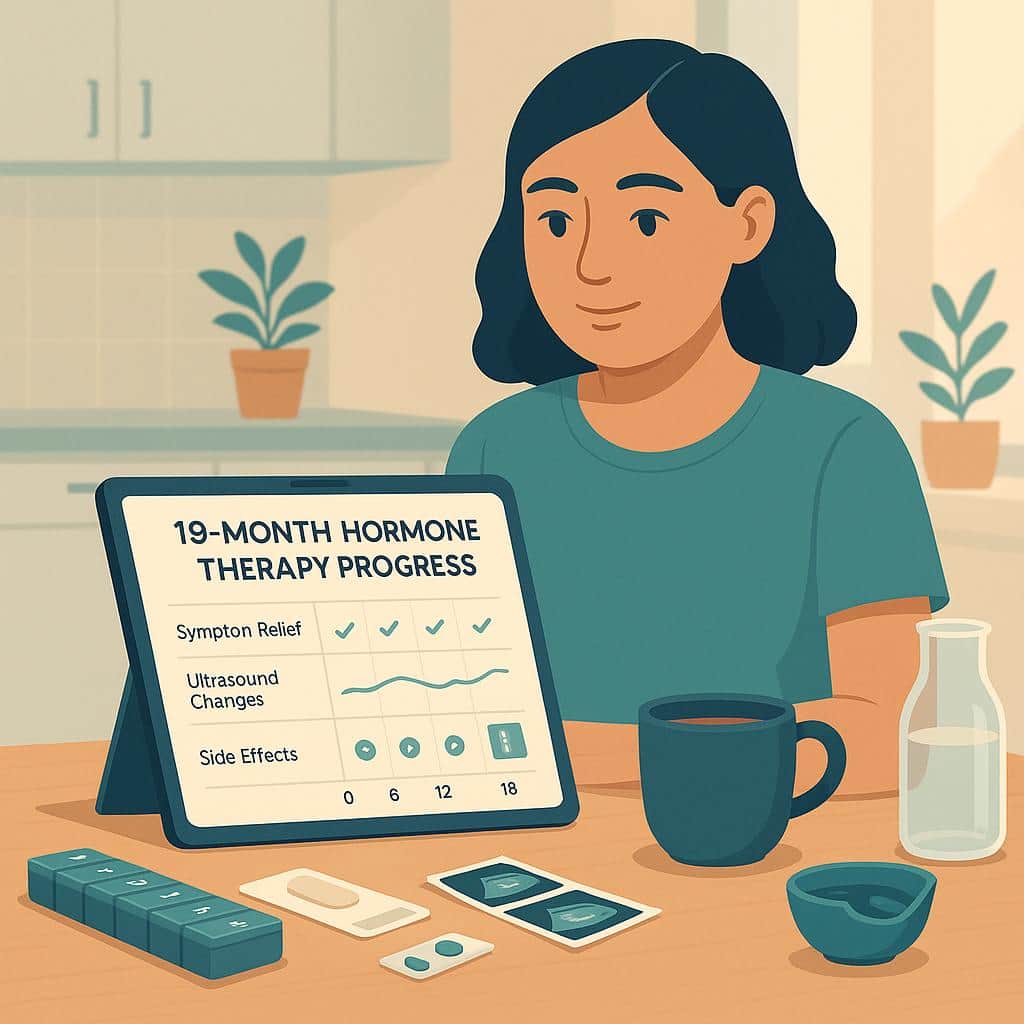
Can Hormone Treatment Calm Adenomyosis Symptoms Over Time? What an 18 Month Follow Up Study Found
We break down an 18‑month follow‑up of hormone therapy for adenomyosis: who was studied, symptom trends, ultrasound changes, side effects, and key limitations.
What Now? Your Post‑Endometriosis Surgery Pain Investigation Plan
Discover an investigation plan for post-surgery pain after endometriosis. Learn effective tracking methods to communicate with your care team.