General
What is tried first for endometriosis pain, and how is it chosen?
The short answer
Many patients start with hormonal suppression, such as continuous combined hormonal contraception, a progestin-only medication, or a levonorgestrel IUD. The choice depends on pain, bleeding goals, migraine history, clot risk, prior hormone side effects, and fertility timing.
Many patients start with hormonal suppression to reduce the cycle-driven inflammation and bleeding that can fuel endometriosis symptoms. Common first-line options include continuous combined hormonal contraception, a progestin-only medication, or a levonorgestrel IUD. The choice depends on whether your main problem is pain, heavy bleeding, or both.
The best first step is tailored to you: we consider your bleeding goals, migraine history, clot risk factors, prior side effects with hormones, and whether you’re trying to conceive now or planning fertility timing. If symptoms persist or the picture is unclear, our team can help clarify whether endometriosis, adenomyosis, or another pelvic pain condition is most likely and map out the next steps. Because imaging and symptoms alone can be misleading, definitive diagnosis is made by direct visualization and tissue confirmation during minimally invasive surgery. We can discuss when that becomes appropriate in your situation.
Where to go from here
Understand it, compare it with what you're feeling, then talk it through with us.
Step 2 · Compare
Symptoms it can relate to
Step 3 · Speak with Us
Find Your Best Pain Relief
Our specialists tailor hormonal treatments to your unique needs, considering pain, bleeding, and personal health history. Let us help you find the right first step to manage your endometriosis pain effectively.
Questions people ask next
All general questionsDo hormones or birth control treat endometriosis?
Hormonal birth control and other hormone therapies can reduce endometriosis symptoms, but they usually don’t treat the disease itself. They don’t remove endometriosis lesions or restore normal anatomy, so pain can return when you stop them.
What medications help endometriosis and adenomyosis?
For endometriosis and adenomyosis, NSAIDs like ibuprofen can help pain, and hormonal medications can sometimes lessen bleeding and pain. NSAIDs don’t treat the underlying disease, and hormonal relief varies and typically lasts only while you’re on medication.
Why don’t hormones help my endometriosis pain?
Hormones may not help your endometriosis pain because they mainly reduce cycle-driven inflammation and bleeding, not every source of pain. Scarring, nerve growth, a sensitized nervous system or pelvic floor problems may keep pain going even when periods are suppressed.
Further reading
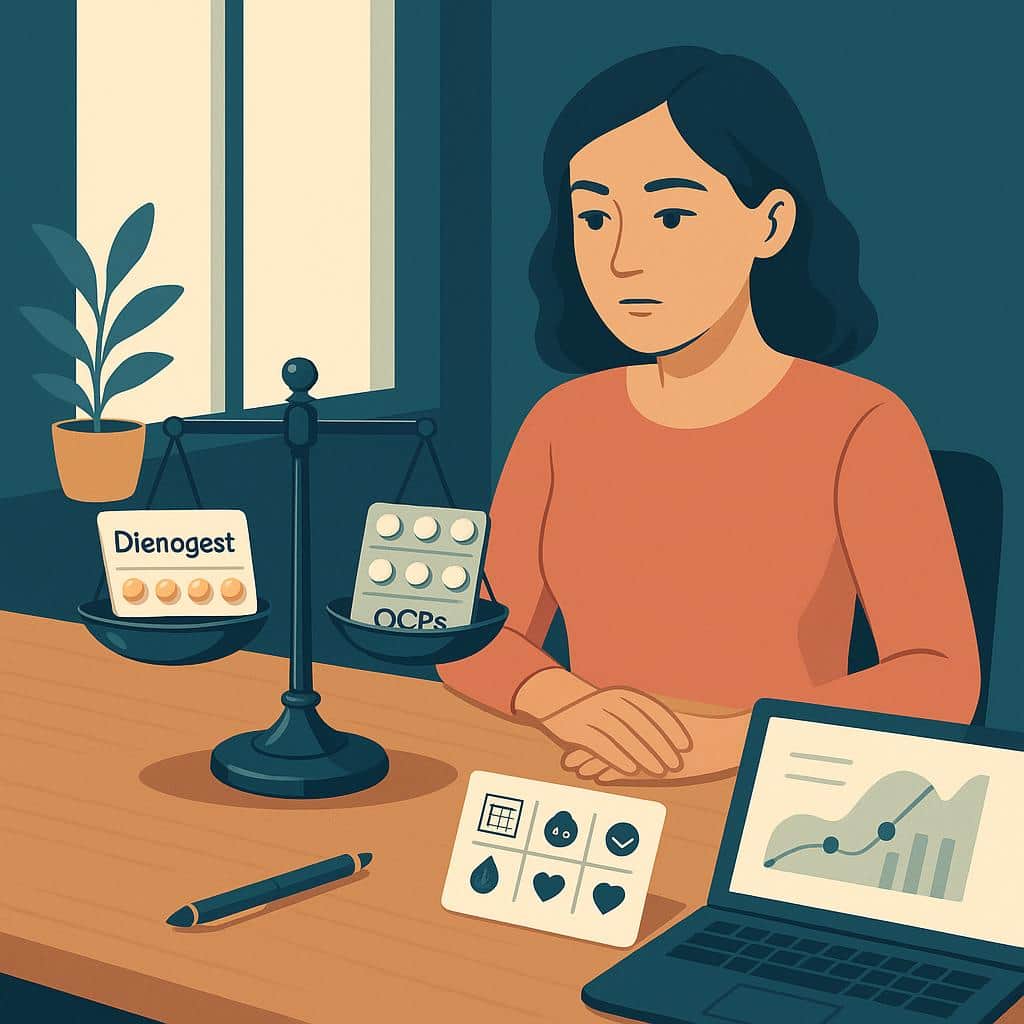
Dienogest vs. Combined Oral Contraceptives for Endometriosis Pain: What a 2025 Meta-Analysis Found
A 2025 meta-analysis of dienogest vs OCPs for endometriosis pain: dienogest helps generalized pain; OCPs help pelvic pain/dyspareunia. Similar side effects.
Should You Try Hormone Therapy Before Endometriosis Surgery?
Explore the benefits of hormone therapy before endometriosis surgery. Learn about GnRH agonists and their impact on pain and recovery.
Non-hormonal Options for Endometriosis Pain: What’s Actually Worth Trying?
Discover evidence-based nonhormonal treatments for endometriosis pain. Find options you can try now for effective symptom management.