General
Do hormones or birth control treat endometriosis?
The short answer
Hormonal birth control and other hormone therapies can reduce endometriosis symptoms, but they usually don’t treat the disease itself. They don’t remove endometriosis lesions or restore normal anatomy, so pain can return when you stop them.
Hormonal birth control and other hormone therapies can help treat endometriosis symptoms, but they usually don’t treat the disease itself. By suppressing ovulation and dampening hormonal cycling, they can reduce bleeding and inflammation signals that drive painful periods and other cyclical pelvic or abdominal symptoms.
Because hormones don’t remove endometriosis lesions or restore normal anatomy, pain can return when you stop taking them, and some patients still have significant symptoms while taking them. In our practice, we often view hormonal therapy as symptom management and, for the right patient, one part of a broader plan that may also include evaluation for endometriosis and discussion of definitive options such as excision. If you’re unsure whether hormones are masking symptoms, not working well enough, or causing side effects, our team can help you clarify next steps and tailor a plan to your goals.
Where to go from here
Understand it, compare it with what you're feeling, then talk it through with us.
Step 1 · Understand
Understand the condition
Step 2 · Compare
Symptoms it can relate to
Step 3 · Speak with Us
Struggling with Endometriosis Symptoms?
Hormonal treatments can ease symptoms but won’t cure endometriosis. Our specialists can help create a tailored plan to manage your pain and improve your quality of life.
Questions people ask next
All general questionsCan birth control pills or IUDs help endometriosis or adenomyosis?
Yes, birth control pills and the levonorgestrel IUD can help many patients with endometriosis or adenomyosis by reducing heavy bleeding and period-related pelvic pain. They can quiet symptoms during use, but don’t remove endometriosis lesions or reverse adenomyosis.
Why don’t hormones help my endometriosis pain?
Hormones may not help your endometriosis pain because they mainly reduce cycle-driven inflammation and bleeding, not every source of pain. Scarring, nerve growth, a sensitized nervous system or pelvic floor problems may keep pain going even when periods are suppressed.
What medications help endometriosis and adenomyosis?
For endometriosis and adenomyosis, NSAIDs like ibuprofen can help pain, and hormonal medications can sometimes lessen bleeding and pain. NSAIDs don’t treat the underlying disease, and hormonal relief varies and typically lasts only while you’re on medication.
What if birth control makes pelvic pain worse?
Birth control can make pelvic pain worse for some people, and that does not rule out endometriosis. A workup can help clarify whether the pain is hormonally driven or whether pelvic floor muscle pain, nerve sensitization or other pelvic conditions are contributing.
Further reading
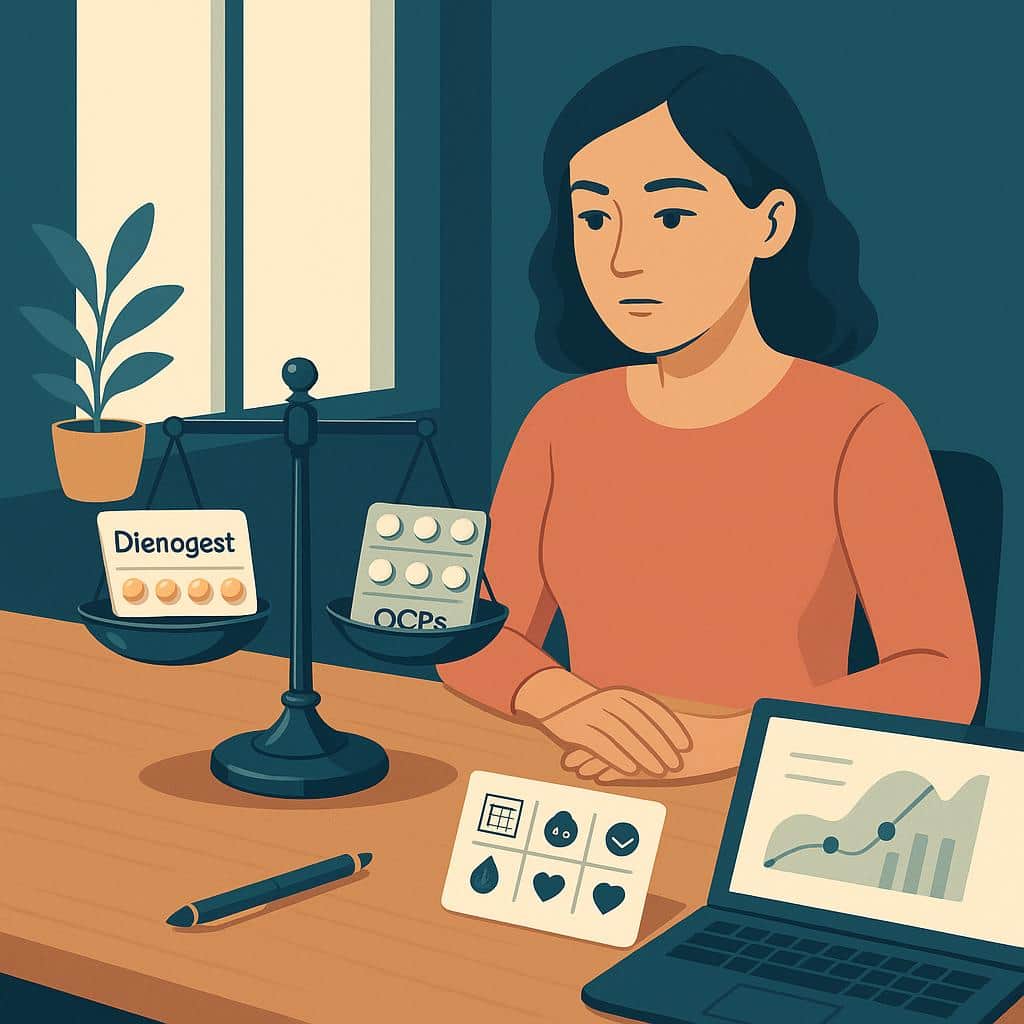
Dienogest vs. Combined Oral Contraceptives for Endometriosis Pain: What a 2025 Meta-Analysis Found
A 2025 meta-analysis of dienogest vs OCPs for endometriosis pain: dienogest helps generalized pain; OCPs help pelvic pain/dyspareunia. Similar side effects.
Should You Try Hormone Therapy Before Endometriosis Surgery?
Explore the benefits of hormone therapy before endometriosis surgery. Learn about GnRH agonists and their impact on pain and recovery.
Hormonal Therapy Risks Without Surgical Diagnosis: What Patients Should Know
Explore the risks of hormonal therapy without surgical diagnosis for endometriosis. Learn what patients need to know about treatment options and potential side