

Surgery
What questions should I ask before endometriosis laparoscopy?
The short answer
At a first specialist visit, ask which diagnoses they are considering and what records or imaging would change the plan. Before laparoscopy, ask whether your surgeon can fully treat what they find, which technique they use, whether tissue goes to pathology, and how they plan for other organs, recovery, and follow-up.
The most useful questions depend on where you are. At a first visit with an endometriosis specialist, focus on how they think and how your care will be planned: based on my symptoms and records, what diagnoses are you considering (endometriosis, adenomyosis, and common look-alikes), and what makes you lean one way or another? Ask what additional records or imaging would meaningfully change the plan, and whether your imaging will be interpreted with endometriosis mapping in mind, rather than just a “normal/abnormal” read.
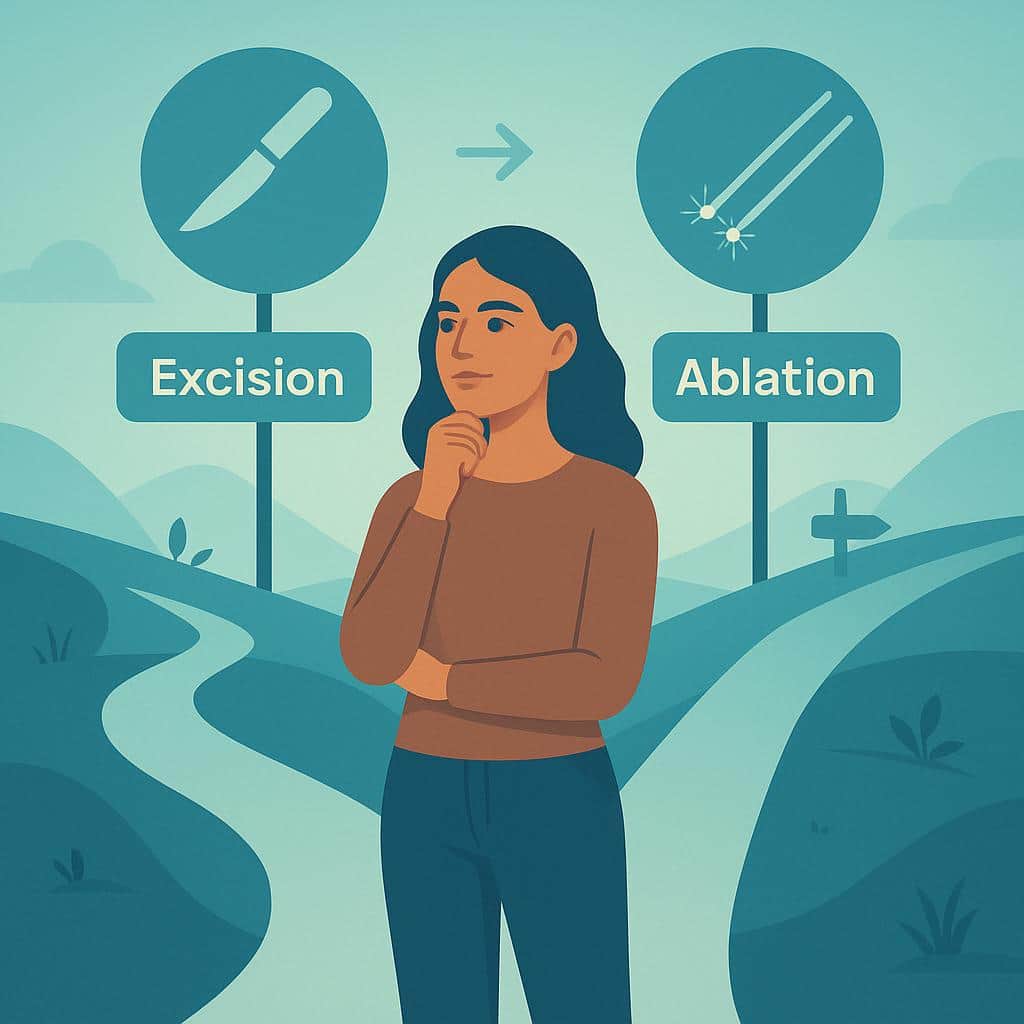
Before laparoscopy, the most important questions focus on whether your surgeon can fully treat what they find, rather than simply look around. Ask what technique they use if endometriosis is suspected (excision vs burning/fulguration/ablation), how they confirm what was removed, including whether tissue will be sent to pathology, and how they determine the anticipated scope of surgery based on your symptoms, prior operative reports, and imaging, even when imaging looks normal.
Because endometriosis can involve ovaries, bladder/ureters, bowel, diaphragm, and nerves, ask how they plan for multi-organ disease. If bowel or urinary tract involvement is suspected, will the appropriate specialists be involved, and what procedures are they prepared to perform in the same operation? You’ll also want clarity on what would change the plan mid-surgery (for example, unexpected deep disease, endometriomas, or adhesions) and how they approach adenomyosis if it’s part of the picture, especially if fertility is a goal.
It’s also reasonable to ask how they define surgical success for your goals, whether pain relief, bowel/bladder function, or fertility, and how outcomes and recurrence or persistent symptoms are handled.
Finally, ask practical recovery and planning questions: what the pre-op workup includes, expected incisions and approach, pain control strategy, typical time back to daily activity, and how follow-up is handled if symptoms persist. Our team is very deliberate about setting expectations upfront (what we think surgery can and cannot accomplish, what records we need to plan safely, and what a comprehensive excision strategy would look like for your specific pattern of symptoms). If you’d like, reach out to schedule a consultation, and we’ll tell you exactly what to send first so we can make your visit worth your time.
Where to go from here
Understand it, compare it with what you're feeling, then talk it through with us.
Understand
Understand the condition
Compare
Symptoms it can relate to
Speak with Us
Prepare for Your Surgery with Confidence
Know the key questions to ask your surgeon before endometriosis laparoscopy. Our specialists will guide you through treatment options tailored to your unique condition.
Questions people ask next
All surgery questionsWhat are the main risks of endometriosis excision, and how are they minimized?
The main risks of endometriosis excision are bleeding, infection, scar tissue (adhesions), and injury to the bowel, bladder or ureters. We minimize these risks with careful surgical planning, meticulous technique to protect organs and nerves, and the right expertise and tools.
Will endometriosis excision surgery need bowel resection or a stoma?
Most endometriosis excision surgeries do not require a bowel resection, and a stoma is uncommon. These possibilities come up mainly when endometriosis grows deep into the bowel wall or scar tissue has significantly distorted the anatomy.
What should I ask about endometriosis-related infertility?
Ask for a plan that specifically evaluates endometriosis or adenomyosis, including imaging, whether your tubes are open, and ovarian reserve. Ask how treatments affect your timeline, when an excision-focused surgical evaluation makes sense, and how pain care can support your fertility goals.
Further reading
What to Expect Before, During, and After Endometriosis Surgery
Discover what to expect before, during, and after endometriosis surgery. Insights on pain relief, preparation, recovery from reliable recent research.
Excision vs Ablation: Understanding Endometriosis Surgery Options
Explore excision vs ablation for endometriosis. Learn about surgery options, pain relief, and making informed choices based on your fertility goals.
Getting Ready for Endometriosis Surgery: A Week‑by‑Week Guide
Get ready for your endometriosis surgery with our week-by-week guide. Learn what to schedule, pack, and prepare for a smooth recovery.