Fertility
When is IVF recommended for endometriosis?
The short answer
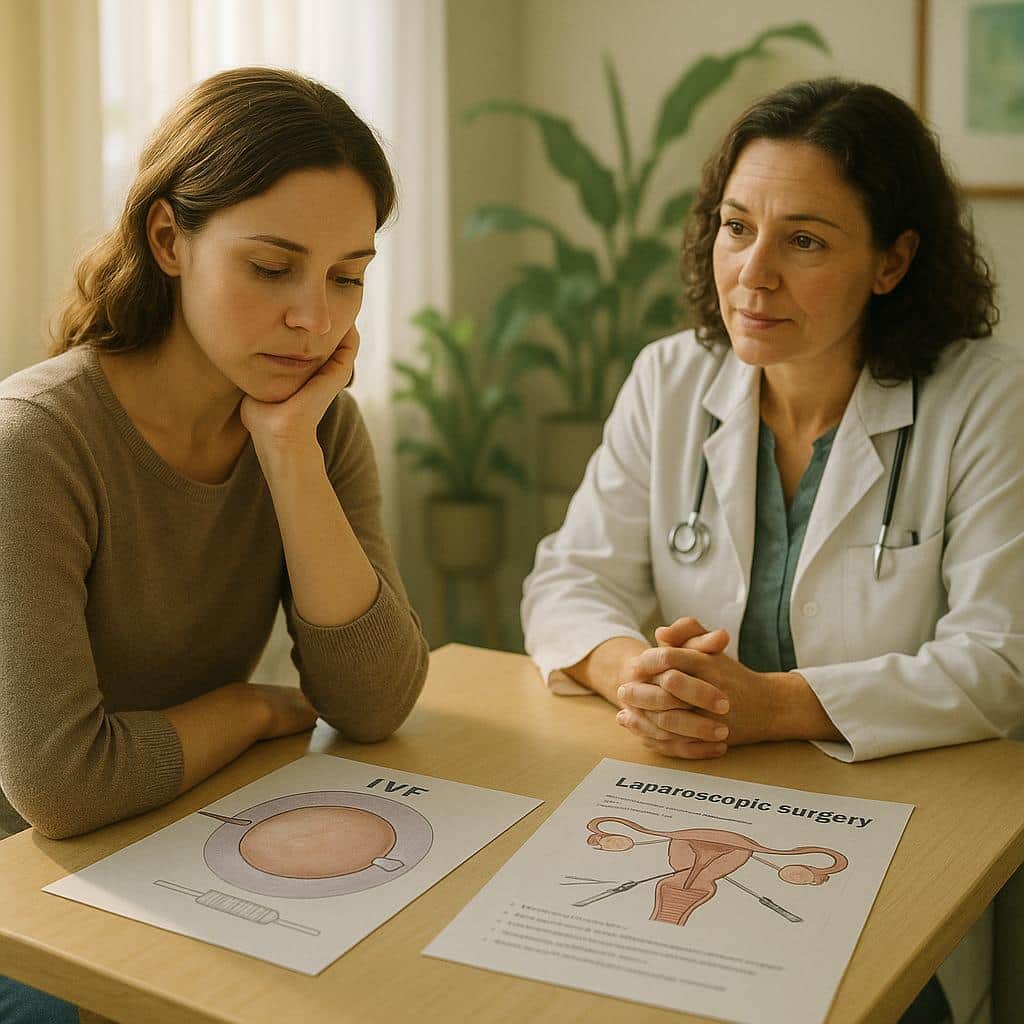
IVF is often recommended for endometriosis when older age or reduced ovarian reserve makes time a key factor, or when fallopian tubes are blocked or damaged. It may also be the next step after unsuccessful less invasive fertility treatment or when male-factor infertility is present.
With endometriosis, IVF is often recommended when time is a key factor (such as older reproductive age or signs of reduced ovarian reserve) or when anatomy makes conception less likely, as with blocked or damaged fallopian tubes. It may also be the next step after unsuccessful attempts with less invasive fertility treatment, or when male-factor infertility is also present.
If severe pain, progressive symptoms, or concern for organ involvement is the main problem, we may prioritize treating the disease first and then focus on fertility planning afterward. The right sequence depends on your goals and objective fertility data (such as imaging, ovarian reserve testing, and semen analysis), and we coordinate these decisions carefully so treatment supports both symptom relief and pregnancy outcomes. If you’re weighing IVF versus other options, our team can review your history and help you choose a plan that fits your timeline and priorities.
Where to go from here
Understand it, compare it with what you're feeling, then talk it through with us.
Step 1 · Understand
Understand the condition
Step 2 · Compare
Symptoms it can relate to
Step 3 · Speak with Us
Struggling to Conceive with Endometriosis?
Our specialists understand the unique challenges of endometriosis-related infertility and can help determine if IVF is right for you. Let us guide you through personalized fertility options tailored to your needs.
Questions people ask next
All fertility questionsHow is infertility from endometriosis treated?
Treatment depends on how endometriosis is affecting your fertility. Excision surgery can remove disease and restore anatomy when fertility is physically blocked. Fertility treatment is sometimes the next step after surgery and sometimes the first step.
Do endometriomas affect fertility or ovarian reserve?
Yes, endometriomas can affect fertility and may be associated with lower ovarian reserve in some patients. Surgery, especially repeat cyst surgery, can also affect ovarian reserve because healthy ovarian tissue can be removed or its blood supply altered.
Should an endometrioma be removed before IVF?
It depends: removing an endometrioma before IVF can help if it blocks access to follicles, causes significant pain, or raises concern for another diagnosis. But removal can also reduce ovarian reserve if healthy ovarian tissue is damaged, so protecting egg yield matters.
Should hydrosalpinx be removed before IVF with endometriosis?
Yes, when a true hydrosalpinx is present, removing or disconnecting the affected tube before embryo transfer is often recommended. Its inflammatory fluid can flow into the uterus and interfere with implantation. The approach depends on your anatomy and goals.
Further reading
Surgery and IVF: When Are They Right for Endometriosis?
Explore when surgery or IVF is best for endometriosis. Understand the decision-making process and what to consider for fertility and health.
Making a Fertility Plan: Working with Your Endometriosis Care Team
Learn how to create a patient-centered fertility plan with your endometriosis care team, addressing symptoms, treatment, and desired timelines.
Bowel Endometriosis and Infertility - What Should You Try First?
Explore options for bowel endometriosis and infertility. Understand whether surgery or IVF should be your first step. Get reliable insights now.