
Fertility
How is infertility from endometriosis treated?
The short answer
Treatment depends on how endometriosis is affecting your fertility. Excision surgery can remove disease and restore anatomy when fertility is physically blocked. Fertility treatment is sometimes the next step after surgery and sometimes the first step.
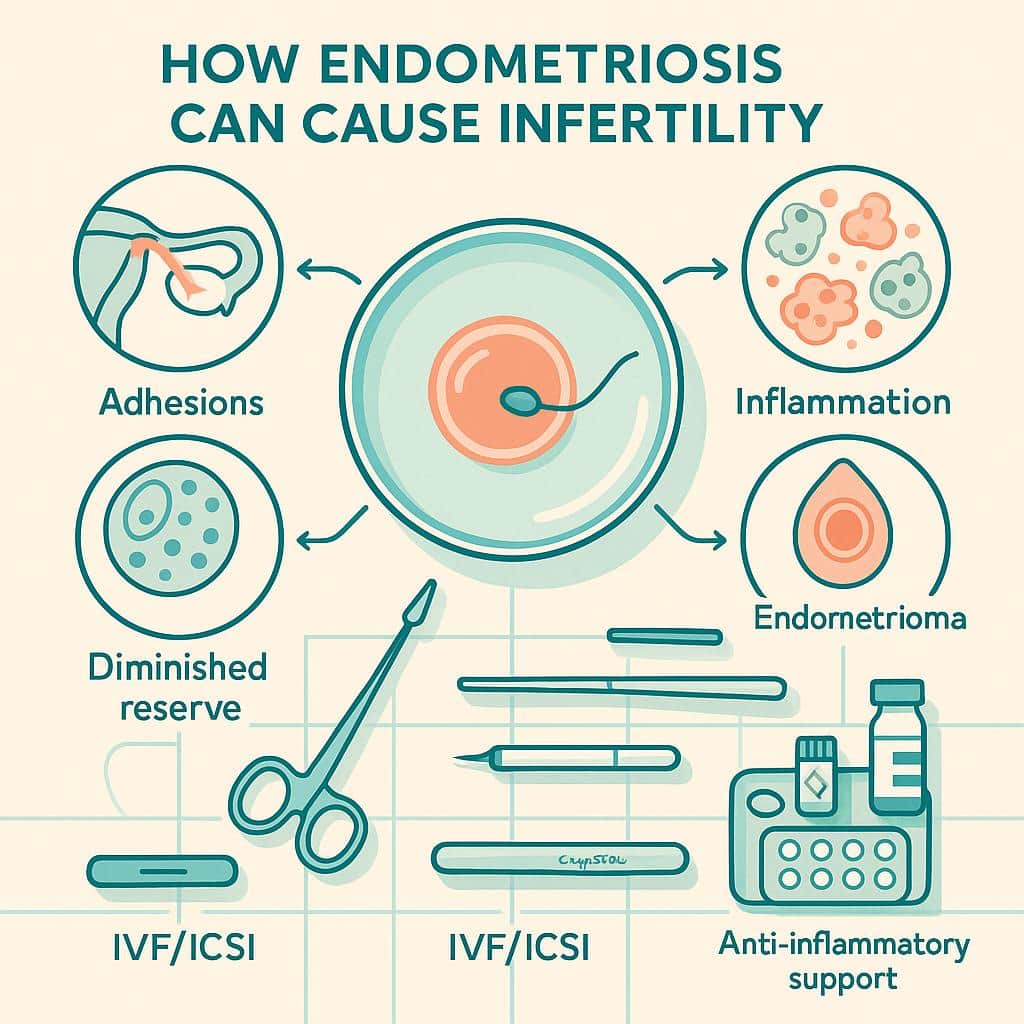
Endometriosis can affect fertility through inflammation, scarring/adhesions, endometriomas, and damage to the fallopian tubes or ovaries, so treatment depends on which fertility barriers are present for you. In many cases, we start with a careful evaluation of pelvic anatomy and ovarian health, because the plan looks different if the main issue is distorted tubes, an endometrioma, significant adhesions, suspected adenomyosis, or an additional fertility factor.
When endometriosis is physically blocking fertility, expert excision surgery can be a cornerstone treatment because it removes disease at its roots and can restore anatomy while prioritizing tissue preservation. Our team uses robotic excision for precision, and we individualize decisions about ovaries to protect ovarian tissue, tubes (including when severely damaged tubes may be better removed to reduce ectopic risk and support implantation), and any bowel or bladder involvement.
Fertility treatment can also be part of the plan, sometimes as the next step after excision and sometimes as the first step when time is a major factor or symptoms are minimal. Hormonal suppression may help with pain control, but it generally doesn’t treat endometriosis in a way that improves fertility while you’re actively trying to conceive. If you’d like, reach out to schedule a consultation so we can map out a strategy that fits your anatomy, timeline, and goals.
Where to go from here
Understand it, compare it with what you're feeling, then talk it through with us.
Step 1 · Understand
Understand the condition
Step 2 · Compare
Symptoms it can relate to
Step 3 · Speak with Us
Struggling with Endometriosis Infertility?
Our specialists provide tailored evaluations and treatments to overcome the unique fertility challenges posed by endometriosis. We're here to help you understand your options and create a personalized plan to improve your chances of conception.
Questions people ask next
All fertility questionsWhen is IVF recommended for endometriosis?
IVF is often recommended for endometriosis when older age or reduced ovarian reserve makes time a key factor, or when fallopian tubes are blocked or damaged. It may also be the next step after unsuccessful less invasive fertility treatment or when male-factor infertility is present.
Can endometriosis surgery affect fertility?
Yes, endometriosis surgery can affect fertility in both positive and negative ways, depending on where the disease is and what surgery involves. Removing disease can improve the chances of conception, but surgery on the ovaries can reduce ovarian reserve.
Which infertility tests matter most with endometriosis?
The most useful infertility tests for endometriosis typically include ovarian reserve labs, a pelvic ultrasound, a test to check whether the fallopian tubes are open, and a semen analysis. Your symptom pattern and surgical history help put results in context.
Can I use medical therapy while trying to get pregnant?
Hormonal therapies for endometriosis are usually paused while you’re trying to get pregnant because they typically suppress ovulation. Symptom relief during this time can focus on non-hormonal options aligned with your fertility goals and timing.
Further reading
Surgery and IVF: When Are They Right for Endometriosis?
Explore when surgery or IVF is best for endometriosis. Understand the decision-making process and what to consider for fertility and health.
Making a Fertility Plan: Working with Your Endometriosis Care Team
Learn how to create a patient-centered fertility plan with your endometriosis care team, addressing symptoms, treatment, and desired timelines.
How Endometriosis Contributes to Infertility
How endometriosis leads to infertility: pathogenesis; effects on gametes, tubes, and endometrium; and treatments (expectant care, surgery, and ART).