Fertility
Which infertility tests matter most with endometriosis?
The short answer
The most useful infertility tests for endometriosis typically include ovarian reserve labs, a pelvic ultrasound, a test to check whether the fallopian tubes are open, and a semen analysis. Your symptom pattern and surgical history help put results in context.
If you have endometriosis and are trying to conceive, the most useful infertility testing usually focuses on ovarian reserve, anatomy, and whether sperm and fallopian tubes are working as they should. That typically includes ovarian reserve labs, a pelvic ultrasound to look at the uterus and ovaries (including possible endometriomas), and a test to check whether the fallopian tubes are open.
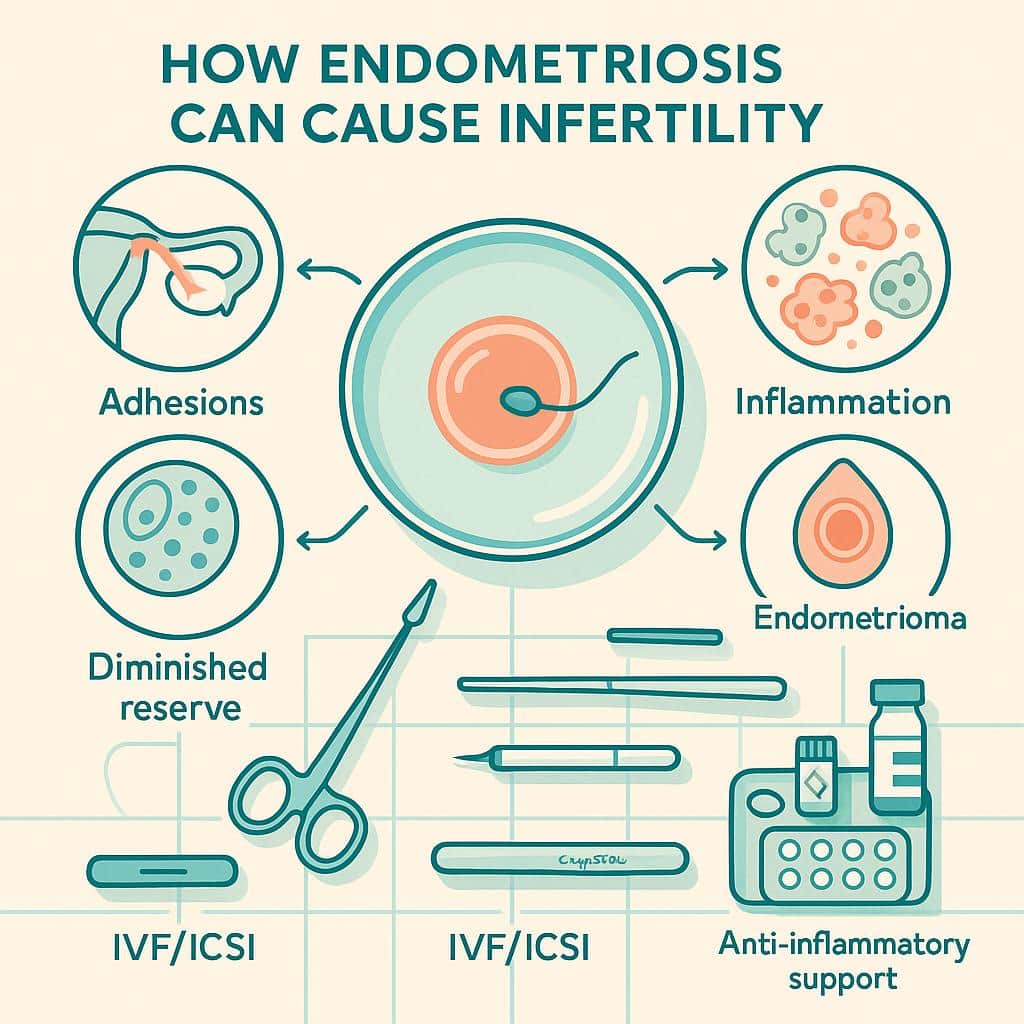
Because prior surgery, adhesions, inflammation, and pain symptoms can influence endometriosis-related infertility, we also prioritize a detailed review of your symptom pattern and surgical history to interpret results in context. We routinely include a semen analysis for the male partner, since male-factor issues are common and can change the best next step. If you’d like, our team can help you decide which tests to start with and how the findings may guide a plan tailored to endometriosis.
Where to go from here
Understand it, compare it with what you're feeling, then talk it through with us.
Speak with Us
Take Charge of Your Fertility Today
Endometriosis can complicate conception, but targeted testing helps uncover the barriers. Our specialists focus on ovarian health, anatomy, and tubal function to guide your personalized path forward.
Questions people ask next
All fertility questionsWhat should a fertility workup include with endometriosis?
A fertility workup with endometriosis typically looks at egg supply and pelvic anatomy, with ovarian reserve tests, pelvic ultrasound and commonly a partner's semen analysis. Depending on your history and imaging, it may include tests to see if the fallopian tubes are open, and sometimes MRI.
Can an HSG detect endometriosis?
An HSG does not reliably detect endometriosis, as most lesions are in areas it cannot show. It checks the uterine cavity and whether the fallopian tubes are open, and can sometimes hint at related problems like tubal blockage or scarring.
What should I ask about endometriosis-related infertility?
Ask for a plan that specifically evaluates endometriosis or adenomyosis, including imaging, whether your tubes are open, and ovarian reserve. Ask how treatments affect your timeline, when an excision-focused surgical evaluation makes sense, and how pain care can support your fertility goals.
When is IVF recommended for endometriosis?
IVF is often recommended for endometriosis when older age or reduced ovarian reserve makes time a key factor, or when fallopian tubes are blocked or damaged. It may also be the next step after unsuccessful less invasive fertility treatment or when male-factor infertility is present.
Further reading
Making a Fertility Plan: Working with Your Endometriosis Care Team
Learn how to create a patient-centered fertility plan with your endometriosis care team, addressing symptoms, treatment, and desired timelines.
How Endometriosis Contributes to Infertility
How endometriosis leads to infertility: pathogenesis; effects on gametes, tubes, and endometrium; and treatments (expectant care, surgery, and ART).
Surgery and IVF: When Are They Right for Endometriosis?
Explore when surgery or IVF is best for endometriosis. Understand the decision-making process and what to consider for fertility and health.