Surgery
Why would a cancer surgeon perform endometriosis excision?
The short answer
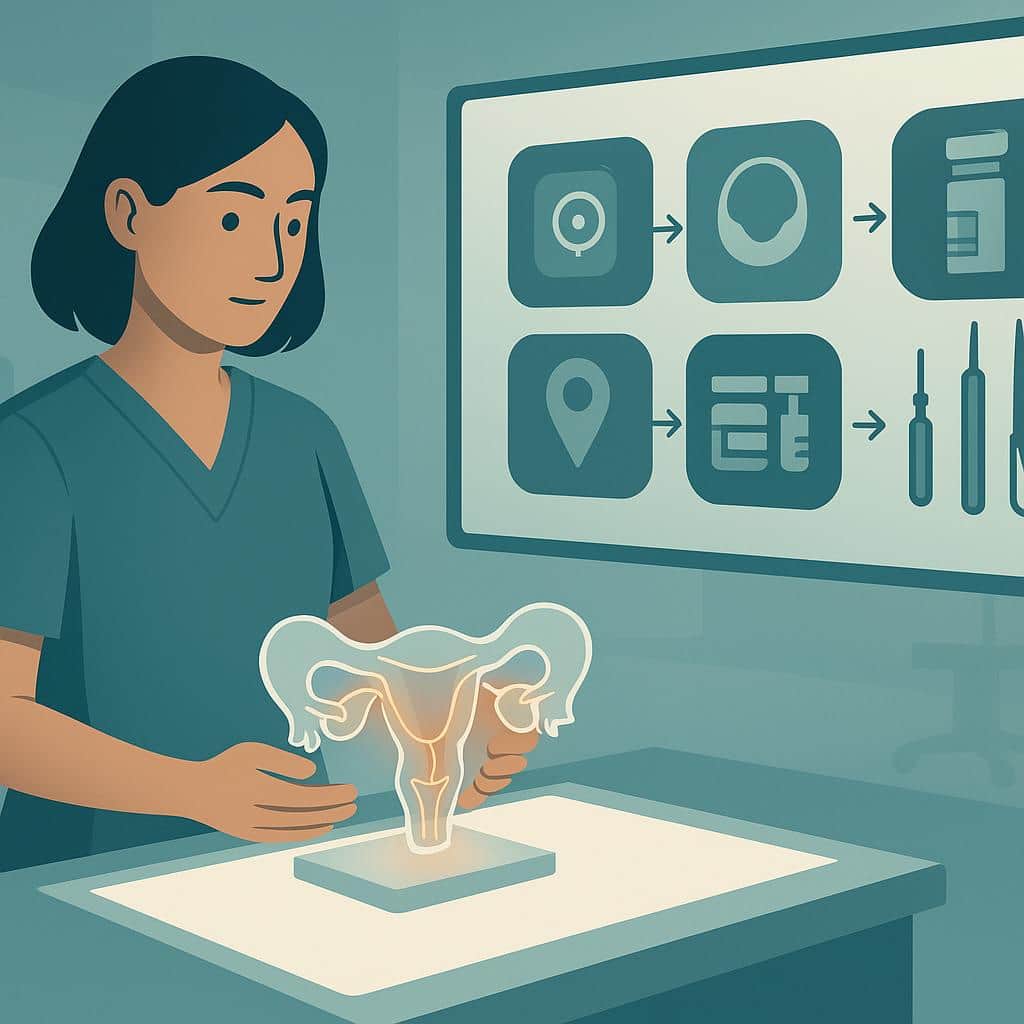
A gynecologic cancer surgeon has skills that often translate directly to challenging endometriosis excision, including operating safely around critical organs. Their experience recognizing atypical tissue can add an extra layer of safety during surgery.
Endometriosis can infiltrate tissue planes and involve high-risk areas like the bowel, bladder, ureters, or diaphragm, where precision surgery matters. Surgeons with a gynecologic oncology background are trained in complex dissection, careful control of bleeding, and operating safely around critical structures. Those skills often translate directly to challenging endometriosis excision.
A cancer-focused surgeon also has experience recognizing when tissue looks atypical and handling that finding appropriately during surgery. Because certain patterns of endometriosis can overlap with or raise concern for ovarian cancer or other benign or malignant pelvic pathology, having that expertise in the operating room can add an extra layer of safety and support decision-making. If you’re considering surgery, our team can explain during a consultation how we tailor the surgical plan to your anatomy, symptoms, and goals.
Where to go from here
Understand it, compare it with what you're feeling, then talk it through with us.
Step 1 · Understand
Understand the condition
Step 2 · Compare
Symptoms it can relate to
Step 3 · Speak with Us
Need Expert Surgery for Complex Endometriosis?
Our cancer-trained surgeons excel at precise, safe excision even in challenging areas like the bowel or bladder. They ensure careful tissue removal and expert care tailored to your unique needs.
Questions people ask next
All surgery questionsWhy would endometriosis require a procedure like ovarian cancer surgery?
Endometriosis may require an oncology-level approach in select, highly complex cases to safely and completely remove aggressive disease when anatomy is distorted and surgical risks are higher. Most people with endometriosis will never need a cancer-style operation.
How do I find a qualified endometriosis specialist?
Look for surgeons who regularly treat complex endometriosis and can explain their training, surgical approach, and care for bowel or bladder involvement. Surgeon-vetting platforms and patient-reported experiences can help, but neither is perfect on its own.
What are the main risks of endometriosis excision, and how are they minimized?
The main risks of endometriosis excision are bleeding, infection, scar tissue (adhesions), and injury to the bowel, bladder or ureters. We minimize these risks with careful surgical planning, meticulous technique to protect organs and nerves, and the right expertise and tools.
What is endometriosis excision surgery?
Endometriosis excision surgery removes lesions by cutting them out at their roots, rather than burning or cauterizing the surface. The goal is to fully remove visible disease while preserving healthy tissue and restoring normal anatomy as much as possible.
Further reading
Gynecologic Oncologists - Safest Choice for Complex Endometriosis Surgery?
For deep or advanced endometriosis, oncology-trained surgeons often provide safer, more complete excision. Learn what this means for you at the Lotus Endometriosis Institute.
Finding the Right Endometriosis Surgeon for Your Peace of Mind
Find the right surgeon for endometriosis or adenomyosis using next-level information. Make informed decisions for best outcomes and peace of mind.
Deep Infiltrating Endometriosis: Current and Future Treatments
Deep infiltrating endometriosis: symptoms, causes, diagnosis and treatment. Medical therapy, ICG-guided surgery, stenting, pathology, and future outlook.