

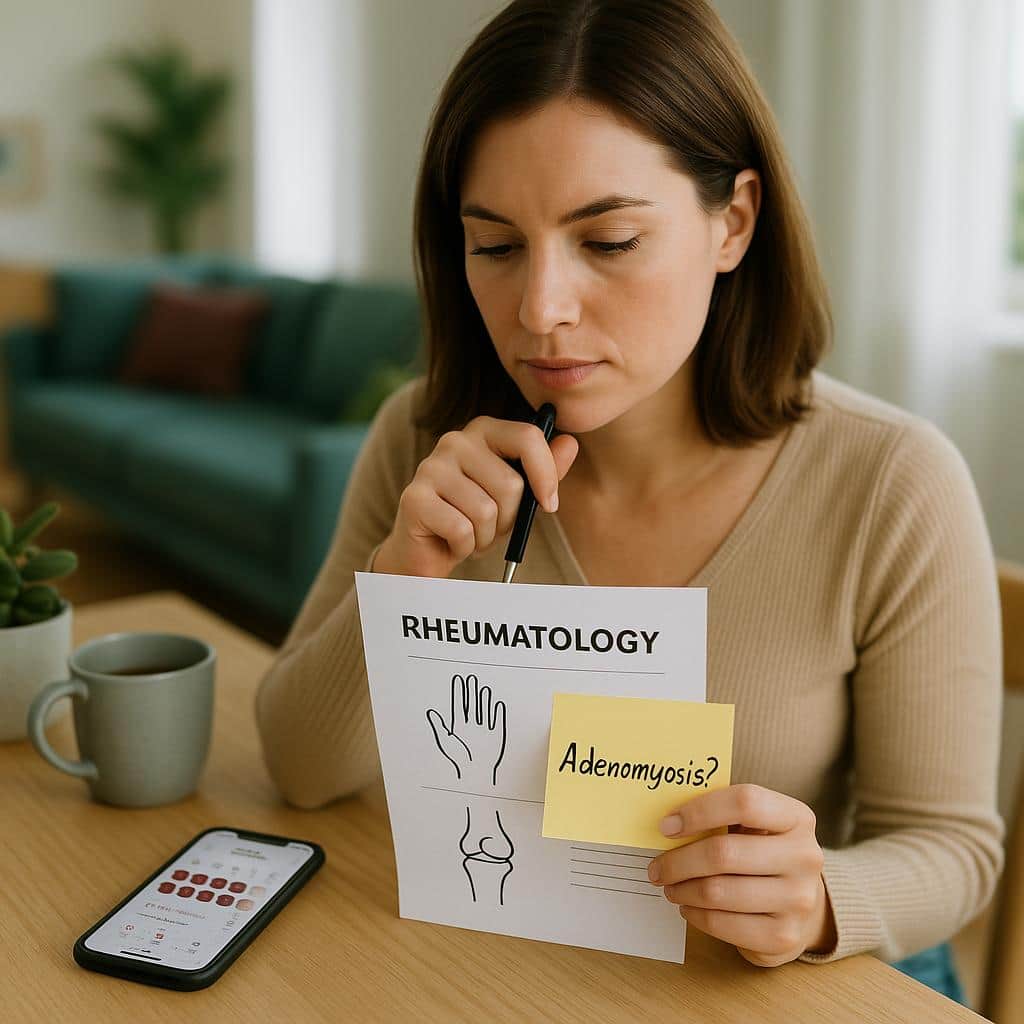
Rheumatic Disease and Heavy Periods: Could Adenomyosis Be Missed?
Heavy bleeding and pain in rheumatic disease aren’t always fibroids. Learn key adenomyosis clues, how to get past a 'normal' ultrasound, and treatment options.
5 minute read
Read moreDiscover how Lotus can guide you toward lasting relief.
Explore why patients choose Lotus
Search expert-written answers, browse by topic, or find information based on where you are in your journey.
Explore All KnowledgeReach out and start your healing journey.
Schedule an AppointmentUnderstand how autoimmune diseases intersect with endometriosis, including shared mechanisms, overlapping symptoms, and risks. Get guidance on implications for diagnosis, treatment options, and coordinating care with your healthcare team.
Autoimmune diseases occur more often in people with endometriosis than in the general population, even though endometriosis itself isn’t classified as primarily autoimmune. Immune dysregulation—changes in macrophages, T and B cells, cytokines, and autoantibodies—may help explain higher rates of thyroiditis, celiac disease, rheumatoid arthritis, psoriasis, lupus, and Sjögren’s syndrome. Because fatigue, joint aches, rashes, and bowel changes can mimic an endometriosis flare, separating overlapping symptoms from a true comorbidity is essential for timely care.
Guidance centers on when to consider targeted testing, red flags that warrant referral, and how to coordinate care with rheumatology, endocrinology, and gastroenterology. Discover how immunosuppressants and biologics interact with hormonal options for endometriosis, ways to protect bone and gut health, and implications for conception and pregnancy. For digestive autoimmune conditions and the microbiome, see IBS / IBD and Gut Health; for pain control and hormone choices, see Medical Management; for family‑building, see Fertility & Reproductive Health and Pregnancy.
Yes—endometriosis can be associated with arthritis-like joint pain in some people, even though joint pain isn’t considered a classic “core” symptom. Endometriosis can drive chronic inflammation and immune dysregulation, and that whole-body inflammatory state may show up as aching, stiffness, or flares that feel similar to inflammatory arthritis. Some patients also notice joint symptoms that cycle with their period or worsen during broader endometriosis flares.
At the same time, endometriosis doesn’t “equal” autoimmune arthritis, and an association doesn’t prove that one causes the other. Research suggests higher rates of certain autoimmune conditions in people with endometriosis—including inflammatory diseases that can affect joints—so persistent joint pain deserves a full-picture evaluation rather than being automatically attributed to pelvic disease alone. If you’re dealing with pelvic pain plus joint symptoms, our team can help you sort out what fits endometriosis, what may be a related immune condition, and how that affects your treatment plan, including whether excision surgery and coordinated integrative support make sense for you.
Yes—there appears to be an evolving connection, but it’s not as simple as “endometriosis equals MCAS.” What current research supports most strongly is that mast cells (the immune cells involved in allergic-type reactions) are often increased and more activated in and around endometriosis lesions, where they tend to cluster near nerves and blood vessels. When mast cells release mediators like histamine and other inflammatory signals, they can irritate pain-sensing nerves, promote nerve growth, and help sustain inflammation—one plausible reason endometriosis pain can feel burning, stabbing, widespread, or unusually persistent.
MCAS, though, is a systemic syndrome—meaning it can cause multi-system flares (for example flushing/itching, GI upset, shortness of breath, dizziness or fast heart rate) and may be triggered by stress, hormones, foods, or environmental exposures. Some people with endometriosis also have MCAS-like symptoms, and in those cases mast-cell biology may be amplifying pelvic pain and lowering the threshold for flares across the body. If this overlap sounds familiar, our team can help you sort out what’s likely being driven by endometriosis lesions themselves (including whether excision surgery may be part of your plan) versus broader mast-cell–type sensitivity that may need coordinated perioperative and long-term management.
Yes—there does appear to be meaningful overlap between endometriosis and joint hypermobility syndromes like hEDS/EDS, but the research is still evolving and it’s not accurate to say one definitively “causes” the other. What we see clinically is that patients with hypermobility often have more complex pelvic pain presentations, sometimes with heightened nerve sensitivity, pelvic floor muscle overactivity, and multi-system symptoms that can make endometriosis harder to recognize and harder to calm down.
One reason this overlap is getting attention is the way connective tissue differences and immune inflammation can intersect with pain processing. Hypermobility is also frequently discussed alongside related patterns like dysautonomia/POTS and mast-cell–type inflammation, which may help explain flares that seem disproportionate, widespread, or triggered by stress, hormones, foods, or environmental exposures.
If you’re hypermobile (or suspect you are) and also dealing with symptoms that fit endometriosis, we take that “whole picture” seriously. Our team can help you sort out what’s coming from endometriosis versus overlapping drivers, and build a plan that may include precise diagnosis, minimally invasive excision when appropriate, and coordinated integrative support so your recovery and long-term symptom control are set up for success.
Autoimmune medications (including immunosuppressants and biologics) can sometimes improve how you feel overall by calming systemic inflammation from an autoimmune condition, which may indirectly reduce fatigue or generalized pain. However, these medications do not remove or “treat away” endometriosis lesions, and they typically don’t address the root drivers of endometriosis-specific symptoms like cyclic pelvic pain, bowel/bladder symptoms, or painful sex.
In our practice, we view autoimmune treatment as something that may run alongside targeted endometriosis care rather than replace it. When symptoms and imaging history suggest endometriosis, the definitive way to identify disease and remove it is excision surgery, and some patients also benefit from hormonal suppression to help manage symptoms and reduce flares. If you’re on (or considering) autoimmune therapy, our team can coordinate a plan that accounts for infection risk, wound healing, and medication timing and help you decide what endometriosis treatment pathway makes the most sense for you.
In many cases, hormonal treatment for endometriosis can be used safely alongside autoimmune disease management. Progestin-based options (such as pills, injections, or a levonorgestrel IUD) are often compatible with common autoimmune medications, and we frequently use them to help reduce bleeding and pain drivers.
The main situation that needs extra caution is estrogen-containing hormones, especially if your autoimmune condition includes higher clot risk (for example, antiphospholipid antibodies) or you’ve had clotting complications before. Because autoimmune diagnoses, medications, and risk profiles vary widely, we individualize recommendations and coordinate with your other treating clinicians when needed. If you’d like, our team can review your autoimmune history, current meds, and symptoms to map out an endometriosis plan that prioritizes both relief and safety.
Autoimmune conditions can influence fertility and pregnancy alongside endometriosis by adding inflammation and hormone or immune-system disruptions that may affect ovulation, implantation, and early pregnancy stability. In our experience, outcomes often improve when the autoimmune condition is clearly identified and well-controlled before trying to conceive, since uncontrolled disease activity can raise the risk of infertility and miscarriage.
The right plan depends on which condition is present—for example, optimizing thyroid levels before conception, maintaining a strict gluten-free diet for confirmed celiac disease, or completing a focused workup if there’s a history of recurrent pregnancy loss. Our team can help you connect the dots between your symptoms, lab findings, and reproductive goals and build a coordinated strategy for preconception and pregnancy monitoring; you can reach out to schedule a consultation to discuss your next steps.
Some autoimmune conditions are reported more often alongside endometriosis, including autoimmune thyroid disease, celiac disease, rheumatoid arthritis, psoriasis, lupus, and Sjögren’s. This doesn’t mean endometriosis causes these conditions, but overlapping immune-driven inflammation can make symptoms blur together and delay clear answers.
Symptoms that commonly warrant a closer look include persistent fatigue out of proportion to sleep, heat or cold intolerance, hair thinning or loss, ongoing digestive symptoms (especially chronic diarrhea), joint pain with swelling or morning stiffness, rashes that worsen with sun exposure, dry eyes or dry mouth, and unexplained weight change. If these are part of your picture, our team can help you decide which labs are most appropriate—often starting with thyroid testing (TSH with thyroid antibodies), celiac screening (tTG-IgA with total IgA), and targeted inflammatory or antibody testing based on your symptoms—and coordinate next steps as part of a comprehensive evaluation.
No—endometriosis is not currently classified as an autoimmune disease. That said, it often involves immune system dysregulation, including chronic inflammation and changes in how the body responds to endometrial-like tissue outside the uterus.
Because of these immune features, some patients with endometriosis also have autoimmune conditions, and overlapping symptoms can blur the picture. If you’re dealing with persistent pelvic pain plus systemic symptoms like fatigue, joint pain, rashes, or gastrointestinal changes, our team can help sort out what may be driven by endometriosis versus a coexisting condition and map out an appropriate evaluation plan.
Heavy bleeding and pain in rheumatic disease aren’t always fibroids. Learn key adenomyosis clues, how to get past a 'normal' ultrasound, and treatment options.

Explore how immune dysfunction may link endometriosis to autoimmune diseases such as lupus, RA, thyroid disease, celiac, MS, and IBD - evidence and care.

Explore the link between lupus (SLE) and endometriosis: outcomes, key results, clinical implications, and priorities for future research.
Lotus Endometriosis Institute provides California-based surgical evaluation and advanced excision care for patients with suspected endometriosis, adenomyosis, complex pelvic pain, and related conditions.
Many patients contact us from outside California to learn whether traveling for in-person evaluation and possible surgery may be appropriate.
2121 Santa Monica Blvd, Santa Monica, CA 90404
8am - 5pm
Monday - Friday
154 Traffic Way, Arroyo Grande, CA 93420