

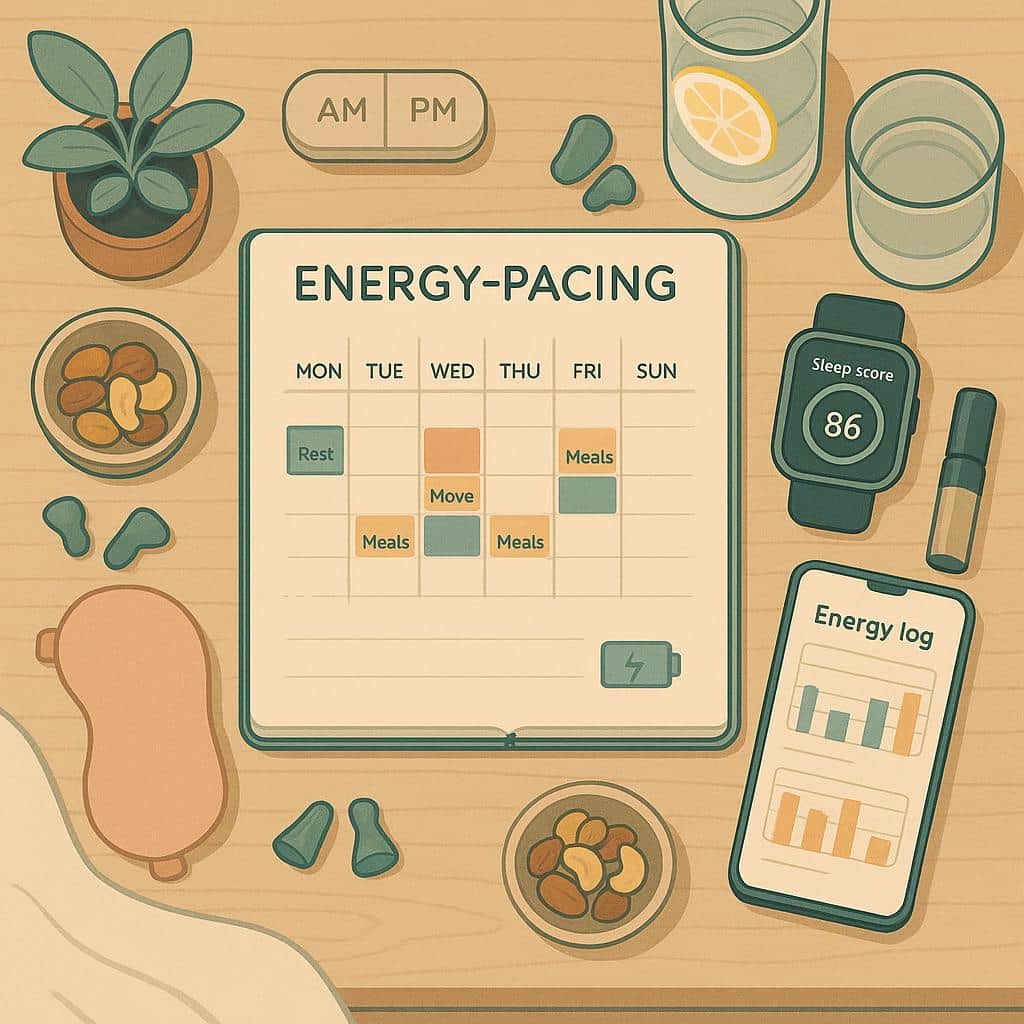
Endometriosis Fatigue : A Practical Guide to Relief
Understand why endometriosis drains energy—chronic pain, hormones, poor sleep, anemia, inflammation—and get practical tips for fatigue, pain, stress, and daily function.
7 minute read
Read moreDiscover how Lotus can guide you toward lasting relief.
Explore why patients choose Lotus
Search expert-written answers, browse by topic, or find information based on where you are in your journey.
Explore All KnowledgeReach out and start your healing journey.
Schedule an AppointmentLearn what drives exhaustion in endometriosis and how to manage it. Find evidence-based tips on pacing, sleep, nutrition, and treatments to reduce fatigue and improve daily function.
Fatigue is a common, often underestimated burden in endometriosis and adenomyosis. Exhaustion can stem from chronic inflammation and immune signaling, unrefreshing sleep due to pain, nervous‑system overactivation, and mood effects. In adenomyosis, heavy or prolonged bleeding may cause iron deficiency and low ferritin even when hemoglobin appears normal, compounding symptoms with brain fog and reduced stamina. Overlapping conditions such as IBS or bladder pain syndrome can also sap energy by disrupting rest and taxing the body.
Care focuses on identifying your main drivers and targeting them systematically: checking for anemia or thyroid issues, stabilizing sleep, pacing activity to prevent boom‑bust cycles, and using nutrition to calm inflammation and support energy. Evidence‑based strategies integrate with medical therapy when appropriate. Explore nutrition approaches in Anti-Inflammatory Diet and gut‑focused tools in Gut Health, practical self‑care in At-Home Remedies, and medication options in Medical Management. For pain‑dominant symptoms, see Pain Types and Neuropathic Pain; for heavy bleeding suggestive of adenomyosis, learn more under Adenomyosis.
Chronic fatigue plus pelvic pain often feels “unexplainable” because it’s rarely caused by just one issue—and many of the most common drivers don’t show up on routine labs or a quick ultrasound. Endometriosis and adenomyosis can cause persistent pelvic pain, painful periods, bowel/bladder symptoms, and deep fatigue through inflammation, disrupted sleep, heavy bleeding (and possible iron deficiency), and the sheer energy cost of living with ongoing pain. It’s also common for more than one gynecologic condition to coexist—like fibroids, polyps, or benign cysts—so a single label may not fully match what you’re experiencing.
Another reason symptoms can persist is that the nervous system can become more pain-sensitive over time (often called central sensitization), meaning pain can spread, linger outside your cycle, or feel disproportionate to what imaging shows. In those cases, symptom relief alone can miss the bigger picture: we think in terms of both treating disease (for example, addressing endometriosis lesions or uterine drivers like adenomyosis/fibroids) and building a personalized pain-management plan so your body can “turn down the volume” on pain signals.
If your fatigue and pelvic pain have been brushed off or left without a clear plan, our team can help you sort through the likely contributors, including endometriosis/adenomyosis and common coexisting conditions, and map next steps that fit your goals. You can explore our educational resources on fatigue, chronic pelvic pain, and comprehensive treatment approaches, and reach out to schedule a consultation when you’re ready.
Documenting endometriosis for work accommodations starts with creating a clear paper trail that connects your diagnosis (or suspected diagnosis) to specific functional limits at work. Keep a simple symptom log for at least 4–8 weeks: date, symptom (pelvic pain, fatigue, bowel/bladder pain, heavy bleeding), severity, duration, triggers, and exactly what work tasks were affected (missed shifts, reduced standing tolerance, inability to sit, concentration issues, frequent bathroom breaks). Save objective documentation too—operative and pathology reports if you’ve had surgery, imaging reports when available, ER/urgent care notes, medication or treatment history, and any workplace attendance or performance impacts that occurred during flares.
For an accommodation request, what usually helps most is a concise clinician letter that focuses on work restrictions rather than extensive medical detail—e.g., need for flexible scheduling during flares, ability to work from home at times, breaks for pain management/restroom access, limits on prolonged standing/sitting, or intermittent leave when symptoms are unpredictable. If you’re pursuing disability benefits, the same principle applies: decision-makers look for consistent records over time showing that symptoms significantly interfere with your ability to perform job duties, since endometriosis isn’t automatically classified as a disability.
Our team can help you organize the records that best support your case and, when appropriate, provide medical documentation that reflects the reality of your symptoms and functional limitations. If you’d like, reach out to schedule a consultation so we can review what you already have and identify what additional documentation would be most useful for workplace accommodations.
Yes—there can be a connection, but it’s usually not as simple as “inflammation makes you gain fat.” Endometriosis is an inflammatory condition, and that inflammation can drive fluid shifts, pelvic and abdominal swelling, bowel slowing/constipation, and the classic waxing-and-waning “endo belly,” all of which can look and feel like weight gain even when body fat hasn’t changed. Pain, fatigue, and stress can also reduce activity or change appetite patterns, which can indirectly affect body composition over time.
What’s also emerging in research is a possible link between endometriosis and certain metabolic risk patterns in some people (like central waist changes and lipid markers). That doesn’t prove endometriosis directly causes metabolic changes—or that metabolic changes cause endometriosis—but it does support why some patients feel their body is harder to “regulate” while the disease is active. If weight changes, bloating, or a new shift in your waistline is part of your story, our team can help you sort out what’s most likely inflammation and GI distension versus longer-term metabolic or hormonal contributors, and build a plan that aligns with your symptoms and goals. If you’d like, you can reach out to schedule a consultation so we can evaluate the full picture and discuss treatment options, including excision and coordinated whole-person care.
Yes—endometriosis can be associated with near-fainting symptoms like tunnel vision, lightheadedness, and feeling like you might pass out, especially during intense pain flares. Severe pelvic pain can trigger a vasovagal response (a nervous-system reflex) that drops blood pressure and heart rate, and some patients also experience broader autonomic “alarm mode” patterns that overlap with dysautonomia-type symptoms. In other words, the sensation can be very real even when it doesn’t feel “gynecologic” in the moment.
That said, near-fainting and tunnel vision aren’t specific to endometriosis, and we take them seriously because they can also come from other issues (like anemia from heavy bleeding, dehydration, blood sugar swings, medication effects, or non-gynecologic conditions). The most helpful next step is to look at the context: does it happen with period pain, bowel/bladder pain, or certain positions, and does it track with other endometriosis or adenomyosis symptoms?
If this is happening to you, our team can help you sort out whether it fits a pain-driven nervous-system response, an endometriosis/adenomyosis pattern, or another contributor that needs attention alongside pelvic disease treatment. We also focus on the difference between symptom management and treating the underlying drivers—because reducing the source of repeated pain signaling is often key to calming the whole system over time. If you’d like, reach out to schedule a consultation so we can review your symptom timeline and build a plan that matches what your body is doing.
Yes—some people with endometriosis (and adenomyosis) report heart palpitations, especially during pain flares, high-stress periods, or around hormonal shifts. One reason is that chronic pelvic pain and inflammation can keep the nervous system in a more “alarm” state, which can affect autonomic regulation (the balance between fight‑or‑flight and rest‑and‑digest) and make your heart rate feel more noticeable or irregular. Palpitations can also show up alongside other whole‑body symptoms some patients describe, like dizziness, temperature intolerance, fatigue, and sleep disruption.
At the same time, palpitations aren’t specific to endometriosis, and we don’t assume they’re “just endo.” Our approach is to look at the whole picture—your cycle pattern, pain history, medications/hormonal treatments, anemia from heavy bleeding, thyroid issues, and cardiac risk factors—so we don’t miss a separate (and treatable) cause. If palpitations are new, worsening, or tied to chest pain, shortness of breath, fainting, or significant lightheadedness, that deserves prompt evaluation; if you’d like, reach out to schedule a consultation so our team can help you sort out what’s driving your symptoms and how to address both the disease and the nervous-system component.
Yes—endometriosis can make weight loss feel harder, even though it isn’t proven to directly “cause” fat gain in a simple, one-to-one way. Many patients deal with “endo belly” (cyclical abdominal bloating), constipation or GI distension, fluid shifts, and inflammation that can make the scale and your waistline look worse without reflecting true fat gain. On top of that, pelvic pain, fatigue, and sleep disruption can reduce activity and change appetite or stress patterns, which can indirectly affect weight over time.
There’s also emerging research suggesting some people with endometriosis may show more metabolic risk markers (like central waist measures and lipid patterns), but most data can’t prove cause and effect yet. In our experience, the key is separating what’s bloating/inflammation from what’s actual body-composition change—and then addressing the drivers that are modifiable for you. If weight loss has felt unusually difficult alongside pelvic pain, heavy periods, bowel/bladder symptoms, or a “swollen abdomen” that comes and goes, explore our educational resources and reach out to schedule a consultation so our team can help you map symptoms to a personalized plan, including evaluating whether excision surgery and integrative support could reduce the underlying burden.
Yes. Heavy menstrual bleeding can make you feel lightheaded, dizzy, weak, or even faint—most commonly because ongoing blood loss can lead to iron deficiency and anemia, which reduces oxygen delivery to your tissues. Some people also feel faint from a combination of pain, dehydration, and low blood pressure during a heavy, crampy period.
If you’re soaking through protection quickly, passing large clots, bleeding for many days, or noticing new fatigue, shortness of breath, heart racing, or near-fainting, we take that seriously—especially when heavy bleeding may be coming from adenomyosis, fibroids, or endometriosis-related bleeding patterns. Our team can help you connect the bleeding to the full picture, confirm whether anemia or another issue is driving your symptoms, and build a plan that addresses both the bleeding and the underlying cause. If you’re ready, reach out to schedule a consultation so we can evaluate what’s going on and discuss your options.
Feeling dizzy during your period is common, and it can happen for a few different reasons. For some people it’s related to heavier bleeding and iron depletion, which can leave you lightheaded or wiped out—especially if dizziness clusters with fatigue, shortness of breath, or headaches. For others, hormonal shifts and prostaglandins around menstruation can trigger lower blood pressure, nausea, diarrhea, or a “near-faint” feeling.
In patients with endometriosis or adenomyosis, dizziness can also be part of a broader pattern of nervous system dysregulation—often described as dysautonomia—where pain, inflammation, and poor sleep keep the body in a constant “alarm mode.” If your dizziness tracks closely with pelvic pain flares, palpitations, temperature intolerance, or feeling shaky when you stand, it’s worth looking at the whole symptom pattern rather than treating dizziness as an isolated issue. Our team can help you sort out whether your cycle-related dizziness is more consistent with blood loss, hormone/prostaglandin effects, or an endometriosis/adenomyosis-driven pain and autonomic picture, and then map out the next best steps for lasting relief.
Understand why endometriosis drains energy—chronic pain, hormones, poor sleep, anemia, inflammation—and get practical tips for fatigue, pain, stress, and daily function.
Lotus Endometriosis Institute provides California-based surgical evaluation and advanced excision care for patients with suspected endometriosis, adenomyosis, complex pelvic pain, and related conditions.
Many patients contact us from outside California to learn whether traveling for in-person evaluation and possible surgery may be appropriate.
2121 Santa Monica Blvd, Santa Monica, CA 90404
8am - 5pm
Monday - Friday
154 Traffic Way, Arroyo Grande, CA 93420