


Sex After Deep Endometriosis Surgery: What You Can Expect
Discover what to expect for sex post-deep endometriosis surgery. Learn about recovery and improvements in sexual function for better intimacy.
8 minute read
Read moreDiscover how Lotus can guide you toward lasting relief.
Explore why patients choose Lotus
Search expert-written answers, browse by topic, or find information based on where you are in your journey.
Explore All KnowledgeReach out and start your healing journey.
Schedule an AppointmentUnderstand why nerve-related pain occurs with endometriosis, how to spot burning or electric sensations, and evidence-based ways to ease them—from medications and pelvic floor therapy to nerve-targeted care and self-management.
Neuropathic pain in endometriosis and adenomyosis arises when inflamed lesions stimulate or involve nerves, and when ongoing pain sensitizes the nervous system. It often feels burning, shooting, electric, or like pins and needles. Light touch or clothing can hurt (allodynia), and symptoms may radiate into the vulva, buttock, or leg if pudendal, obturator, or sciatic pathways are affected. Adenomyosis can also drive nerve sprouting and hypersensitivity inside the uterus, compounding period pain.
Understanding these patterns helps target care. Learn how to distinguish neuropathic features from cramping, track triggers such as sitting, bowel movements, sex, or ovulation, and describe symptoms so clinicians can examine pelvic floor tone, map sensory changes, and order focused tests when needed. For diagnostic context, see Diagnostics & Imaging, MRI, and Ultrasound. Management typically blends nerve‑directed medicines, pelvic floor rehabilitation, desensitization and pacing, with selective procedures when entrapment is suspected; see Nerve Pain, Pelvic Floor PT, and At-Home Remedies. When deep disease contacts nerves, coordinated evaluation with Deep Infiltrating Endometriosis expertise helps determine when surgery may help and when long‑term nervous‑system care is most important.
Yes—sexual pain (dyspareunia) from endometriosis can improve, and for many patients it improves meaningfully when we treat the underlying disease rather than only masking symptoms. Painful sex is often driven by deep lesions and adhesions that create mechanical pain with penetration, especially when disease involves areas like the uterosacral ligaments, rectovaginal space, bowel, or bladder. When those pain generators are thoroughly excised, the “trigger” for intercourse pain is often reduced, and many people notice gradual improvement over the months after surgery as healing progresses.
That said, painful sex doesn’t always disappear immediately—even after excellent excision—because pain can become “wired in” through pelvic floor muscle guarding, nerve sensitization, and central sensitization over time. This is why we often pair disease-directed treatment with a broader plan that addresses the pelvic floor and the nervous system, so your body can relearn safety and comfort with touch and penetration. If sex has become something you dread, reach out to schedule a consultation with our team—we’ll help you sort out what’s likely driving your pain and what a realistic path to improvement looks like for your specific case.
Yes—endometriosis (and adenomyosis) can be associated with dysautonomia-like symptoms for some patients, especially in the setting of long-term pelvic pain. When the nervous system is repeatedly exposed to pain, inflammation, poor sleep, and stress physiology, it can start to behave as if it’s stuck in “alarm mode,” with less flexible switching between fight-or-flight and rest-and-digest.
The link isn’t always a simple one-to-one cause, and the research is still evolving, but there’s strong biologic plausibility. Endometriosis can involve inflammation and nerve changes around lesions, and over time those ongoing signals can contribute to broader nervous-system sensitivity (often described as central sensitization). That whole-body sensitized state can overlap with symptoms many people label as dysautonomia—things like palpitations, dizziness, temperature intolerance, fatigue, and feeling “wired but tired,” even when imaging doesn’t look dramatic.
In our practice, we take these symptoms seriously and look at the full picture: pelvic disease drivers, pain processing, and the pattern of autonomic-type symptoms together. If this resonates with you, exploring our resources on nervous system involvement in endometriosis can help you make sense of what you’re feeling—and you can reach out to schedule a consultation so our team can map out a plan tailored to your symptoms and goals.
If ibuprofen isn’t working for you—or you can’t take it—there are still several evidence-based ways we can approach endometriosis pain, depending on what’s driving it. Some pain is more inflammatory and cramp-like, while other pain behaves more like nerve pain (burning, electric, radiating) or becomes amplified over time through central sensitization. That’s why the “best” alternative isn’t one universal medication, but a plan matched to your pain pattern and goals (including fertility).
On the medication side, alternatives may include other NSAIDs, acetaminophen, and—when symptoms fit—neuropathic pain modulators (commonly medications used for nerve pain) that help calm overactive pain signaling. Some patients also ask about low-dose naltrexone; it’s a promising option for certain centralized pain conditions, but it isn’t proven as an endometriosis-specific treatment, so we treat it as an adjunct with careful expectations. Non-medication options can be genuinely useful too, especially when layered together—things like home electrical stimulation (TENS) for flares, and pain-focused psychological strategies that reduce the pain–stress amplification loop.
Most importantly, alternatives to ibuprofen are about managing symptoms while we keep sight of the underlying disease: symptom control alone can feel like a band-aid if active lesions are still driving inflammation, scarring, and organ irritation. Our team can help you sort out what type(s) of pain you’re experiencing and build a multimodal plan that fits your body and your timeline—whether you’re pursuing definitive diagnosis, considering excision surgery, or trying to stabilize day-to-day function in the meantime. If you’d like, reach out to schedule a consultation so we can personalize options rather than relying on trial-and-error.
Tailbone (coccyx) pain can happen with endometriosis even though the coccyx isn’t a reproductive organ. One common reason is pelvic floor dysfunction: ongoing pelvic inflammation and pain can “train” the pelvic floor muscles to stay clenched and overactive, and those muscles attach near the tailbone and can refer pain into the coccyx, low back, hips, and rectum. Over time, nerve sensitization can also develop, meaning the nervous system becomes better at producing pain signals—so tailbone discomfort can persist or flare even when the original trigger seems small.
In other cases, tailbone pain is part of a broader endometriosis pain pattern that overlaps with bowel symptoms, deep pelvic pressure, or pain with sitting, and it may reflect how your muscles, fascia, and nerves are interacting—not just where endometriosis lesions are visible. That’s why effective care often looks beyond the lesions alone and includes a careful evaluation of pelvic floor tone, myofascial trigger points, posture/movement patterns, and coexisting conditions like adenomyosis.
If tailbone pain is one of your dominant symptoms, our team can help you map out likely pain drivers and build a plan that may include expert excision surgery when indicated and pelvic floor therapy to address muscle guarding and sensitization. If you’d like, reach out to schedule a consultation so we can review your symptoms in detail and discuss the next best steps.
Chronic endometriosis pain often feels different from acute pain because it’s usually driven by more than a single “injury signal.” Acute pain tends to be tied to a specific trigger—like a sudden inflammatory flare—so it can feel sharp, intense, and more clearly linked to timing (often around periods). Over time, ongoing irritation from lesions, inflammation, adhesions, and tissue changes can keep pain signals firing and change how the body processes them. That’s why chronic pain can feel more constant, deeper, more diffuse, or harder to predict.
Another major reason is central sensitization, where the brain and spinal cord become more sensitive after repeated pain input. In this state, normal sensations (pressure, fullness, movement, pelvic exams, even clothing) may be interpreted as painful, and pain can spread beyond the original pelvic area. This doesn’t mean the pain is “in your head”—it means the nervous system has learned to stay on high alert and can be slow to turn back down.
In our care, we separate treating the disease (targeting the lesions themselves) from managing the pain system that may have adapted over time. For many patients, lasting relief requires addressing both—through precise evaluation of lesion-related pain drivers and a tailored plan for chronic pain mechanisms. If your pain has shifted from cyclical to persistent or widespread, reach out to our team; we can help you make sense of your pattern and map out next steps.
Yes—some people with endometriosis report shaking or trembling during flares, and it’s often related to the body’s pain and stress response rather than the lesions directly “causing” tremors. Intense pelvic pain, nausea, sweating, lightheadedness, and a surge of adrenaline can all make your muscles feel jittery or uncontrollable. When pain has been persistent for a long time, the nervous system can become hypersensitized (central sensitization), meaning your body may overreact to pain signals and a flare can feel whole-body.
That said, shaking isn’t specific to endometriosis, so we look at the full pattern—when it happens, what symptoms come with it, and whether it tracks with your cycle, bowel/bladder symptoms, or other signs of deeper disease or inflammation. In our practice, we focus on both sides of the problem: managing the flare (so your nervous system can “turn down the volume”) and treating the underlying disease when endometriosis is driving ongoing pain. If trembling is showing up with your pain episodes, reach out to schedule a consultation—our team can help you map what’s happening and build a plan aimed at lasting relief, not just temporary band-aids.
Endometriosis pain often comes in waves because the drivers of pain aren’t constant—your body is responding to changing inflammation, hormone signaling, and tissue irritation over the cycle and even day to day. Lesions can behave like “active wounds,” creating bursts of inflammatory chemicals that sensitize nearby nerves, so a trigger that feels manageable one day can feel overwhelming the next. If adhesions or fibrosis are involved, organs may tug or feel “stuck” with certain movements, bowel/bladder filling, sex, or exercise, creating flares that rise and fall rather than steady pain.
Waves can also happen because the nervous system can become more reactive over time (often called central sensitization). When pain pathways are repeatedly activated, the brain and spinal cord may start amplifying signals, so normal sensations can register as pain and flares can spread beyond the original area. This is one reason pain severity doesn’t always match what imaging shows or even what someone has been told about “stage.” If your pain pattern is changing—becoming more constant, spreading, or linking to bowel/bladder symptoms—our team can help you sort out what’s likely lesion-driven, adhesion-related, pelvic floor-related, or nervous-system-driven and build a plan that targets the source, not just the flare.
Yes—endometriosis pain can absolutely worsen over time even if you haven’t received a new diagnosis (or if prior testing didn’t “prove” anything). Pain can increase if lesions continue driving inflammation, scarring/adhesions, or irritation of nearby nerves, which can create deeper, more constant symptoms that aren’t limited to your period. It’s also common for pain to spread or change in character—like more pulling/tightness, bowel or bladder pain, or pain with sex—even when imaging is unrevealing.
Another reason symptoms can intensify is the nervous system itself. With ongoing pain signals, the brain and spinal cord can become more sensitive over time (often called central sensitization), so sensations that used to be tolerable start to feel painful and flares become easier to trigger. This helps explain why some people feel worse year after year—even if the disease isn’t “everywhere,” and even after treatments that only focus on temporary symptom suppression.
If your pain is escalating, our team’s focus is to separate what might be driven by active disease (lesions, adhesions, organ involvement) versus what may be amplified by pelvic floor dysfunction or nervous system sensitization—because the best plan depends on the dominant driver. You can explore our approach to evaluation and pain management, and if you’d like, reach out to schedule a consultation so we can map your symptoms, review prior work-ups, and discuss next steps toward more durable relief.
Discover what to expect for sex post-deep endometriosis surgery. Learn about recovery and improvements in sexual function for better intimacy.
Explore types of endometriosis pain, evaluation, and evidence-based treatments, including triggers, pelvic floor therapy, CNS sensitization, and adenomyosis.
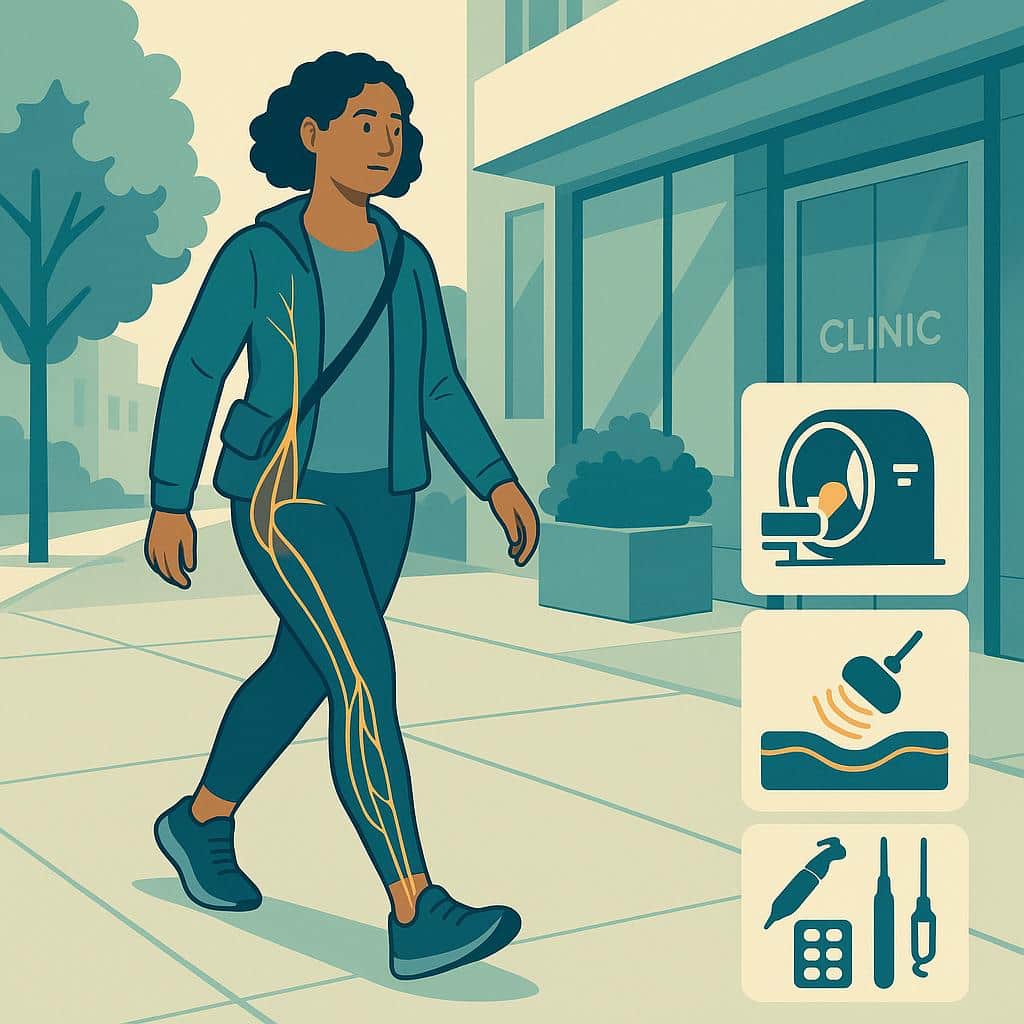
Sciatic nerve endometriosis explained: key symptoms, how it's diagnosed (exam, MRI), and effective treatments including medication, PT, and surgical excision.
Lotus Endometriosis Institute provides California-based surgical evaluation and advanced excision care for patients with suspected endometriosis, adenomyosis, complex pelvic pain, and related conditions.
Many patients contact us from outside California to learn whether traveling for in-person evaluation and possible surgery may be appropriate.
2121 Santa Monica Blvd, Santa Monica, CA 90404
8am - 5pm
Monday - Friday
154 Traffic Way, Arroyo Grande, CA 93420