


Sex After Endometriosis Excision and Deep Surgery
When to discuss returning to intimacy, what may improve, and when lingering pain needs attention

Sex after endometriosis excision and deep surgery
Sex after endometriosis excision often becomes less painful, with many sexually active people reporting better sexual function within 3–6 months after deep surgery. There is no universal date for resuming penetration: follow your operating surgeon’s instructions. Being cleared for sex and feeling comfortable with it are different milestones, and healing and sexual confidence vary.
Before surgery, pain, fear of pain, bleeding, bowel symptoms, or an emotional crash afterward can make sex something you dread. Pain can lead to avoidance, guilt, and relationship stress, which can make arousal and lubrication harder and worsen pain. These overlapping effects do not make the pain psychological.
Returning to sex follows your own surgical recovery
Clearance for penetration is not a promise of pain-free sex
The extent of your deep surgery and your surgeon’s instructions determine when penetration is appropriate. Having laparoscopic or robotic surgery, or a stage 4 diagnosis, does not by itself establish a safe return date. Deep endometriosis surgery can be extensive, so healing may take longer than you expect.
Ask your own surgeon specifically about penetration and, if relevant, nonpenetrative touch, masturbation, and orgasm. Do not assume the same restrictions apply to every activity. If you resumed sex earlier than instructed, including at three weeks, contact your surgeon for individual advice rather than assuming that harm did or did not occur.
A three- to six-month timeline describes improvement, not surgical clearance
The 3–6-month timeline describes when people reported changes in pain and sexual function. It is not a recommendation to wait that long before sex, or permission to resume it at a particular point.
By about three months, many people notice meaningful improvement, although arousal, lubrication, and pain may still be troublesome. By six months, those gains often persist, but residual sexual pain or lower satisfaction can remain. Permission to resume an activity does not mean it will immediately feel comfortable.
Improvement is common, but sexual pain can persist
Why surgery can help without resolving every cause of pain
Sexual functioning includes desire, arousal, lubrication, orgasm, satisfaction, and pain with sex. Deep endometriosis can affect these through several overlapping routes:
- Mechanical pain from deep lesions near the uterosacral ligaments, rectovaginal space, bowel, bladder, or vaginal fornix.
- Pelvic floor muscle guarding and secondary vaginismus, or involuntary tightening, from anticipating pain.
- Inflammation and sensitization, which can amplify pain even after the original trigger is reduced.
- Mood and stress effects, including depressive symptoms that commonly coexist with chronic pain.
- Relationship strain and loss of a sense of safety around touch and intimacy.
Surgery aims to remove or treat deep lesions and reduce the sources of pain. It cannot instantly undo pelvic floor overactivity, nervous-system sensitization, or fear learned through painful experiences. Improvement can therefore be meaningful while still incomplete at 3–6 months.
What improved at three and six months
In a 2025 retrospective cohort study of 125 sexually active women undergoing laparoscopic deep endometriosis surgery, average sexual function improved across every measured domain: desire, arousal, lubrication, orgasm, satisfaction, and pain. Improvements were reported at both three and six months, although only 65 participants provided six-month data.
Overall sexual function averaged about 65% of the best possible questionnaire score before surgery, 75% at three months, and 74% at six months. A comparison group of 134 healthy women averaged about 85%. These are group averages, not percentages of people who recovered or predictions of your individual outcome.
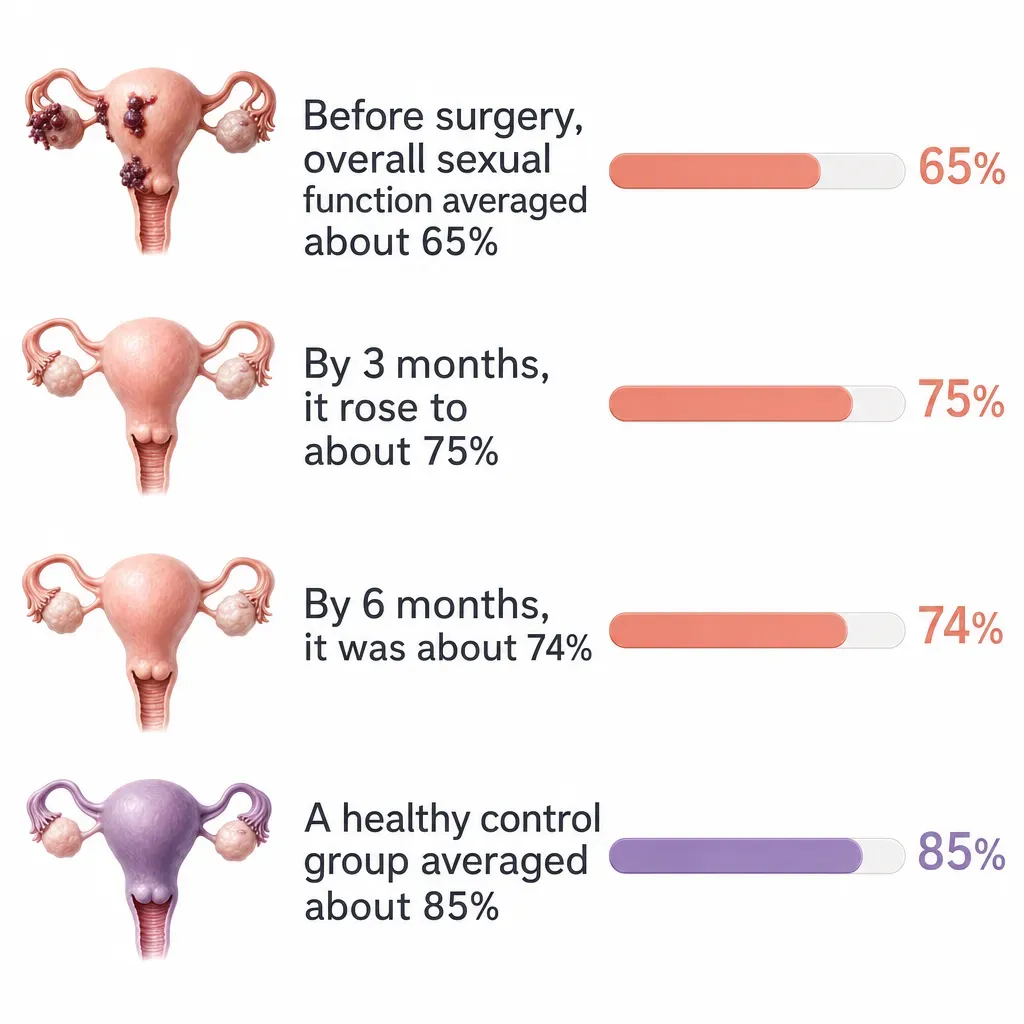
Many people improved noticeably, but average sexual function remained below that of healthy peers at 3–6 months. Less pain does not necessarily mean every aspect of sex has recovered at the same pace.
Arousal, lubrication, pain, and satisfaction may lag
In the 2025 cohort of women undergoing deep surgery, arousal, lubrication, and pain scores remained worse than those of healthy controls at three and six months. At six months, sexual satisfaction was also lower.
Arousal and lubrication are strongly influenced by a sense of safety, anticipation, pelvic floor muscle tension, hormones, and mood. Postoperative hormonal suppression can also affect these areas. Removing lesions and reducing pain helps, but it does not address every factor affecting sexual comfort.
Emotional recovery and other symptoms matter too
Sexual distress does not always track physical improvement
Sexual distress means feeling upset or frustrated about your sexual life, or feeling that something is wrong with you. Sexual function can improve while distress remains high, and distress can ease without an equal change in physical function.
In the 2025 cohort of sexually active women having deep surgery, sexual distress decreased at three months and remained improved at six months compared with before surgery. Distress nevertheless tended to remain higher than in healthy controls.
You may have less pain but still feel anxious about sex, grieve what pain has done to a relationship, or not yet trust your body. Those feelings can require additional support as part of recovering sexual well-being.
Reclaim Pain-Free Intimacy Now
Our specialists are here to help you understand your condition and explore your treatment options.
Schedule Your ConsultationChanges in pain, mood, and quality of life
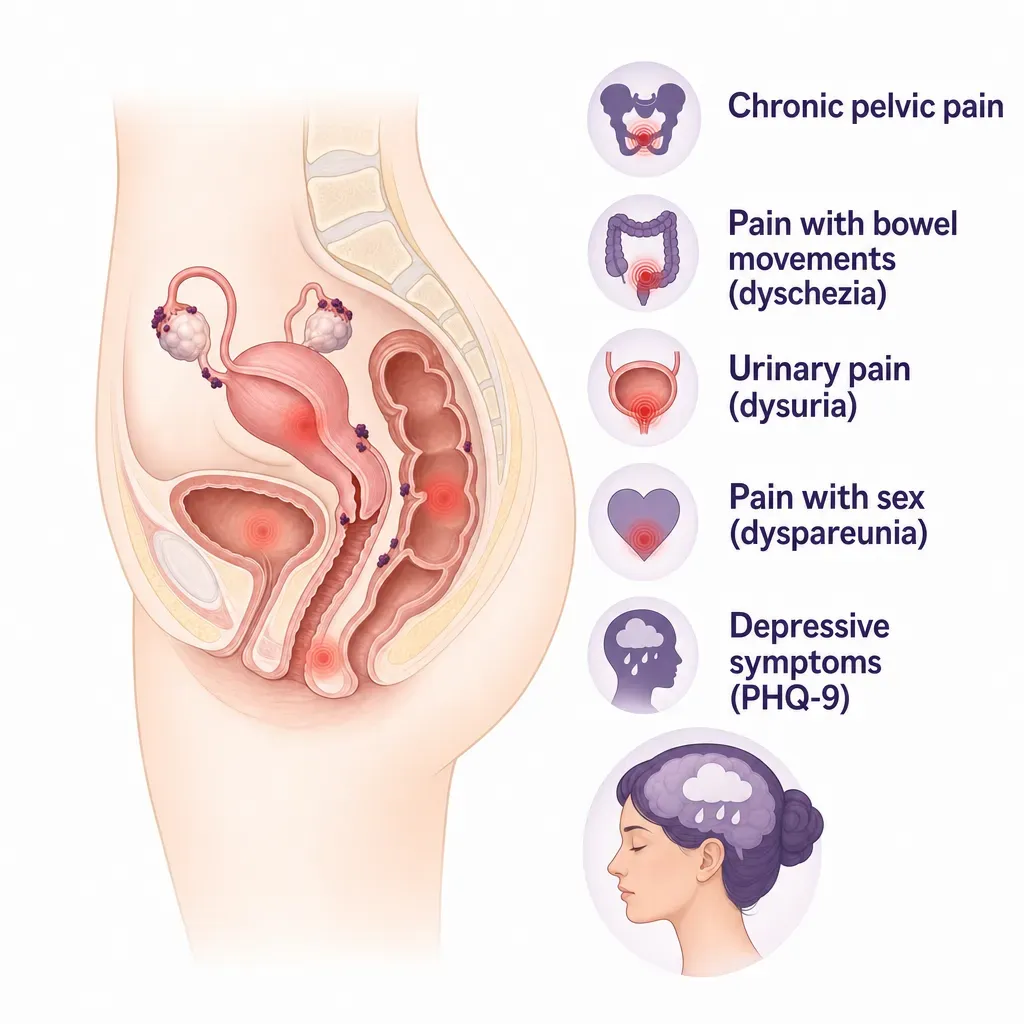
Sex does not happen in isolation from the rest of your symptoms. Women in the 2025 deep-surgery cohort also reported improvements in period pain, chronic pelvic pain, pain with bowel movements, urinary pain, pain with sex, and depressive symptoms.
Quality of life improved broadly by three months. By six months, social support and self-image were less consistently improved. Emotional recovery and rebuilding your sense of self and your relationships often take longer than tissue healing.
Bowel surgery does not automatically mean worse sexual function
Hearing that you may need bowel shaving, disc resection, or segmental resection can understandably raise concerns about sex after surgery. In the 2025 cohort of women undergoing laparoscopic deep endometriosis surgery, overall postoperative sexual-function scores were not statistically different between those who did and did not have bowel surgery.
That is reassuring: bowel procedures did not automatically mean worse short-term sexual function in this group. It is not a guarantee that bowel surgery has no effect, particularly because smaller subgroups and differences in anatomy and surgical complexity can make differences harder to detect.
Your individual risk and sexual recovery depend on disease location, nerve involvement, previous surgeries, baseline bowel function, surgeon experience, and complication risk. Ask your surgeon how those factors apply to the procedure you may need.
These results may not predict your individual recovery
The figures above are most relevant to sexually active people with deep endometriosis undergoing laparoscopic surgery, particularly when pain affects sex or sexual confidence. They describe changes over the first six months, rather than every possible recovery course.
Questionnaires built around recent sexual activity may not represent someone who is avoiding sex because of pain. The figures may also be less applicable if you have complex trauma related to pelvic pain or significant adenomyosis without deep endometriosis. The 2025 cohort excluded adenomyosis-only cases, although some participants had both conditions.
The extent and quality of surgery matter, too. Deep surgery done right excises visible disease while limiting trauma and optimizing preservation of normal tissue and organs. This requires surgical skills many notches above those of an average excision surgeon.
Persistent pain deserves a targeted reassessment
Possible reasons sex still hurts
If improvement has stalled, or you are not seeing improvement by 3–6 months, it is time to reassess what is causing symptoms now. This does not establish that surgery failed, was pointless, or that symptoms are permanent.
Discuss pelvic floor dysfunction, hormonal effects and vaginal dryness, residual disease, nerve pain, and central sensitization with your own clinicians. Central sensitization means the nervous system continues to amplify pain signals. Relationship factors, depression, and anxiety may also need attention alongside physical causes.
Support that can help beyond surgery
Surgery can be a powerful treatment, but it is rarely the only tool needed to restore a satisfying sex life. Depending on the remaining symptoms, support may include:
- Pelvic floor physical therapy, especially for entry pain, burning, tightness, or muscle guarding.
- Gradual, pain-aware sexual rehabilitation, with a gradual return to touch and penetration and sometimes guided use of dilators.
- Lubricants, vaginal moisturizers, and treatment of dryness, particularly during hormonal suppression.
- Mental health support for depression, anxiety, grief, or trauma responses related to pain.
- Couples or sex therapy to rebuild a sense of safety and improve communication.
These options address muscles, nerves, hormones, learned fear, and relationship dynamics that may remain after lesions have been treated. Ask which are appropriate for your symptoms and stage of healing.
Questions to take to your own doctors
Take these questions to your surgeon, gynecologist, or pelvic pain specialist so that your recovery plan addresses more than how long discomfort might last:
- “Based on where my deep endometriosis is, what are the most likely reasons sex hurts for me: deep pain, entry pain, pelvic floor spasm, or bowel or bladder involvement?”
- “What is your timeline for returning to penetration after my operation? If I’m still having pain at 3–6 months, what is your step-by-step plan?”
- “Will I be on postoperative hormonal suppression? How might that affect libido, mood, and vaginal dryness, and what can we do if that happens?”
- “Can you refer me now to pelvic floor physical therapy or a sexual health counselor so recovery is proactive, rather than waiting to see whether problems persist?”
- “If bowel surgery might be needed, what is the realistic complication risk in my case, and how would complications affect pain and sexual recovery?”
Symptoms that warrant prompt medical advice
Some discomfort during healing can be normal, but do not push through symptoms that feel wrong. Contact your own surgeon or care team promptly, or seek urgent care, for fever, worsening severe pain, heavy bleeding, foul discharge, inability to pass stool or gas, inability to urinate, or rapidly worsening new bowel or bladder symptoms.
If sex causes sharp or persistent pain, stop rather than pushing through it and seek reassessment. Pain that escalates over time instead of gradually improving also needs medical review.
References
de Koning, Metzemaekers, Keetels, Kleinjans, Jansen, Twijnstra, Both, Blikkendaal. The impact of laparoscopic deep endometriosis surgery on sexual functioning and distress. Facts, Views & Vision in ObGyn. 2025.. DOI: 10.52054/FVVO.2025.148
Quick Answers
How much time off work do I need after endometriosis surgery?
Most people need about 2–3 weeks off work after minimally invasive endometriosis excision, especially for a desk-based job with a gradual return. More complex surgery can extend that time, and your job duties help determine a realistic return-to-work plan.
When is hysterectomy recommended for adenomyosis?
Hysterectomy is typically considered for adenomyosis when severe symptoms come from the uterus and you’re not planning future pregnancy. It is usually weighed most strongly when conservative treatments haven’t provided acceptable relief, aren’t tolerated, or don’t fit your goals.
Why does sex hurt more around my period?
Pain with sex that worsens around your period often points to inflammation and more reactive pelvic nerves before and during bleeding. Endometriosis can amplify pain signals, and adenomyosis can make the uterus unusually tender and crampy.
Why is my period pain so severe it disrupts my daily life?
Severe period pain that disrupts daily life often points to an underlying cause, such as endometriosis or adenomyosis. Pain severity doesn’t reliably match the stage of endometriosis, so pain can be intense even when imaging looks normal.