Symptoms
Can adenomyosis cause hip pain?
The short answer
Yes, adenomyosis can contribute to hip pain as uterine inflammation and cramping refer pain through shared pelvic nerves. Hip pain is not specific to adenomyosis, but worsening before or during your period with heavy bleeding or painful periods makes it a stronger suspect.
Medically reviewed by Dr. Steven Vasilev, MD
Quadruple board-certified in surgical and integrative therapies, Minimally-Invasive Robotic Endometriosis-Excision Surgeon, Director of Lotus Endometriosis Institute · Updated Oct 2026
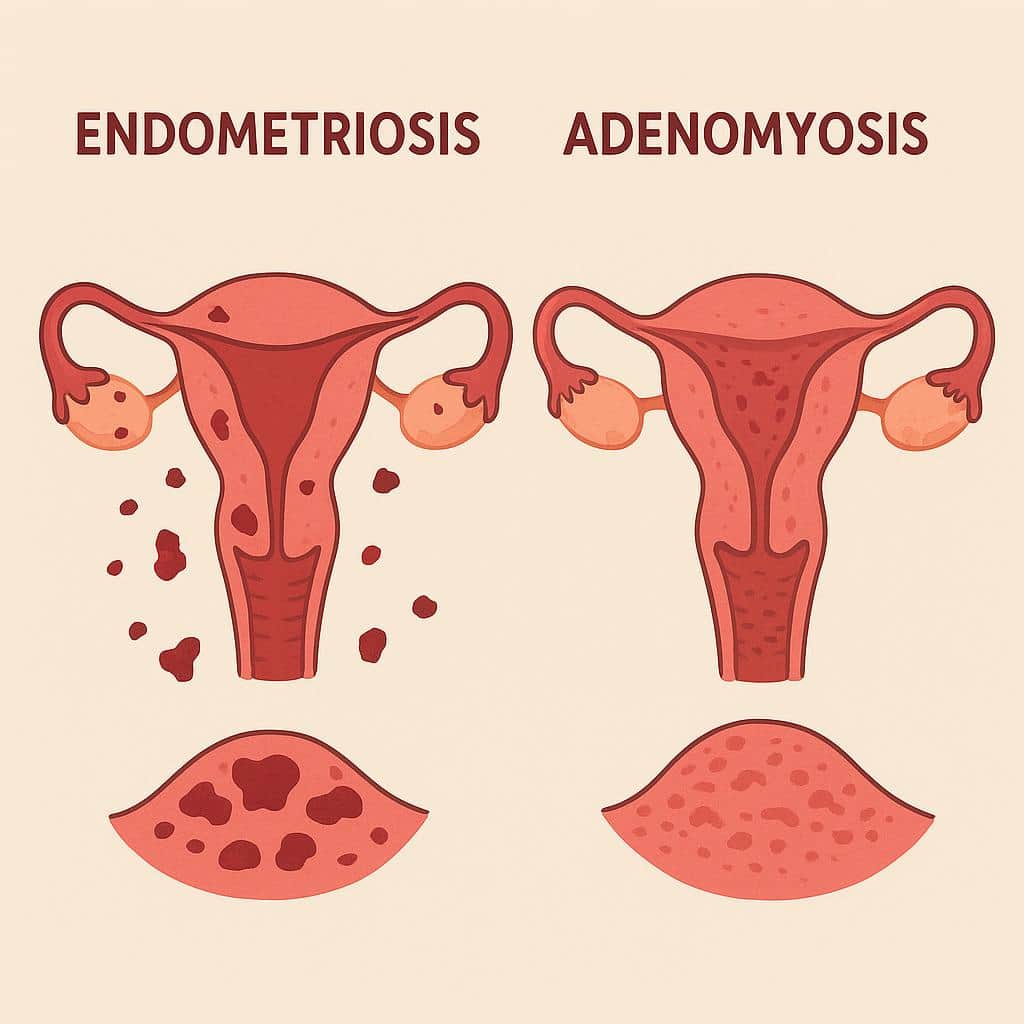
Yes, adenomyosis can contribute to pain that you feel in the hip, buttock, groin, or upper thigh. Even though adenomyosis stays within the muscular wall of the uterus, uterine inflammation and cramping can “refer” pain outward through shared pelvic nerve pathways, and it can also trigger pelvic floor muscle guarding that radiates into the hips.
That said, hip pain isn’t specific to adenomyosis, and it often overlaps with other common “neighbors,” especially endometriosis (which frequently coexists with adenomyosis) and bladder or bowel pain syndromes. When hip pain follows a cyclical pattern (worsening before or during your period) especially alongside heavy bleeding, painful periods, deep pelvic pressure, or pain with sex, adenomyosis becomes a stronger suspect.
Our team takes a whole-pelvis approach to figure out whether the uterus is the primary driver or part of a larger picture, using targeted history plus imaging such as ultrasound or MRI when appropriate. If adenomyosis and/or endometriosis is contributing, we’ll walk you through individualized options that may include medical management and, for select patients, minimally invasive surgical approaches aimed at long-term relief. If you’d like, you can reach out to schedule a consultation so we can map your symptoms and help you understand what’s most likely causing your hip pain.
Where to go from here
Understand it, compare it with what you're feeling, then talk it through with us.
Speak with Us
Is Your Hip Pain Linked to Adenomyosis?
Hip pain can be a confusing symptom, but our specialists can help determine if adenomyosis is the cause. We’re here to provide clarity and relief tailored to your unique symptoms.
Questions people ask next
All symptoms questionsHip pain during periods: could it be endometriosis?
Yes, hip pain that predictably flares during your period can be endometriosis-related, as pelvic tissue or nerve irritation can send pain into the hip. But period-timed hip pain does not automatically mean endometriosis, and muscle, joint or spine problems can also contribute.
Can adenomyosis cause leg pain, or is it only endometriosis?
Both adenomyosis and endometriosis can contribute to leg pain. With adenomyosis, intense uterine cramping and pelvic pressure can send pain into the hips, thighs, or legs, often alongside pelvic floor muscle tightening that amplifies symptoms.
Can adenomyosis cause back pain?
Yes, adenomyosis can cause back pain, especially low back or sacral aching that flares with your cycle. The uterus can become enlarged and tender, and deep pelvic pain can spread into the back, often alongside heavy bleeding, severe cramping or pelvic pressure.
Why does pain worsen in certain positions or times in my cycle?
Pain in certain positions often points to pressure or stretching of sensitive pelvic structures. Cycle-related flares can reflect hormone-driven inflammation and tissue changes, with many patients noticing worse symptoms around ovulation or before a period.
Further reading
Do My Symptoms Mean Adenomyosis or Endometriosis?
Discover the truth about endometriosis and adenomyosis symptoms. Understand how common they really are, and gain insights for effective advocacy.
Endometriosis and Adenomyosis: How They Drive Pelvic Pain
Compare endometriosis and adenomyosis: similarities, differences in location and prevalence, diagnosis methods, and treatment options for pelvic pain.
What Else Could It Be? Ruling Out Other Causes
Explore essential insights on endometriosis and other causes of pelvic pain. Learn about differential diagnoses and effective treatment options.