General
Can birth control pills or IUDs help endometriosis or adenomyosis?
The short answer
Yes, birth control pills and the levonorgestrel IUD can help many patients with endometriosis or adenomyosis by reducing heavy bleeding and period-related pelvic pain. They can quiet symptoms during use, but don’t remove endometriosis lesions or reverse adenomyosis.
Yes. Hormonal birth control, including combined or progestin-only pills and the levonorgestrel IUD, can help many patients by reducing heavy bleeding and period-related pelvic pain common with endometriosis and adenomyosis.
These options suppress or thin the uterine lining and can ease symptoms while you’re using them, but they don’t remove endometriosis lesions or reverse adenomyosis. If you’re still having significant pain, bleeding, or side effects on hormonal therapy, or symptoms return when you stop, our team can help you sort out what’s driving your symptoms and discuss next-step options, including surgical evaluation when appropriate.
Where to go from here
Understand it, compare it with what you're feeling, then talk it through with us.
Compare
Symptoms it can relate to
Speak with Us
Struggling with birth control options?
Hormonal methods can ease heavy bleeding and pelvic pain from endometriosis or adenomyosis. Our specialists help tailor treatments to manage your symptoms effectively.
Questions people ask next
All general questionsWill a hormonal IUD help adenomyosis, and affect future fertility?
A hormonal IUD can reduce heavy bleeding and period pain from adenomyosis without permanently reducing fertility. Ovulation and the ability to conceive typically return soon after removal, though symptom relief can be less complete with severe or diffuse adenomyosis.
Can hormonal birth control stop heavy bleeding in adenomyosis?
Hormonal birth control can significantly reduce heavy bleeding and cramping for many people with adenomyosis. For some patients, bleeding can feel like it stops, while for others it becomes lighter or more predictable rather than fully resolving.
Side effects, monitoring, and duration of endometriosis medications?
Side effects can include spotting, mood changes, acne or effects on bone density, depending on the medication. Monitoring depends on your health history; many patients can use progestogens or a hormonal IUD long term if effective and well-tolerated, while GnRH regimens are typically time-limited.
Why don’t hormones help my endometriosis pain?
Hormones may not help your endometriosis pain because they mainly reduce cycle-driven inflammation and bleeding, not every source of pain. Scarring, nerve growth, a sensitized nervous system or pelvic floor problems may keep pain going even when periods are suppressed.
Further reading
IUD for Adenomyosis Pain and Bleeding
Can an IUD for adenomyosis ease pain and heavy bleeding? Learn what improvement, side effects and the first six months may look like.
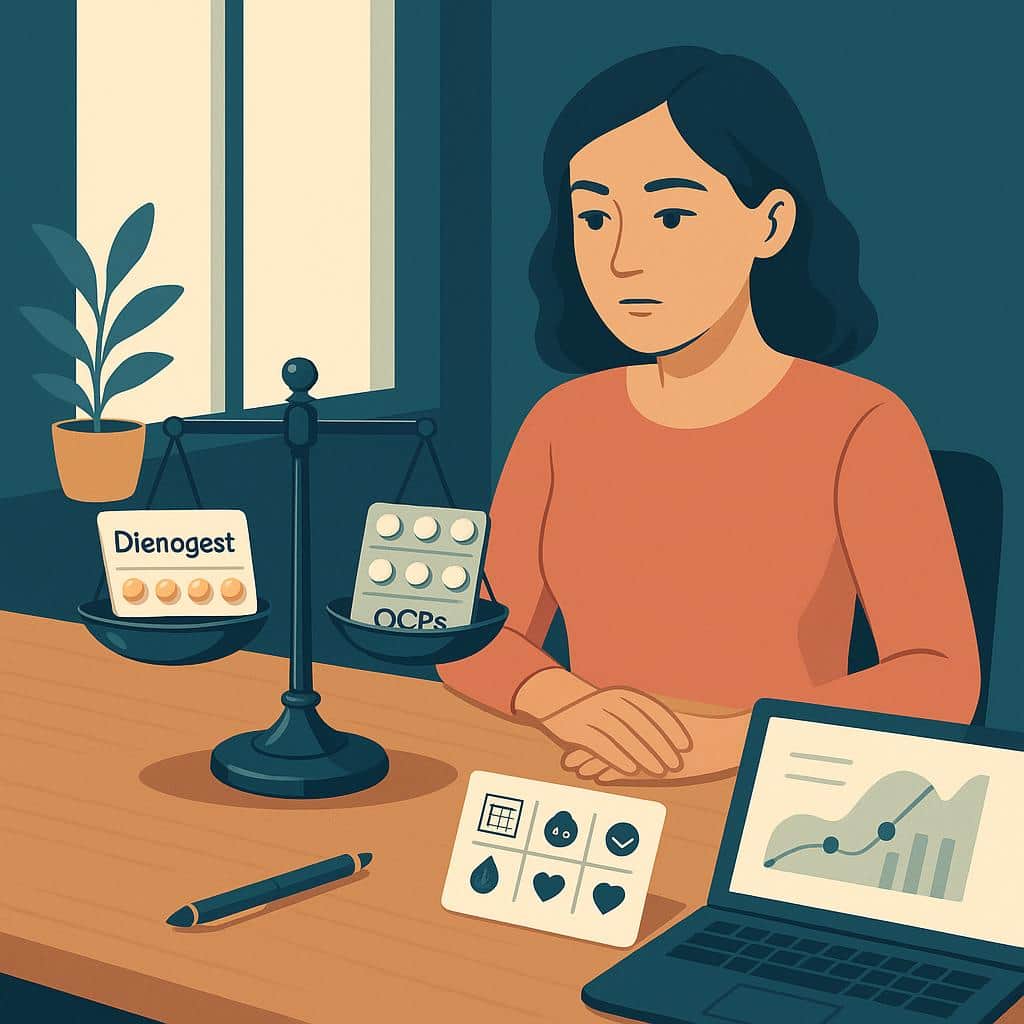
Dienogest vs. Combined Oral Contraceptives for Endometriosis Pain: What a 2025 Meta-Analysis Found
A 2025 meta-analysis of dienogest vs OCPs for endometriosis pain: dienogest helps generalized pain; OCPs help pelvic pain/dyspareunia. Similar side effects.
Should You Try Hormone Therapy Before Endometriosis Surgery?
Explore the benefits of hormone therapy before endometriosis surgery. Learn about GnRH agonists and their impact on pain and recovery.