

General
Can hormonal birth control stop heavy bleeding in adenomyosis?
The short answer
Hormonal birth control can significantly reduce heavy bleeding and cramping for many people with adenomyosis. For some patients, bleeding can feel like it stops, while for others it becomes lighter or more predictable rather than fully resolving.
Hormonal birth control can significantly reduce heavy bleeding and cramping for many people with adenomyosis and sometimes with endometriosis, mainly by suppressing cycle-driven hormonal fluctuations and thinning the uterine lining. For some patients, it can feel like the bleeding stops, while for others it becomes lighter or more predictable rather than fully resolving.
Response varies, and side effects, breakthrough bleeding, and how long you can comfortably stay on hormones all matter. Hormonal therapy doesn’t remove endometriosis lesions, so symptoms may return when hormones are stopped. If heavy bleeding is affecting your quality of life or causing anemia, our team can help you sort out likely causes, review whether hormonal management makes sense for your goals, and discuss longer-term options, including surgical evaluation when appropriate.
Where to go from here
Understand it, compare it with what you're feeling, then talk it through with us.
Compare
Symptoms it can relate to
Speak with Us
Struggling With Heavy Bleeding?
Our specialists understand how heavy bleeding impacts your life. We can help tailor hormonal treatments to manage your symptoms effectively.
Questions people ask next
All general questionsCan birth control pills or IUDs help endometriosis or adenomyosis?
Yes, birth control pills and the levonorgestrel IUD can help many patients with endometriosis or adenomyosis by reducing heavy bleeding and period-related pelvic pain. They can quiet symptoms during use, but don’t remove endometriosis lesions or reverse adenomyosis.
What medications help endometriosis and adenomyosis?
For endometriosis and adenomyosis, NSAIDs like ibuprofen can help pain, and hormonal medications can sometimes lessen bleeding and pain. NSAIDs don’t treat the underlying disease, and hormonal relief varies and typically lasts only while you’re on medication.
Side effects, monitoring, and duration of endometriosis medications?
Side effects can include spotting, mood changes, acne or effects on bone density, depending on the medication. Monitoring depends on your health history; many patients can use progestogens or a hormonal IUD long term if effective and well-tolerated, while GnRH regimens are typically time-limited.
When is menstrual bleeding considered too heavy?
Menstrual bleeding is generally too heavy when it consistently disrupts your life or overwhelms your usual period products. Signs include soaking pads or tampons quickly, frequent or large clots, doubling up on products, or waking at night to change them.
Further reading
IUD for Adenomyosis Pain and Bleeding
Can an IUD for adenomyosis ease pain and heavy bleeding? Learn what improvement, side effects and the first six months may look like.
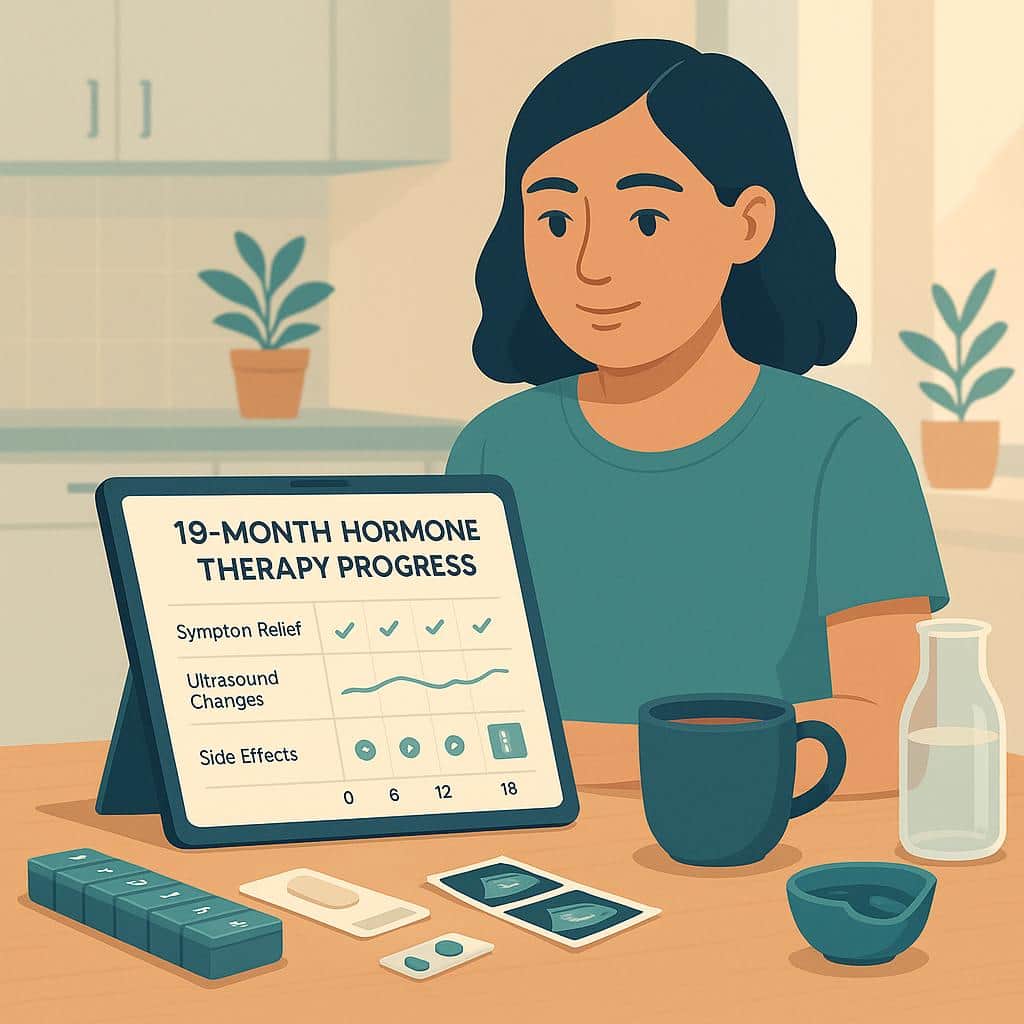
Can Hormone Treatment Calm Adenomyosis Symptoms Over Time? What an 18 Month Follow Up Study Found
We break down an 18‑month follow‑up of hormone therapy for adenomyosis: who was studied, symptom trends, ultrasound changes, side effects, and key limitations.
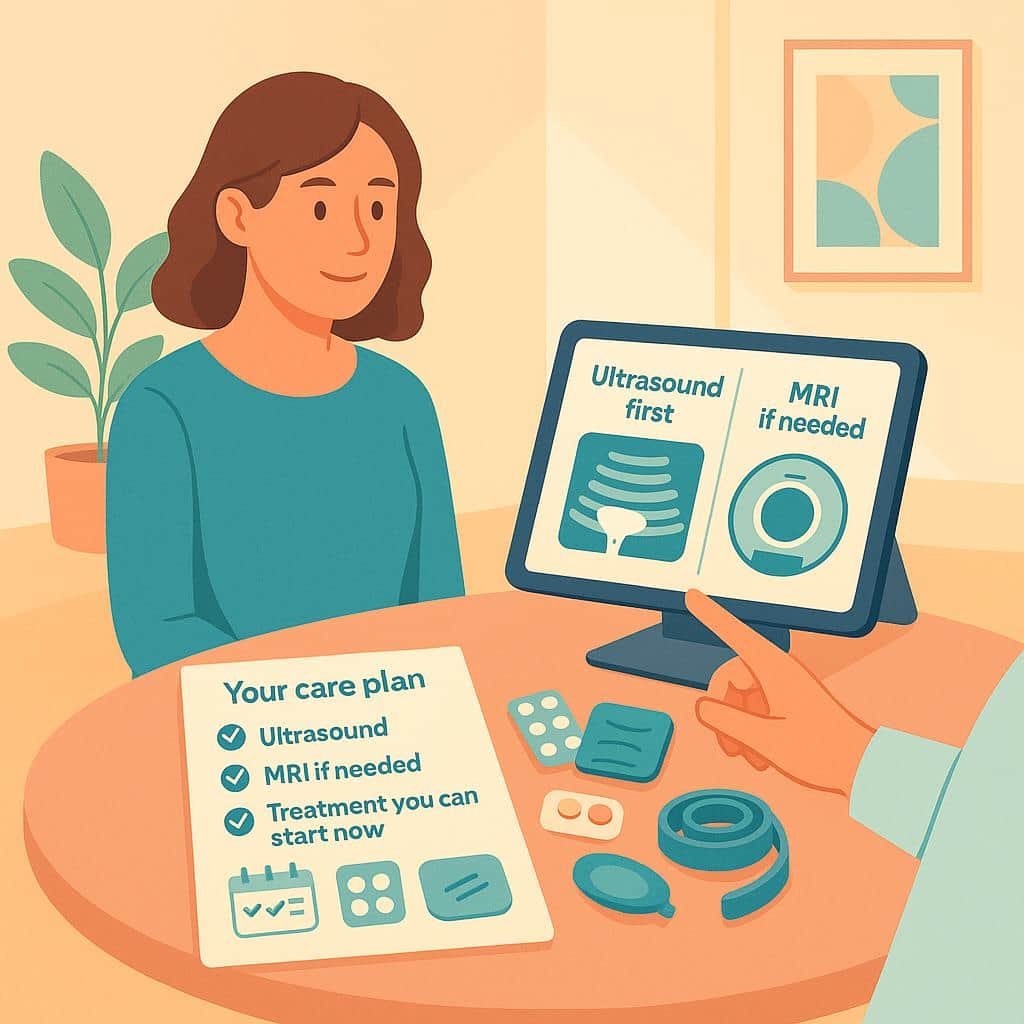
Diffuse Adenomyosis Diagnosis and Treatment That Fit Your Goals
What diffuse adenomyosis means, how ultrasound and MRI guide diagnosis, and which treatments may fit your bleeding, pain, and fertility goals.