Diagnosis
Do fibroids turn into cancer, and what are red flags?
The short answer
Benign uterine fibroids almost never turn into cancer. Red flags include a new or rapidly enlarging uterine mass after menopause, concerning ultrasound or MRI findings, and bleeding that differs from your past patterns, especially new bleeding after menopause.
Benign uterine fibroids almost never turn into cancer. A true uterine leiomyosarcoma is rare and typically arises independently rather than from a pre-existing fibroid, which is why the overall risk remains low.
The red flags we take most seriously include a new or rapidly enlarging uterine mass after menopause, unusual or concerning findings on ultrasound or MRI, and bleeding patterns that don’t fit your prior history, especially new bleeding after menopause. When there are concerning features, our team focuses on a careful review of your history and expert imaging interpretation (often with MRI) to better assess risk and guide next steps. The only definitive way to diagnose leiomyosarcoma is through pathology after tissue is removed. If you’re worried about your symptoms or imaging report, you can reach out to schedule a consultation with us for a personalized assessment.
Where to go from here
Understand it, compare it with what you're feeling, then talk it through with us.
Step 2 · Compare
Symptoms it can relate to
Step 3 · Speak with Us
Worried About Fibroids and Cancer?
Fibroids rarely become cancerous, but sudden changes or new symptoms need expert evaluation. Our specialists use advanced imaging to ensure accurate diagnosis and peace of mind.
Questions people ask next
All diagnosis questionsWhat if I have pelvic pain or bladder/bowel symptoms with fibroids?
Pelvic pain or bladder and bowel symptoms can happen with fibroids, but they can also signal another contributing condition, such as endometriosis or pelvic floor muscle dysfunction. A fibroid-only treatment plan may not fully relieve these symptoms.
Can adenomyosis cause cancer?
Adenomyosis is not cancer, and current evidence doesn’t show that it clearly causes cancer. It can sometimes be seen alongside uterine (endometrial) cancer, but research on the relationship between the two is still evolving.
Further reading
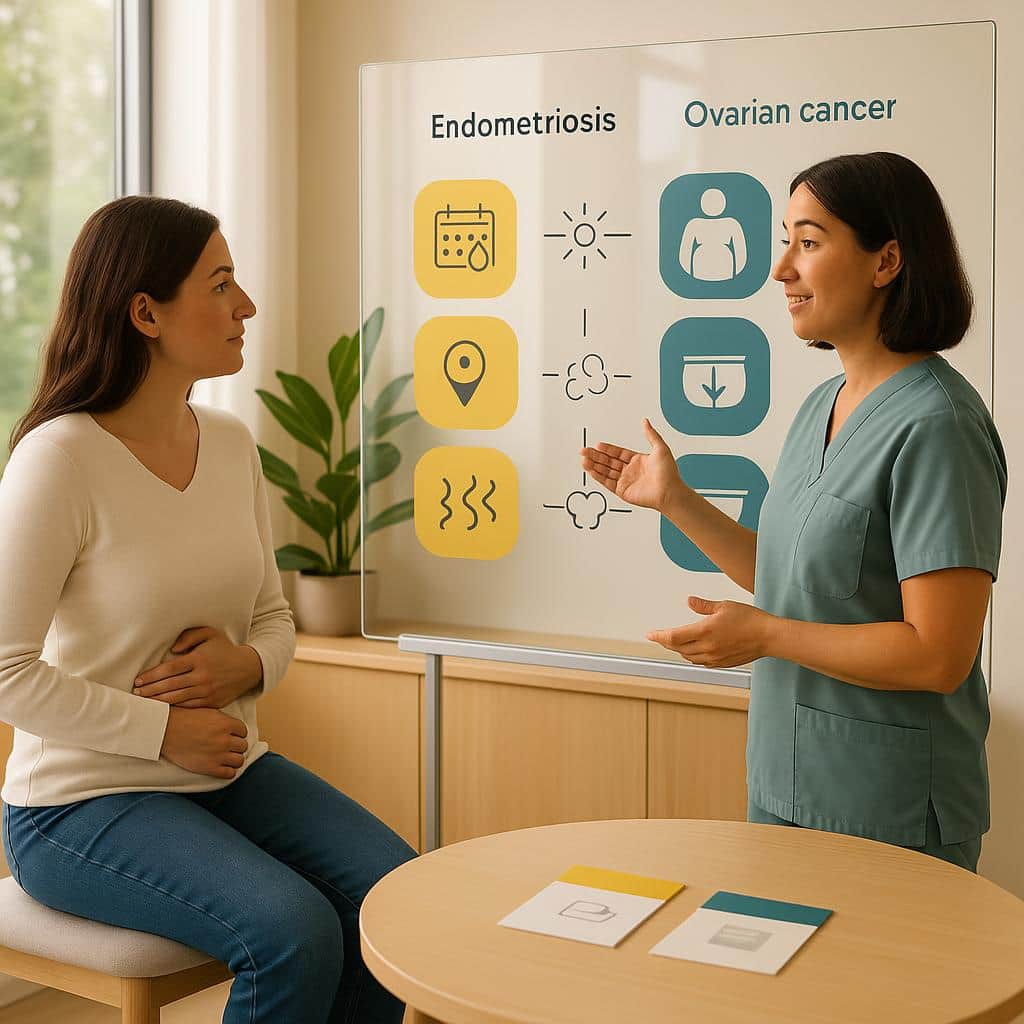
Endometriosis vs. Cancer: How to Tell The Symptoms Apart
Compare endometriosis vs. ovarian cancer symptoms: pain patterns, bleeding, GI signs, and red flags. Know when to see a gynecologist or gynecologic oncologist.
Why Endometriosis and Fibroids Often Show Up Together—And What That Means for You
Explore why endometriosis and fibroids often coexist, their symptoms, and what it means for your health. Get informed on your care options.