

Diagnosis
When is imaging most helpful for endometriosis?
The short answer
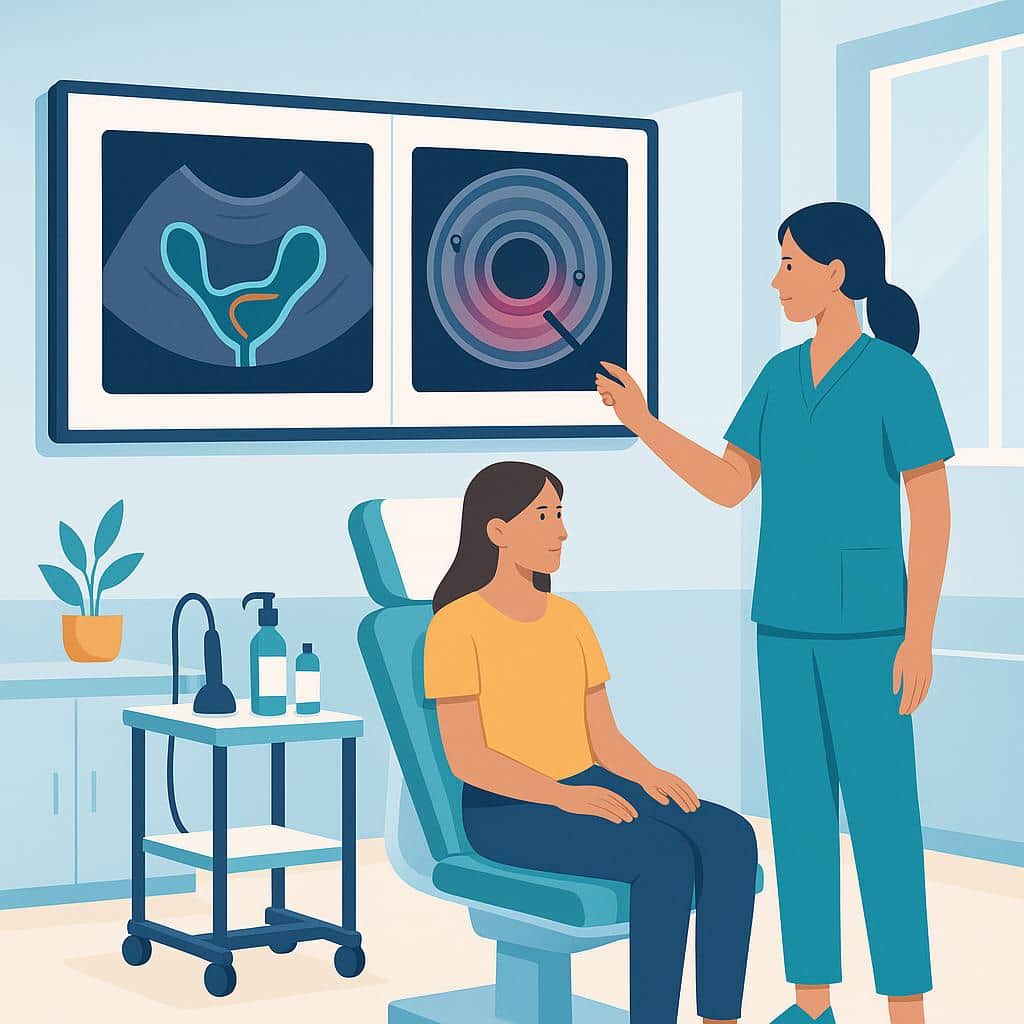
Imaging is most helpful when clarifying what may be driving your symptoms before treatment, or when we suspect deeper disease that may involve the bowel or bladder. It can help guide surgical planning, but it can’t rule out endometriosis.
Imaging is most helpful when we’re clarifying what may be driving your symptoms before making treatment decisions. It can add important context when pelvic pain, bloating, bowel changes, or urinary symptoms could have multiple causes and we need to sort out what’s most likely.
It’s also particularly useful when we suspect deeper disease that may involve the bowel, bladder, or pelvic sidewall, because that information can influence surgical planning and which specialists may be needed. While imaging can’t rule out endometriosis, it can help us map what’s visible, anticipate complexity, and plan the safest, most effective next step. Reach out if you’d like our team to review your history and help decide whether imaging would be useful in your case.
Where to go from here
Understand it, compare it with what you're feeling, then talk it through with us.
Compare
Symptoms it can relate to
Speak with Us
Wondering if Imaging Can Help?
Our specialists use imaging to pinpoint the causes of your symptoms and tailor your treatment plan. We'll help clarify your diagnosis and plan the right approach for you.
Questions people ask next
All diagnosis questionsWhen is pelvic MRI recommended for suspected endometriosis?
Pelvic MRI is most helpful when deep endometriosis is suspected and is commonly used when a high-quality ultrasound doesn’t fully explain symptoms. It can help plan surgery and may be considered if symptoms persist despite treatment and results could change next steps.
Can imaging confirm endometriosis?
Imaging can be very helpful, but it usually can’t confirm endometriosis on its own. Ultrasound or MRI may strongly suggest disease, but a normal scan doesn’t rule it out because many small, superficial or microscopic lesions won’t show up on scans.
Can imaging tell endometriosis from IBS or bladder pain?
Imaging can sometimes provide helpful clues, but it can’t reliably tell endometriosis apart from IBS or bladder pain on its own. Ultrasound or MRI can be normal despite significant symptoms, so results are interpreted alongside your symptom history and a targeted pelvic exam.
Ultrasound or MRI before endometriosis excision: which is best?
Neither ultrasound nor MRI is universally best before endometriosis excision. Expert ultrasound assesses deep disease and organ mobility; MRI often adds a broader map of disease near the bowel, bladder and ureters, and both may be recommended in complex cases.
Further reading
Do You Need Two Ultrasounds Before Bowel Endometriosis Surgery?
How TVS (transvaginal) and ERUS (endorectal) map rectal endometriosis, guide bowel surgery planning, flag stenosis and risks, and who benefits.
Bladder Endometriosis: Symptoms, Diagnosis, and Treatment Options
Learn about bladder endometriosis, its symptoms, diagnosis, and treatment options. Understand the complexities to find effective pain management solutions.
Deep Infiltrating Endometriosis: Current and Future Treatments
Deep infiltrating endometriosis: symptoms, causes, diagnosis and treatment. Medical therapy, ICG-guided surgery, stenting, pathology, and future outlook.