
Endometriosis
Endometriosis is tissue similar to the lining of the uterus growing outside it: on the ovaries, the tubes and the pelvic lining, and sometimes on the bowel, bladder or diaphragm. It can bring painful periods, pelvic pain, painful sex and trouble getting pregnant. It isn't one disease: where it grows, and how deep, shapes the symptoms and the treatment.
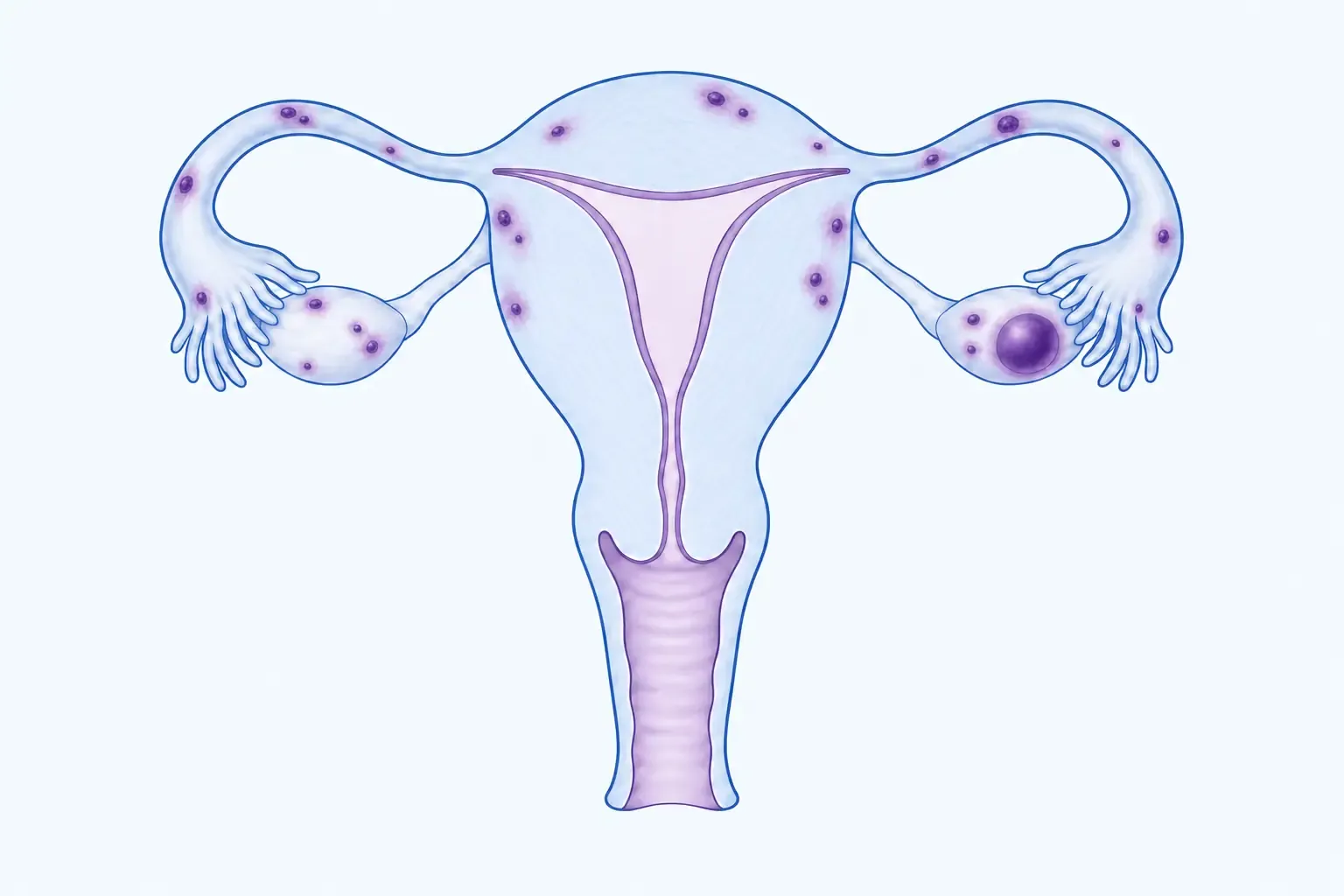
- LiningThe endometrium, inside the uterus
- EndometriosisImplants on the uterus, tubes and ovaries
- EndometriomaA blood-filled cyst inside the ovary
- About 1 in 10
- women of reproductive age have it
- Years
- often pass before it's diagnosed
- Excision
- removes it; hormones control it
Its forms
Is it one disease?
No. It can stay on the surface of the pelvic lining, grow deep into organs, or form cysts in the ovary, and many people have more than one form. Where it grows shapes the symptoms and the surgery.
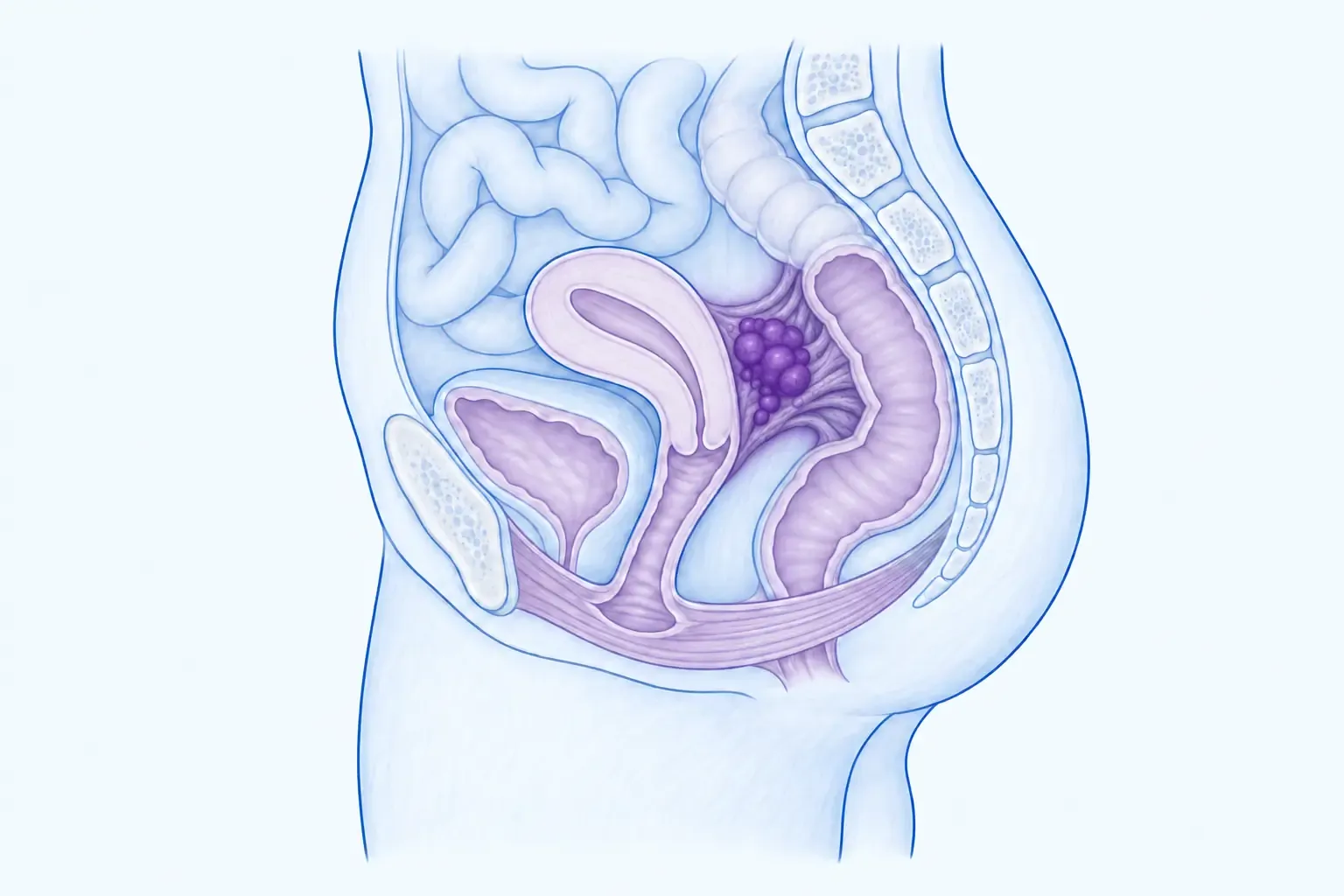
Deep infiltrating endometriosis
Grows more than 5 mm below the surface, often behind the uterus, where scar tissue can bind it to the rectum. It tends to cause the most severe pain and needs an experienced surgeon.
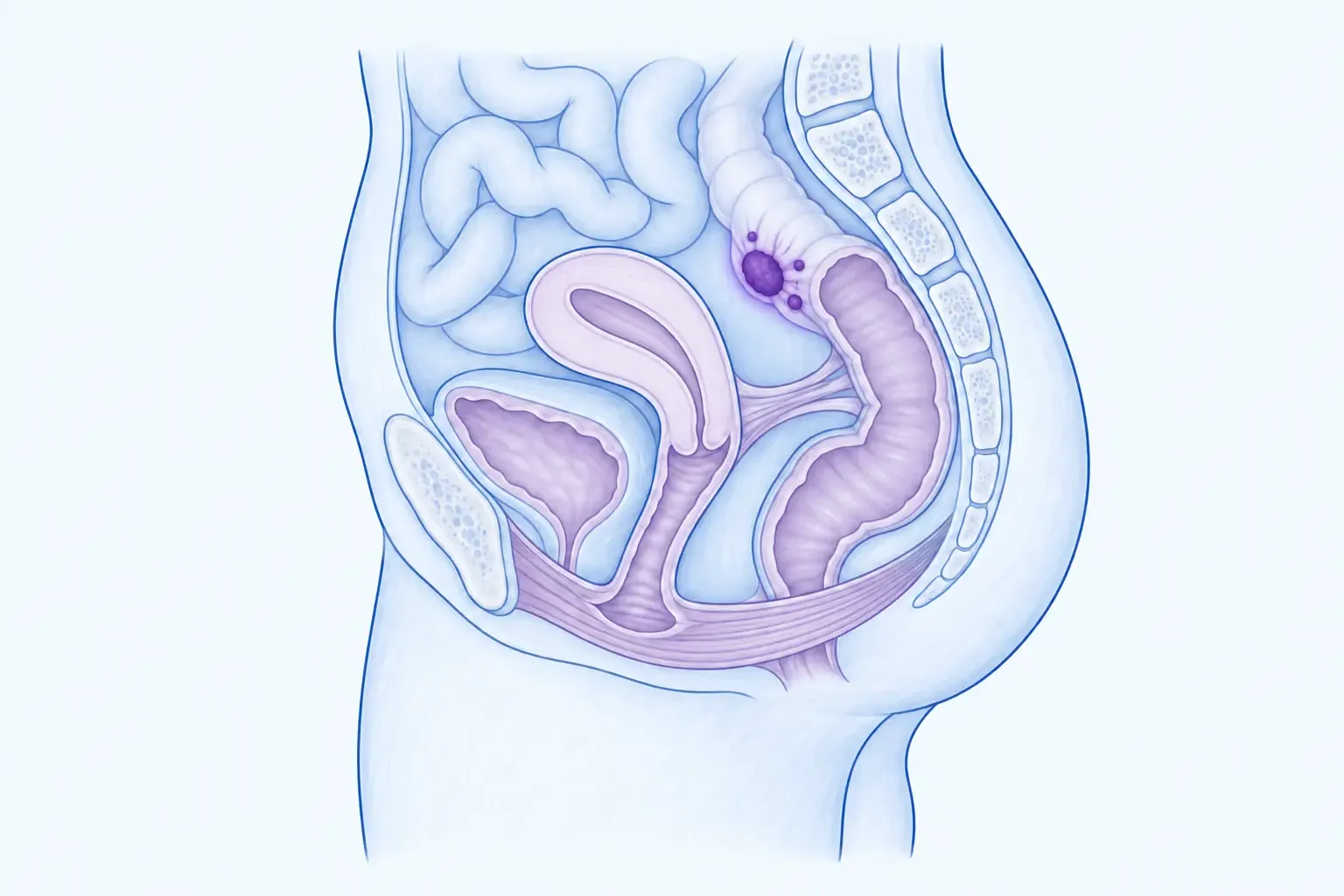
Bowel endometriosis
Nodules on the bowel wall, most often the rectum or sigmoid colon. It can cause painful bowel movements, constipation or diarrhea that flare with the period, and is often mistaken for IBS.
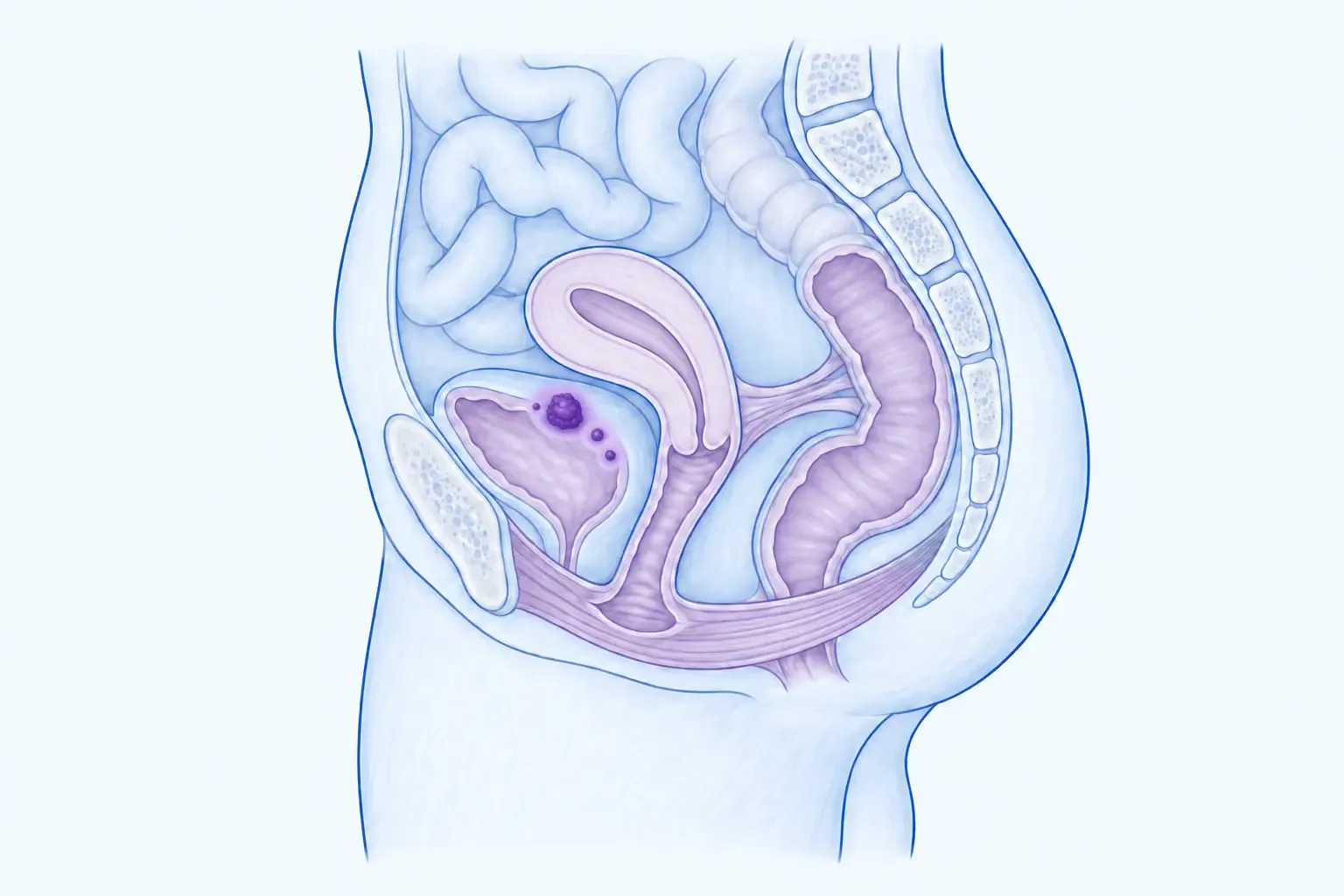
Bladder & ureter endometriosis
Disease in the bladder wall or along the ureters, the tubes from the kidneys. Bladder disease brings urinary pain and urgency; ureter disease can be silent, so it's looked for before surgery.
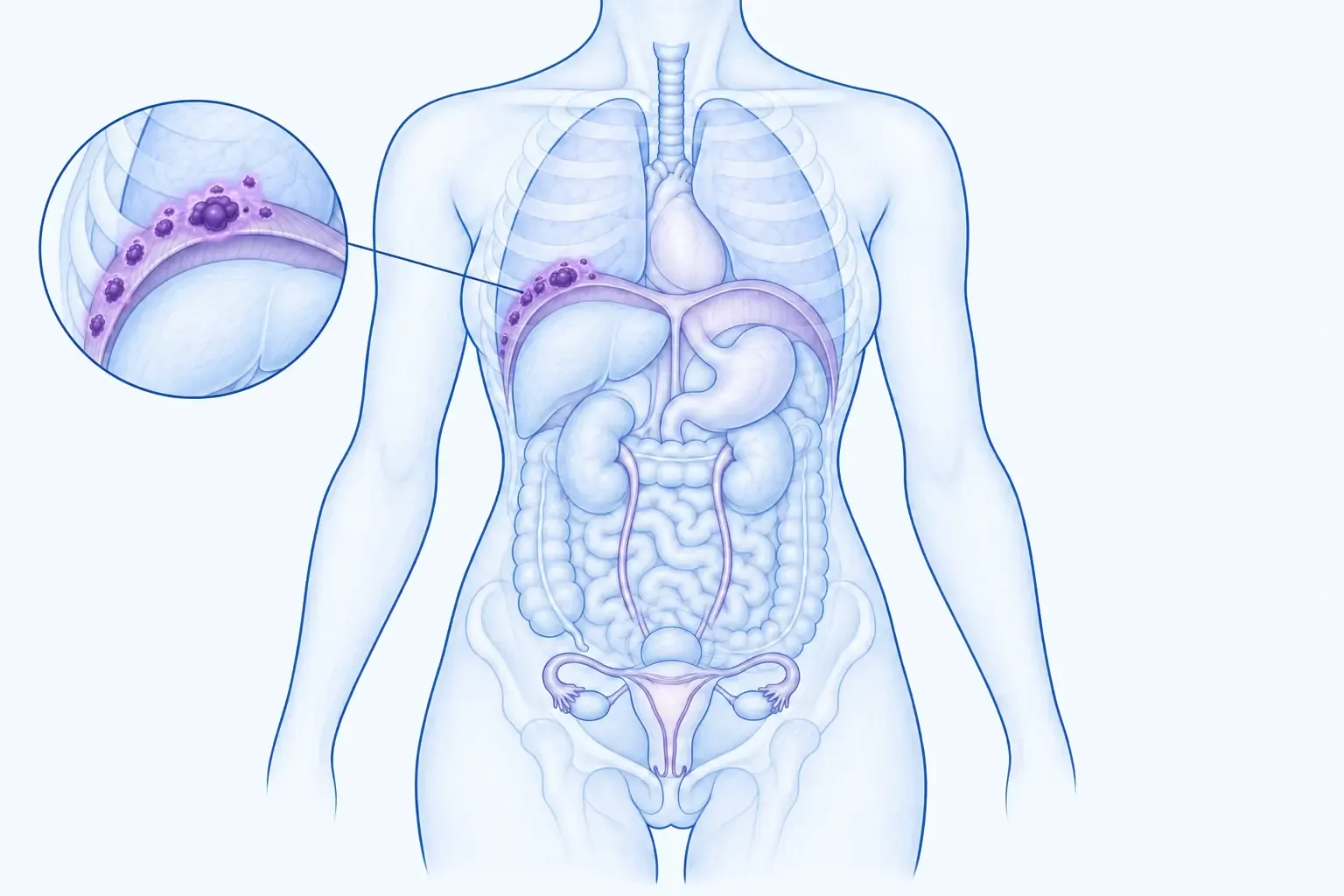
Thoracic & diaphragmatic endometriosis
Endometriosis on the diaphragm or in the chest, usually on the right. It can cause shoulder, chest or breathing pain around the period, and rarely a collapsed lung.
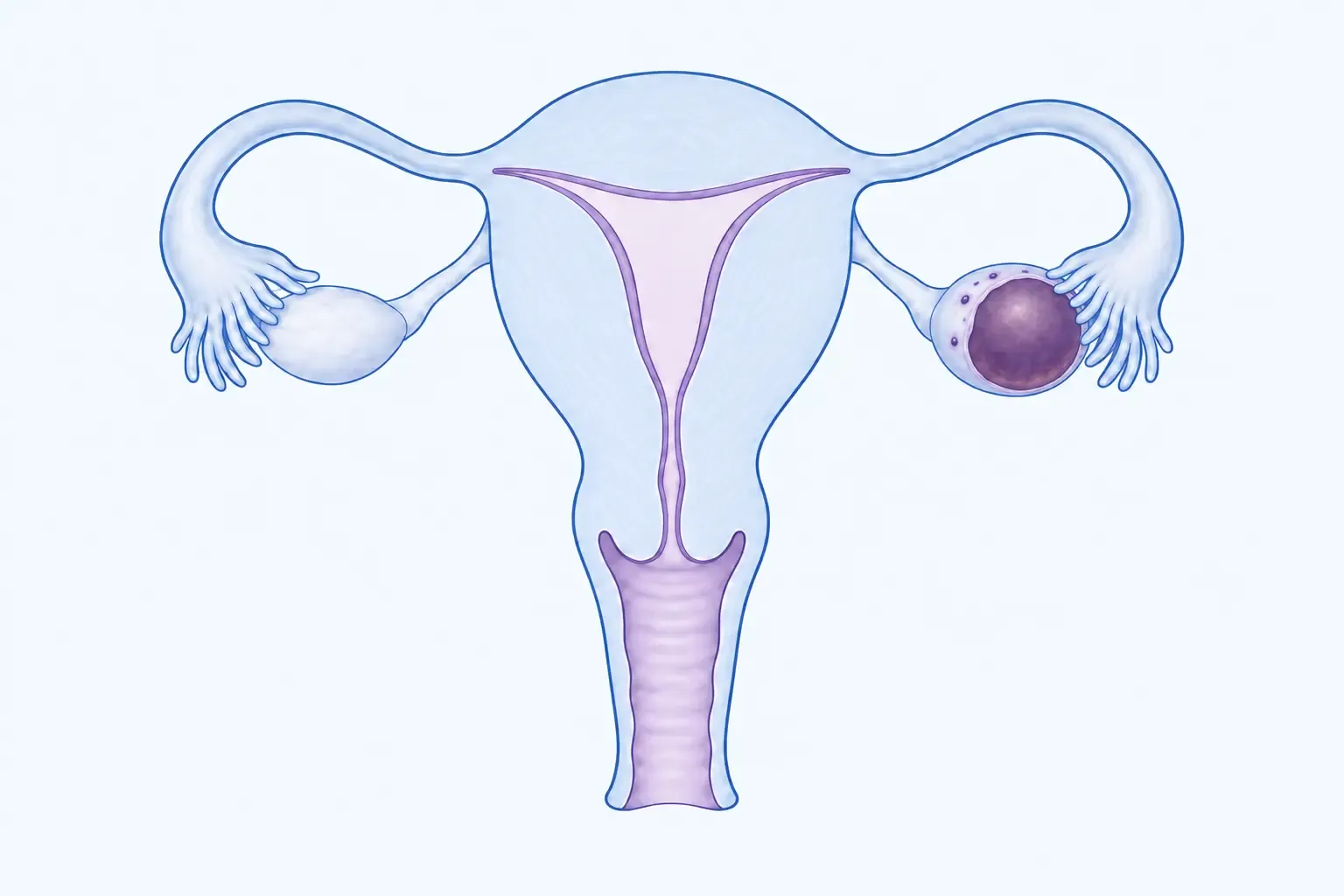
Endometrioma
A cyst inside the ovary filled with old blood, sometimes called a chocolate cyst. Ultrasound finds it well; whether and how to remove it depends on its size, symptoms and fertility plans.
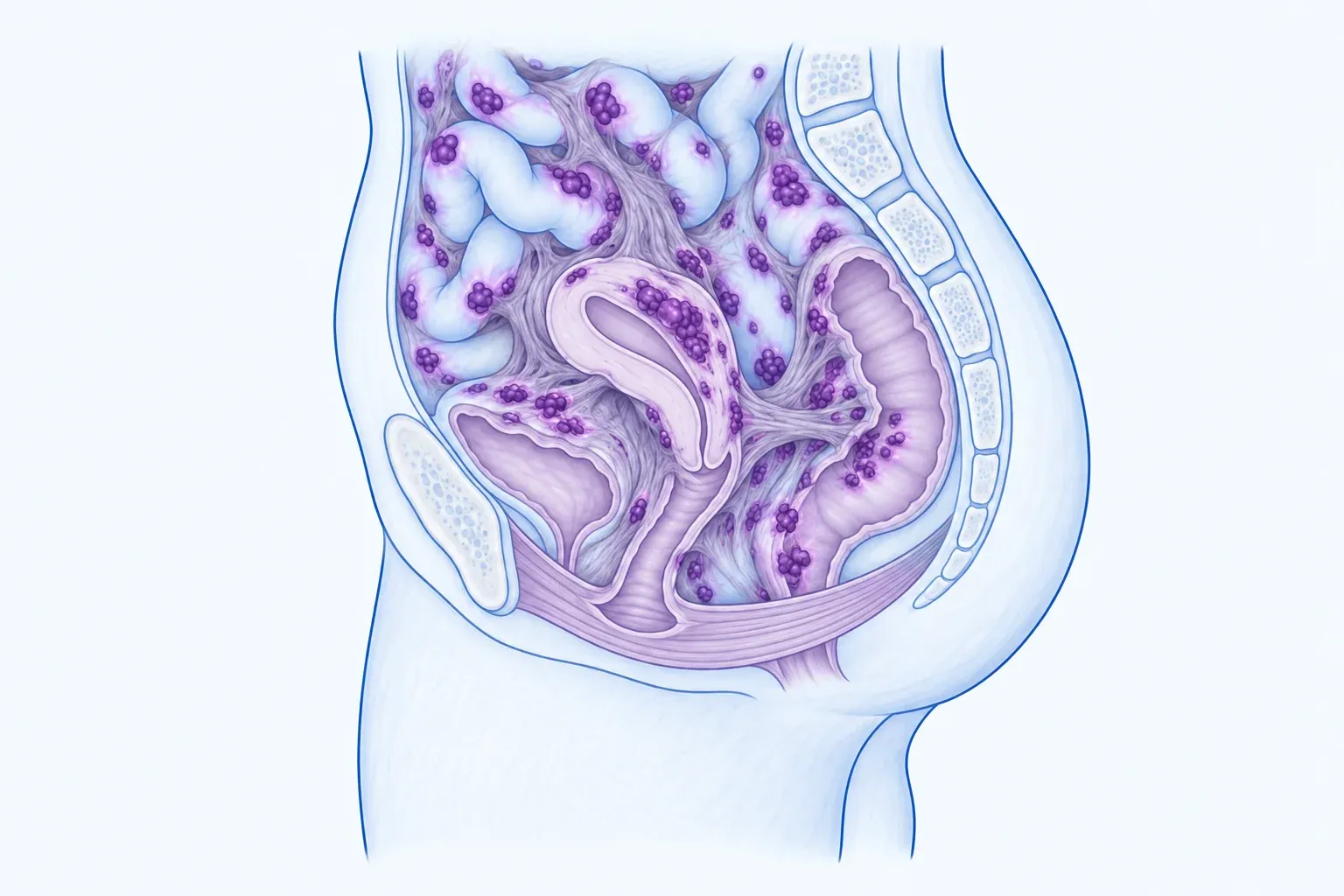
Stages I–IV
Surgeons grade how much disease they find, from minimal to severe. The stage doesn't track pain: stage I can hurt a great deal, and the stages don't capture deep disease well.
Other places it grows
- Superficial (peritoneal) endometriosis
The most common form: small implants on the lining of the pelvis. They're easy to miss on scans and can still cause a lot of pain, so a normal ultrasound doesn't rule endometriosis out.
- Scar and abdominal wall endometriosis
Rarely, endometriosis grows in a surgical scar, most often from a cesarean, as a tender lump that swells and hurts with the period.
- Nerve and sciatic endometriosis
On the sacral or sciatic nerves, it can cause cyclical pain down the leg, buttock or back. It's rare and often found late. More on leg pain.

Symptoms
Does this sound familiar?
Pain that follows the cycle is the most common sign, but the symptoms depend on where it grows. Some people have few symptoms and extensive disease; others the reverse.
Many people are told for years that painful periods are normal. Pain that stops work or school, that pain medicine doesn't touch, or that comes with bowel, bladder or fertility problems deserves a specialist's look.
- Painful periodsCramps that stop daily life, or that pain medicine doesn't touch
- Pelvic painPain between periods too, deep or one-sided
- Pain during intercourseA deep ache during or after sex
- Painful bowel movementsWorse around the period, sometimes with bleeding
- Painful urinationBurning or urgency that follows the cycle
- BloatingSwelling that rises with the cycle, sometimes called endo belly
- FatigueTiredness that rest doesn't fix
- InfertilityTrouble getting pregnant, sometimes the first sign
How much it hurts doesn't track how much disease there is. A small amount of endometriosis can be very painful, and extensive disease can cause few symptoms.
Diagnosis
How is it diagnosed?
Often with an expert ultrasound or MRI, which find deep disease and endometriomas well. Superficial disease can hide from scans, so surgery with a biopsy is still the only way to be certain.
- Your history and an examYour periods, where the pain is and when, bowel and bladder symptoms, fertility plans and what's been tried.
- An expert ultrasoundThe starting pointA transvaginal scan by someone trained to map endometriosis finds endometriomas and most deep disease, and checks whether the ovaries move freely.
- MRI, when more detail would change the planFor deep disease on the bowel, bladder or ureters, or above the pelvis, so surgery can be planned with the right team.
- Laparoscopy with a biopsySurgery shows what scans can't, and the tissue confirms it. When surgery is planned, the disease is removed in the same operation.
What imaging can show
Can MRI reliably detect deep infiltrating endometriosis?
MRI can be very helpful for suspecting deep infiltrating endometriosis, especially when read by a radiologist experienced in endometriosis, but it is not a guaranteed yes/no test. A normal MRI does not reliably rule it out, and even deep disease can be missed.
Can imaging tell endometriosis from IBS or bladder pain?
Imaging can sometimes provide helpful clues, but it can’t reliably tell endometriosis apart from IBS or bladder pain on its own. Ultrasound or MRI can be normal despite significant symptoms, so results are interpreted alongside your symptom history and a targeted pelvic exam.
Treatment
What are the options?
Hormonal care can control the pain; excision surgery removes the disease. Which comes first depends on the pain, where the disease is, and plans for pregnancy.
Hormonal care
Continuous pills, progestins or a hormonal IUD can quiet the pain by stopping periods. They don't remove the disease, and symptoms usually return when they stop.
- Removes the disease
- No, controls it
- Confirms the diagnosis
- No
Excision surgery
Cutting the disease out, wherever it grows, by a surgeon trained in deep disease, is the gold-standard first surgery. Planning matters: each repeat operation adds scar tissue.
- Removes the disease
- Yes, what's found
- Confirms the diagnosis
- Yes, by pathology
Pelvic floor and pain care
Pelvic floor therapy, pain care and integrative medicine treat the pain that can outlast the disease, before or after surgery.
Every operation we offer, for every form: Surgery & Advanced Excision
Who treats it
Dr. Steven Vasilev, MD
Board-Certified Gynecologic Oncologist & Integrative Medicine Diplomate, Advanced Robotic Endometriosis Excision Surgeon, Director of Lotus Endometriosis Institute
Endometriosis is often more than one form at once, and deep disease is easy to under-treat. He maps it before surgery, removes it wherever it grows, and plans care around the goal: less pain, a pregnancy, or both.
Patients often ask
Does endometriosis always get worse over time?
No, endometriosis does not always get worse over time. In some people, lesions can remain stable for years, while in others the disease can advance, especially with deep infiltrating endometriosis. Changes in symptoms and daily function matter more than stage.
How fast does endometriosis grow?
Endometriosis doesn’t grow at one predictable rate: one person may have slow, relatively stable disease while another has lesions that progress faster. Most people first notice changing symptoms over months or years, rather than growth day to day.
What do endometriosis stages 1–4 mean?
Endometriosis stages 1–4 describe surgical findings, from minimal to severe, based on lesions, ovarian endometriomas, and adhesions. Stage does not reliably predict pain or case complexity; disease type, location, and completeness of safe removal also guide care.
Can endometriosis be life-threatening?
Endometriosis is not typically life-threatening, but it can become medically serious when it affects organs. Rare complications include bowel obstruction or silent kidney damage, while chest involvement can be associated with a collapsed lung in a small subset of patients.