

Does Endometriosis Cause Cancer? What Research Actually Shows
Explore the link between endometriosis and cancer risk. Get reliable insights based on recent research for informed health decisions.
10 minute read
Read moreDiscover how Lotus can guide you toward lasting relief.
Explore why patients choose Lotus
Search expert-written answers, browse by topic, or find information based on where you are in your journey.
Explore All KnowledgeReach out and start your healing journey.
Schedule an AppointmentExplores links between endometriosis and cancer risk, what current research does and doesn’t show, and symptoms that warrant evaluation. Helps you interpret screening guidance and discuss personal risk factors with your clinician.
Endometriosis and adenomyosis are benign conditions, but certain patterns have been associated with a small increase in risk for specific gynecologic cancers. Research is most consistent for a modestly higher relative risk of some ovarian cancer subtypes (especially clear cell and endometrioid) in people with a history of endometriosis, while the absolute risk for any individual remains low. For adenomyosis, evidence is still evolving; most people will never develop cancer, but persistent or changing symptoms deserve appropriate evaluation.
Practical decision-making matters most: how to interpret “increased risk” language, what symptoms should prompt timely assessment, and how individual factors (age, family history, genetic risk, prior surgeries, and imaging findings) shape next steps. Topics include warning signs that warrant urgent review, how clinicians approach evaluation of new pelvic pain, bleeding changes, or adnexal masses, and how to discuss screening limitations and personalized surveillance. For diagnostic workups and imaging terminology, see Diagnostics & Imaging and Imaging & Diagnosis (MRI, Ultrasound)
Endometriosis is not typically life-threatening, but it can become medically serious when it affects organs. Rare complications include bowel obstruction or silent kidney damage, while chest involvement can be associated with a collapsed lung in a small subset of patients.
Yes, endometriosis can rarely become cancer, but for the vast majority of people it does not. Endometriosis itself is not cancer, and the best-supported link is with certain ovarian cancers. The risk appears highest when the ovaries are involved.
Adenomyosis is not cancer, and current evidence doesn’t show that it clearly causes cancer. It can sometimes be seen alongside uterine (endometrial) cancer, but research on the relationship between the two is still evolving.
An untreated endometrioma can grow, increase pelvic pain and inflammation, and in rare cases rupture or cause the ovary to twist. There is also a small increased lifetime risk of certain ovarian cancers, but the absolute risk remains low.
Explore the link between endometriosis and cancer risk. Get reliable insights based on recent research for informed health decisions.
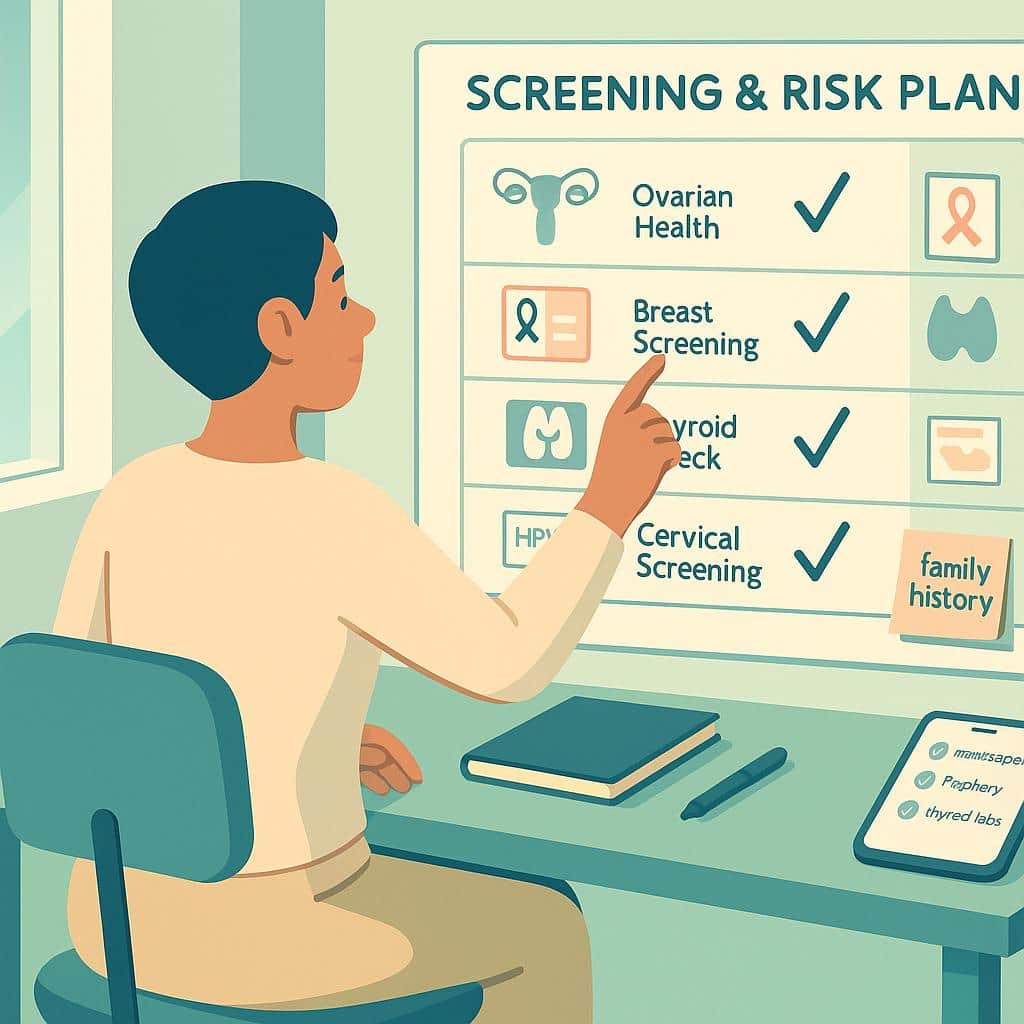
Understand how endometriosis affects ovarian, breast, thyroid, and cervical cancer risk, plus symptoms to watch, screening guidance, and ways to lower risk.

Compare endometriosis vs. ovarian cancer symptoms: pain patterns, bleeding, GI signs, and red flags. Know when to see a gynecologist or gynecologic oncologist.
Lotus Endometriosis Institute provides California-based surgical evaluation and advanced excision care for patients with suspected endometriosis, adenomyosis, complex pelvic pain, and related conditions.
Many patients contact us from outside California to learn whether traveling for in-person evaluation and possible surgery may be appropriate.
2121 Santa Monica Blvd, Santa Monica, CA 90404
8am - 5pm
Monday - Friday
154 Traffic Way, Arroyo Grande, CA 93420