Symptoms
Are painful periods normal or a sign of endometriosis?
The short answer
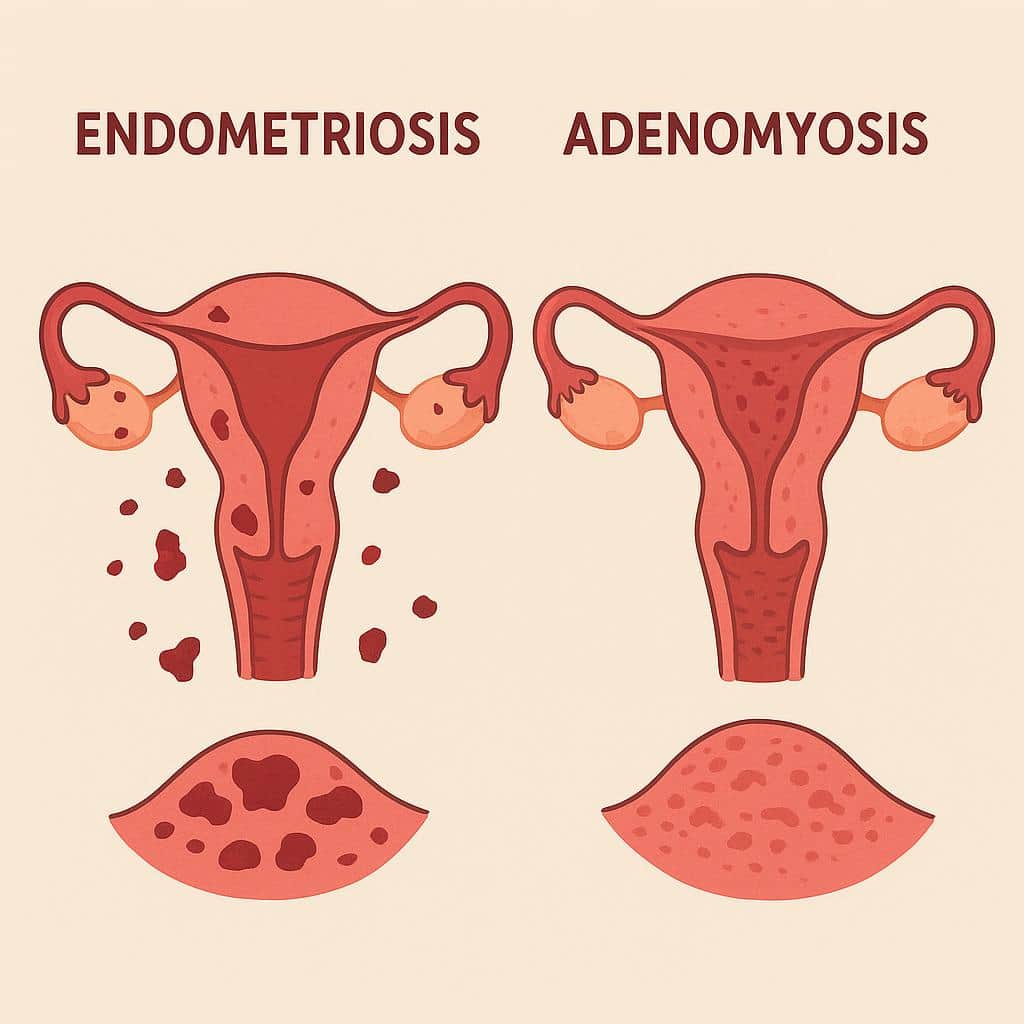
Mild period cramping can be common, but endometriosis and adenomyosis are two common causes of intense period pain. Severe, worsening, or disabling pain, especially when it keeps you home from school or work, is a signal to look deeper.
Mild cramping with a period can be common, but severe, worsening, or disabling pain isn’t something you should have to push through. When period pain keeps you home from school or work, requires escalating medication, or feels out of proportion to the bleeding, it’s a reason to look more closely, especially when the pain starts before bleeding and radiates into the pelvis or lower abdomen.
Endometriosis and adenomyosis are two common causes of intense dysmenorrhea, and they can also come with bowel or bladder symptoms, pain with sex, or persistent pelvic pain between periods. Because both conditions are frequently missed or minimized, our team focuses on a thorough, specialist-level evaluation to understand what’s driving your symptoms and which treatment options make sense for you. If your periods are consistently painful or getting worse, reaching out to schedule a consultation is a strong next step.
Where to go from here
Understand it, compare it with what you're feeling, then talk it through with us.
Compare
Symptoms it can relate to
Speak with Us
Severe Period Pain? Get Answers
Painful periods aren’t something you should just endure. Our specialists can help diagnose and treat endometriosis and adenomyosis, restoring your quality of life.
Questions people ask next
All symptoms questionsHow can I tell if my period cramps are abnormal?
Period cramps may be abnormal if they start before bleeding, worsen over time, or don’t meaningfully improve with NSAIDs and heat. Cramps that regularly disrupt school, work, sleep, or daily activities are a key red flag; heavy or prolonged bleeding with clots also matters.
Why are my menstrual cramps getting worse over time?
Menstrual cramps that worsen over time can be a sign that an underlying condition is progressing. Inflammation and scarring from endometriosis can intensify pain, while adenomyosis can lead to heavier, more painful periods.
What are the key symptoms of endometriosis?
Endometriosis often shows up as pelvic pain, especially painful periods and pain with sex, which can spread to the back or legs. Many people also have bowel or bladder symptoms that flare cyclically, and endometriosis can be associated with difficulty conceiving.
Further reading
How to Recognize Endometriosis Symptoms
Recognize endometriosis: painful periods, GI and urinary symptoms, dyspareunia, infertility. Understand causes, complications, diagnosis, and medical/surgical treatment options.
Do My Symptoms Mean Adenomyosis or Endometriosis?
Discover the truth about endometriosis and adenomyosis symptoms. Understand how common they really are, and gain insights for effective advocacy.
Endometriosis and Adenomyosis: How They Drive Pelvic Pain
Compare endometriosis and adenomyosis: similarities, differences in location and prevalence, diagnosis methods, and treatment options for pelvic pain.