Surgery
Benefits of minimally invasive/robotic surgery for endometriosis?
The short answer
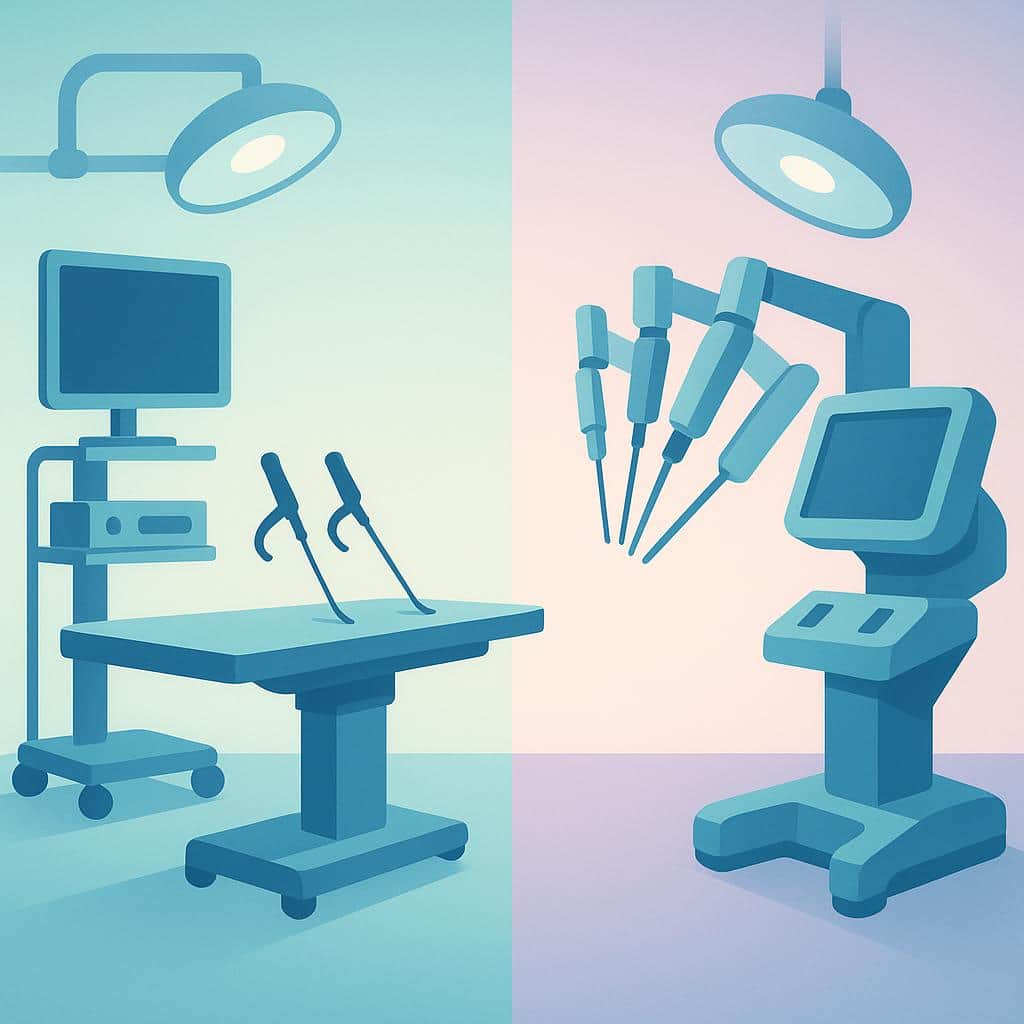
Minimally invasive and robotic surgery can mean less pain, less blood loss, and a smoother early recovery compared with larger-incision surgery. Enhanced visualization and precise instrument control can help remove endometriosis while minimizing unnecessary tissue trauma.
Minimally invasive and robotic-assisted approaches typically use small incisions, which can mean less postoperative pain, less blood loss, and a smoother early recovery than surgery with larger incisions. Many patients can go home the same day or the next morning, depending on the complexity of their case and what we find during surgery.
For endometriosis, enhanced visualization and precise instrument control can help us dissect carefully around sensitive structures and remove disease while minimizing unnecessary tissue trauma. Patients also often appreciate the cosmetic benefit of smaller incisions, which tend to heal with subtle scarring. If you’re considering surgery, our team can help you understand whether a minimally invasive or robotic approach fits your anatomy, symptoms, and surgical goals.
Where to go from here
Understand it, compare it with what you're feeling, then talk it through with us.
Compare
Symptoms it can relate to
Speak with Us
Explore Less Painful Surgery Options
Our specialists use minimally invasive and robotic techniques to reduce pain and speed up recovery after endometriosis surgery. We focus on precise removal while protecting your healthy tissues for the best outcomes.
Questions people ask next
All surgery questionsIs robotic surgery better than laparoscopy for endometriosis?
With an expert team, robotic surgery and standard laparoscopy generally have similar outcomes for endometriosis. The surgeon’s skill usually matters more, though robotics can be especially helpful in certain complex cases and can add time and cost.
What are the risks or downsides specific to robotic surgery?
Robotic surgery can sometimes involve longer time under anesthesia and rare equipment or docking issues. Some people have temporary soreness or numbness from positioning; in uncommon situations, conversion to open surgery may be needed for safety or visibility.
Who is a good candidate for robotic endometriosis surgery?
Robotic surgery can be a good fit when complex, deep endometriosis is anticipated or disease may involve the bowel, bladder, or ureters. Candidacy is individualized, based on disease mapping, surgical goals, and which approach allows thorough, safe removal.
Why use robotic-assisted (da Vinci) surgery for endometriosis?
Robotic-assisted (da Vinci) surgery may be used for endometriosis when precision matters most, such as with deep disease or disease near sensitive organs. It provides a magnified 3D view and finer control to help remove disease while protecting healthy tissue.
Further reading
Conventional Laparoscopy vs Robotic Surgery for Endometriosis and Adenomyosis: What Patients Need to Know
Comparing safety, effectiveness, and recovery: a patient-friendly overview of different surgery approaches and what they can mean for your treatment.
What to Expect Before, During, and After Endometriosis Surgery
Discover what to expect before, during, and after endometriosis surgery. Insights on pain relief, preparation, recovery from reliable recent research.
Excision vs Ablation: Understanding Endometriosis Surgery Options
Explore excision vs ablation for endometriosis. Learn about surgery options, pain relief, and making informed choices based on your fertility goals.