Symptoms
Can pelvic floor therapy help pain during sex or pelvic exams?
The short answer
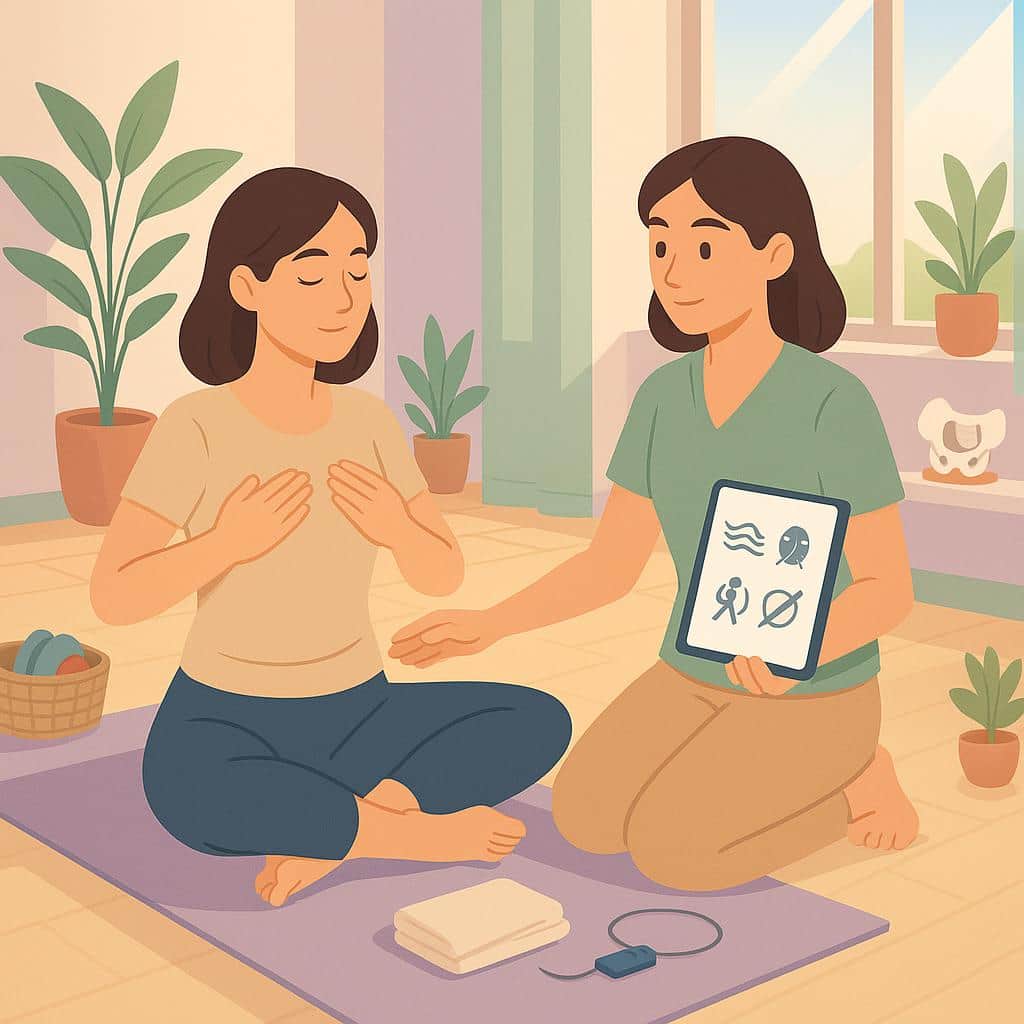
Yes, pelvic floor therapy can be very helpful for pain during sex or pelvic exams when pelvic floor muscles are overactive or stay tightened. Therapy aims to help these muscles relax and coordinate normally, improving comfort with touch and pressure over time.
Yes, pelvic floor therapy can be very helpful for pain with intercourse or pelvic exams when pelvic floor muscles are overactive, guarding, or stuck in a tightened state. That muscle tension can amplify pain signals and make penetration or internal pressure feel sharp, burning, or intolerable even when the tissue itself isn’t being harmed.
In therapy, the goal is typically to retrain the pelvic floor to relax and coordinate normally, reduce protective gripping, and improve comfort with touch and pressure over time. Our team often includes pelvic floor findings in a broader evaluation because persistent pain with sex or exams can also be driven by conditions like endometriosis, adenomyosis, or pelvic inflammation. If this is affecting your quality of life, reach out to schedule a consultation so we can help clarify what’s driving your symptoms and what combination of therapies is most likely to help.
Where to go from here
Understand it, compare it with what you're feeling, then talk it through with us.
Step 3 · Speak with Us
Find Relief from Painful Sex
Pelvic floor therapy can ease muscle tension that causes pain during intercourse or exams. Our specialists help retrain your muscles for lasting comfort and better experiences.
Questions people ask next
All symptoms questionsWhat is pelvic floor physical therapy like, and will it hurt?
Pelvic floor physical therapy usually starts with a conversation and a gentle assessment, and it should not feel like a painful exam. Treatment may include hands-on muscle release and retraining. Some people feel temporary soreness or a brief increase in symptoms afterward.
Is internal pelvic floor therapy always required?
Internal pelvic floor therapy is not always required; the need depends on your symptoms, exam findings, and goals. Alternatives can be used, and nothing is performed without your clear, informed consent. You can pause or decline treatment at any time.
How does pelvic floor physical therapy help pain?
Pelvic floor physical therapy helps by addressing muscles and connective tissues that can amplify pelvic pain. It also helps the pelvic floor relax and engage at the right times, so sitting, urinating, bowel movements, or intercourse are less likely to trigger symptoms.
How soon will pelvic floor therapy improve my symptoms?
Most patients begin to notice some improvement after a few pelvic floor therapy sessions, but the timeline can vary widely. Progress may be more gradual and require a longer course of therapy if your symptoms have been present for a long time or are more complex.
Further reading
Can Physical Rehab Reduce Endo and Adeno Pain?
How pelvic rehab and pelvic floor PT can help endometriosis and adenomyosis pain. What it treats best, who benefits, timelines, red flags, and questions to ask.
Post-Orgasm Pain in Endometriosis: Causes and Management
Why orgasms can trigger endometriosis pain: how to ease post-sex discomfort. Causes, symptoms, meds, pelvic floor therapy, surgical options, and sex tips.
Pelvic Floor & Myofascial Pain After Endometriosis Surgery
Why Do I Still Hurt series article three about pain post-endometriosis surgery. Learn the basics about myofascial pain and treatment options.