
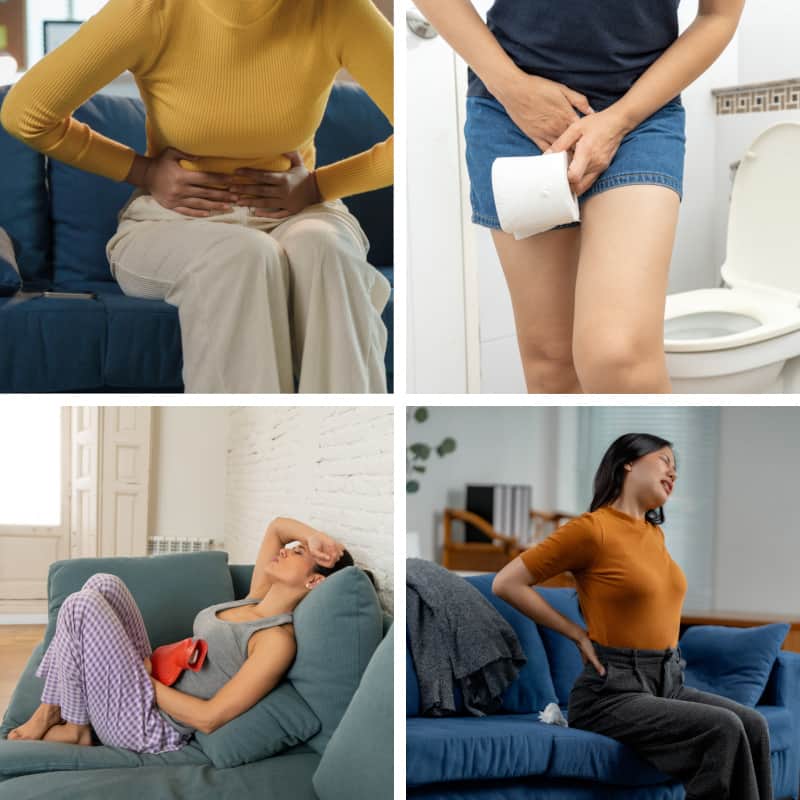


Pelvic Floor & Myofascial Pain After Endometriosis Surgery
Why tight, tender muscles can keep pain going—even after “successful” excision

If your endometriosis surgery went well on paper but your pain didn’t truly lift, it can feel confusing and defeating. Many people are told (directly or indirectly) that persistent pain must mean “the endometriosis is back” or that something was missed, or it's too soon after surgery and more healing is required. Sometimes any of these can be true—but they are not the only explanations.
A growing body of research suggests another common driver: pelvic floor dysfunction and myofascial pain—in other words, muscles and connective tissues that stay guarded, tight, tender, and hard to “turn off.” Studies in women with endometriosis-associated chronic pelvic pain repeatedly find pelvic floor spasm, trigger points, and signs that the pain system has become more sensitive. This matters because muscle-based pain often needs a different plan than lesion-based pain.
This post (part 3 in the “Why Do I Still Hurt?” series) explains what myofascial and pelvic floor pain are, how they can show up after surgery, what the evidence says about pelvic floor physical therapy (PFPT), and how to talk with your surgeon about next steps. If a pelvic floor physical therapist has not been involved up to this point, they should be consulted at least for an extended opinion.
What do “pelvic floor dysfunction” and “myofascial pain” actually mean?
The pelvic floor is a group of muscles (plus connective tissue) that support the bladder, uterus/vagina, and bowel, and coordinate functions like urination, bowel movements, and sex. These muscles are supposed to tighten and relax on command.
Myofascial pain refers to pain coming from muscles and fascia (the connective tissue around them). A key feature is trigger points—tender, irritable “knots” or bands in a muscle that can hurt locally and also refer pain elsewhere (for example, a pelvic muscle trigger point that feels like deep vaginal pain, rectal pressure, hip pain, or urinary urgency).
In endometriosis (and sometimes adenomyosis), pain can "train" the pelvic floor into a long-term protective pattern: clenching, shortening, and bracing. Over time, that pattern can become its own problem—independent of whether lesions were removed.
Why can pelvic muscles keep hurting after surgery?
Surgery can be medically successful and still not fully reset pelvic floor pain patterns. Here are common reasons muscles “won’t let go” afterward:
First, guarding can persist. If your pelvic floor spent months or years bracing against pain (period pain, bowel pain, painful sex, bladder symptoms), it may stay in that mode even when the original trigger is reduced or even eliminated.
Second, myofascial pain can be widespread, not just pelvic. In a detailed exam-based study of women with endometriosis-associated chronic pelvic pain, every participant had pelvic floor muscle spasm, and pressing on that spasm reproduced their typical pelvic pain. Even more striking: despite many people describing their pelvic pain as “focal,” exam findings showed widespread trigger points across many body regions, and more than half showed signs of sensitization beyond the pelvis. This helps explain why some people feel pain that “spreads” or becomes harder to localize over time.
Third, pain can be amplified by the nervous system (sensitization), which also affects muscles. In another study comparing people with chronic pelvic pain (with and without biopsy-proven endometriosis) to pain-free volunteers, signs consistent with sensitization (like allodynia or hyperalgesia) were common in both chronic pelvic pain groups and rare in healthy controls. Myofascial trigger points were present in nearly all women with chronic pelvic pain—again suggesting that muscle pain and pain amplification frequently travel together. The same research also found that higher anxiety and depression scores were associated with a higher likelihood of sensitization (an association, not a judgment and not proof of cause). Clinically, it supports treating pain as a whole-person system—not just a pelvic anatomy problem.
The practical takeaway: after surgery, persistent pain can come from a muscle–nerve loop—pain leads to guarding; guarding creates trigger points and tissue sensitivity; sensitivity makes the nervous system more reactive; a reactive system increases guarding. This can become an endless loop unless addressed.
Symptoms that can point toward pelvic floor or myofascial pain
Pelvic floor and myofascial pain don’t look the same in everyone. Some clues patients often recognize include:
- Pain with penetration that feels burning, cutting, or “hitting a wall” (often described as superficial dyspareunia), or deep aching that lingers after sex
- Pelvic pain that flares with stress, prolonged sitting, certain movements, or after bowel movements
- A sense of pelvic heaviness, rectal pressure, or “golf ball” sensation
- Urinary urgency/frequency without infection, or trouble fully relaxing to pee
- Constipation patterns that feel like difficulty evacuating or incomplete emptying
- Hip, buttock, low back, inner thigh, or groin pain that seems connected to pelvic flares
Importantly: you can have pelvic floor tightness and weakness at the same time. A 2024 study assessing women with deep endometriosis and chronic pelvic pain found pelvic floor findings were very common—nearly half had increased vaginal tone, trigger points in the levator ani and obturator internus muscles were frequent, and many also showed weakness on standardized pelvic floor tests and difficulty relaxing after a contraction. That “tight-but-weak” pattern is one reason generic “do Kegels” advice can sometimes worsen symptoms.
Still in Pain? Check Your Pelvic Floor
Our specialists are here to help you understand your condition and explore your treatment options.
Book Your Evaluation“If this is so common, will pelvic floor physical therapy fix it?”
Pelvic floor physical therapy is often recommended, but the honest answer from the research is: it can help some goals for some people, but it’s not a guaranteed fix—and results depend on what you’re treating and how.
A randomized controlled trial in women with deep infiltrating endometriosis and dyspareunia tested a short course of pelvic floor physiotherapy (five sessions across about 11 weeks) and looked specifically at urinary symptoms, constipation, and sexual function questionnaire scores at around four months. In that small study, physiotherapy did not produce statistically significant improvements versus no intervention on those particular bladder/bowel/sexual-function measures.
That’s disappointing—but it’s also clarifying. It suggests a few important nuances:
- Pelvic floor PT isn’t one single treatment. Techniques aimed primarily at pain and hypertonicity (like internal manual therapy/Thiele massage) are not identical to programs designed for constipation mechanics, biofeedback for coordination, bladder retraining, or graded strengthening.
- Your outcome measure matters. In that same trial report, the authors noted a mismatch between improvements in superficial dyspareunia and pelvic floor relaxation reported in the broader parent study cohort versus no change on a sexual function pain domain—possibly because common sexual-function questionnaires don’t cleanly separate superficial from deep pain. Translation: you may feel real-life change that doesn’t show up neatly on a global score.
- Some subtypes might respond better than others. Constipation was extremely common in the trial (about 70% at baseline). The authors saw a non-significant trend toward constipation improvement in people whose constipation fit a rectal evacuation disorder pattern—interesting, but not yet firm proof.
So, pelvic floor PT is very important to consider when you have endo—especially when exam findings show spasm/trigger points or symptoms strongly suggest muscular contribution—but keep realistic expectations in mind and a strive for a plan tailored to your pattern.
What about exercise—can movement help myofascial pain in endometriosis?
Many people want to know whether exercise can “fix” endometriosis pain or post-surgery pain. A systematic review looking at exercise/physical activity interventions for endometriosis-associated symptoms found surprisingly little high-quality evidence—only a handful of small studies, with mixed results and lots of limitations (co-interventions, inconsistent reporting, and no clear “dose” guidance).
That doesn’t mean movement is pointless. It means research hasn’t nailed down the best type, intensity, or progression specifically for endometriosis symptoms. For myofascial pain, many pelvic floor clinicians use a graded, symptoms-informed approach: restoring safe movement, breathing mechanics, hip/pelvic mobility, gentle strength, and nervous-system downshifting. In practice, the “right” plan is one you can repeat consistently without provoking multi-day flares—and that may look very different from conventional fitness advice.
Who is most likely to benefit from a myofascial/pelvic floor approach?
Based on patterns across multiple studies, PFPT is especially worth considering when:
- Your pain persists despite lesion-directed treatment, or doesn’t match imaging/surgical findings
- Exam reproduces your typical pain with pelvic floor palpation (a common finding in research cohorts with endometriosis-associated chronic pelvic pain)
- You have painful sex, pelvic pressure, urinary urgency/frequency, constipation with evacuation difficulty, or pain that spreads to hips/back/thighs
- You also notice headaches, jaw/face pain, or widespread body pain—features that have been reported alongside sensitization and widespread myofascial trigger points in endometriosis-associated chronic pelvic pain groups
What to expect: timeline and “signs it’s working”
Muscles and pain processing rarely change overnight. Many patients notice early wins like: fewer sharp spikes, improved ability to relax, less post-sex soreness, or shorter flares. Functional improvements (sitting tolerance, walking, bowel mechanics) may come next.
One practical lesson from the randomized trial is that a brief course (five sessions) may be insufficient for some goals, and improvements may show up in specific symptoms (like superficial pain) rather than in broad questionnaire totals. If you try pelvic floor PT, it’s reasonable to track a few personal markers (for example: pain with insertion, time-to-flare after sex, bowel emptying comfort, or number of “good days” per month) rather than relying on one score.
Practical takeaways: how to talk to your care team
Use your appointments to shift the conversation from “Is endometriosis back?” or "Was the surgery maybe incomplete?" to “What pain mechanisms are active right now?”
Here are a few high-yield questions to ask:
- “Can you check for pelvic floor spasm and trigger points (levator ani, obturator internus) and see if it reproduces my pain?”
- “Does my constipation pattern seem like evacuation difficulty, and would pelvic floor coordination therapy or biofeedback help?”
- “What is the goal of pelvic floor PT for me—pain relief/relaxation, bladder symptoms, bowel function, or strengthening—and what techniques will be used?”
- “Do I show signs of sensitization or widespread myofascial pain that would change the plan (for example, combining PT with pain psychology, medication options, or multidisciplinary care)?”
What we still don’t know
Even though pelvic floor and myofascial findings are consistently common in chronic pelvic pain research, big gaps remain:
- We still don’t have enough large, well-designed trials to say which pelvic floor PT approach works best for which symptom cluster in endometriosis, or how much treatment is enough. On the other hand, everyone is different in so many ways that we may never have a tidy set of groupings. PFPT like many areas of medicine is still an "art" in many ways that should be individualized for best results.
- Sexual-function and symptom questionnaires may miss meaningful changes (for example, superficial vs deep dyspareunia), which makes studies harder to compare.
- Many people have overlapping drivers after surgery—muscles, nerves/sensitization, bladder/bowel cross-sensitization, adenomyosis that may be left behind if a hysterectomy was not done, adhesions, fibrosis, and so on—so one therapy rarely explains the whole outcome.
If your pain is persisting, the message is not that “surgery didn't work.” It may be that the next step is a different target: the muscles that have been protecting you for too long—and the pain system that learned to stay on high alert, which is further addressed in the articles within this six-part "Why Do I Still Hurt?" series.
***N.B. This article is written from the perspective of a surgeon who understands that a truly effective and durable comprehensive integrative whole-person endometriosis treatment plan does not begin or end with excision surgery. A deeper dive for your circumstances should be sought through a consult with an endo-savvy pelvic floor physical therapy specialist.
References
Del Forno, Cocchi, Arena et al.. Effects of Pelvic Floor Muscle Physiotherapy on Urinary, Bowel, and Sexual Functions in Women with Deep Infiltrating Endometriosis: A Randomized Controlled Trial. Medicina. 2023. PMID: 38256327 PMCID: PMC10818504
Moreira da Cunha, Oliveira Veloso, Coutinho et al.. Sexual function in women with endometriosis and pelvic floor myofascial pain syndrome. Revista Brasileira de Ginecologia e Obstetrícia. 2024. PMID: 39381337 PMCID: PMC11460432
Stratton, Khachikyan, Sinaii et al.. Association of Chronic Pelvic Pain and Endometriosis With Signs of Sensitization and Myofascial Pain. Obstetrics and gynecology. 2015. PMID: 25730237 PMCID: PMC4347996
Phan, Stratton, Tandon et al.. Widespread myofascial dysfunction and sensitization in women with endometriosis-associated chronic pelvic pain: A cross-sectional study. European journal of pain (London, England). 2021. PMID: 33326662 PMCID: PMC7979491
Tennfjord, Gabrielsen, Tellum. Effect of physical activity and exercise on endometriosis-associated symptoms: a systematic review. BMC Women's Health. 2021. PMID: 34627209 PMCID: PMC8502311
Quick Answers
Why does sex hurt more around my period?
Pain with sex that worsens around your period often points to inflammation and more reactive pelvic nerves before and during bleeding. Endometriosis can amplify pain signals, and adenomyosis can make the uterus unusually tender and crampy.
Why is my period pain so severe it disrupts my daily life?
Severe period pain that disrupts daily life often points to an underlying cause, such as endometriosis or adenomyosis. Pain severity doesn’t reliably match the stage of endometriosis, so pain can be intense even when imaging looks normal.
Can endometriosis cause arthritis-like joint pain?
Yes, endometriosis can be associated with arthritis-like joint pain in some people. Whole-body inflammation may show up as aching or stiffness, but the association does not prove causation, and persistent joint pain deserves evaluation for other conditions.
How long do endometriosis flare-ups last?
Endometriosis flare-ups have no single usual length: some last a few hours to a couple of days, while others span an entire cycle window or blend into more constant pain. Many flares track with hormonal shifts, but some pain may not follow a calendar pattern.