Diagnosis
Do I need extra cancer screening with endometriosis or adenomyosis?
The short answer
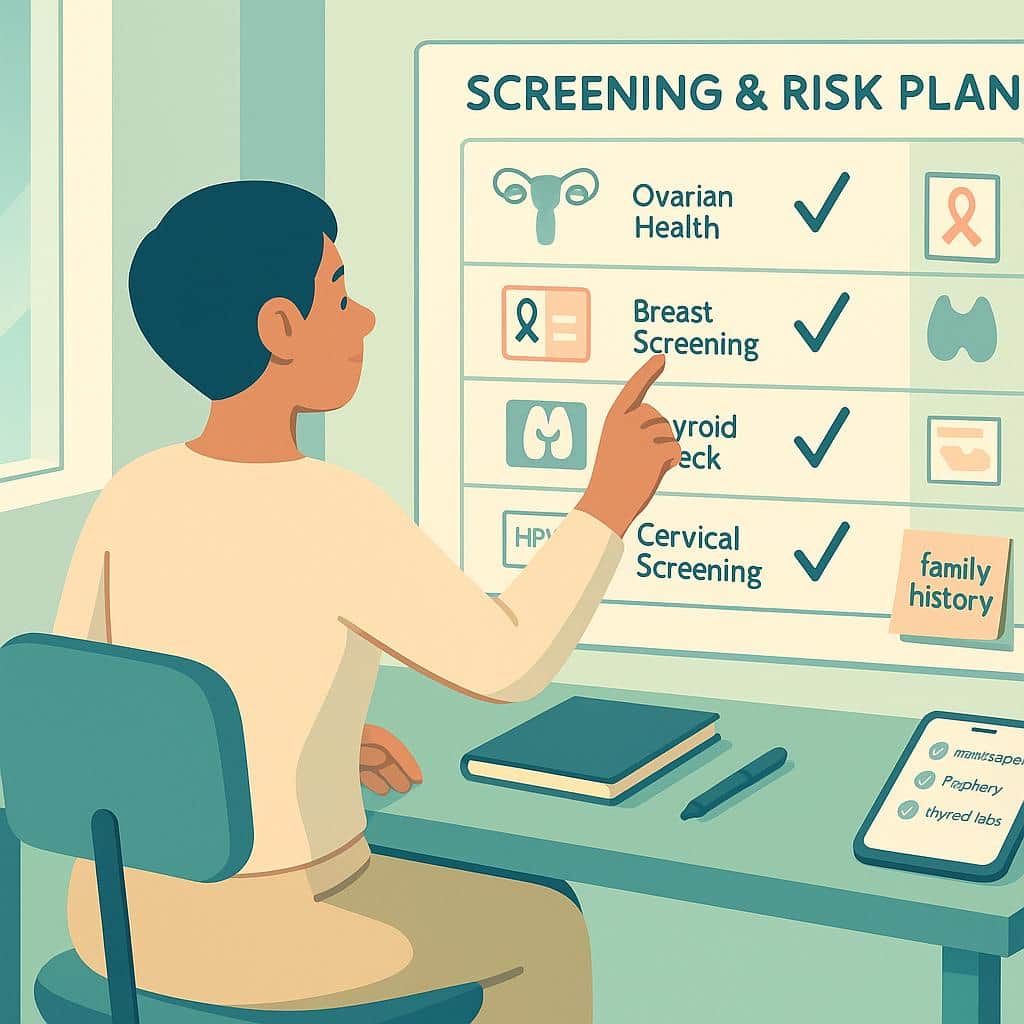
No universal extra cancer-screening program is recommended solely for endometriosis or adenomyosis. Additional evaluation may be appropriate based on your personal risk, especially with a strong family history, genetic predisposition or new concerning symptoms.
No universal cancer-screening program is recommended solely for endometriosis or adenomyosis, but that does not mean cancer risk should be ignored. Endometriosis is not cancer, and most people with it will never develop cancer. Still, research does suggest an increased risk of certain ovarian cancers, which is why individual risk assessment matters.
Tests such as CA-125 or CA19-9 are not reliable routine screening tools by themselves because they can be elevated for many non-cancer reasons, including endometriosis itself. The right next step depends on your personal risk profile, especially if you have a strong family history of ovarian, breast, uterine, or colon cancer, a known or suspected genetic predisposition, an endometrioma, deep infiltrating disease, or new concerning symptoms.
In those situations, closer evaluation, imaging, follow-up, and sometimes genetic counseling or testing may be appropriate. Our team can help you understand your individual risk and decide whether additional evaluation makes sense.
Where to go from here
Understand it, compare it with what you're feeling, then talk it through with us.
Step 3 · Speak with Us
Worried About Cancer Risk?
Our specialists understand the unique cancer risks linked to endometriosis and adenomyosis and can guide you through personalized screening options. Get clarity and care tailored to your health situation.
Questions people ask next
All diagnosis questionsDoes endometriosis increase cancer risk?
Yes, endometriosis increases ovarian cancer risk up to ten times, but most people with endometriosis never develop cancer. Research suggests there may be a slightly increased risk of other cancer subtypes, though the overall risk for these generally remains low.
Can adenomyosis cause cancer?
Adenomyosis is not cancer, and current evidence doesn’t show that it clearly causes cancer. It can sometimes be seen alongside uterine (endometrial) cancer, but research on the relationship between the two is still evolving.
Can blood tests diagnose endometriosis?
At this time, blood tests cannot reliably diagnose endometriosis. Markers like CA-125 may be elevated in some people, but they are not specific enough to confirm or rule out endometriosis, and newer tests are not yet ready for routine clinical use.
Which cancers are linked to endometriosis, and how strong is the evidence?
The strongest and most consistent evidence shows an association between endometriosis and clear cell and endometrioid ovarian cancers. The risk increase is relative to people without endometriosis, and most patients with endometriosis will never develop cancer.
Further reading
Evaluating Cancer Risk in Endometriosis
Understand how endometriosis affects ovarian, breast, thyroid, and cervical cancer risk, plus symptoms to watch, screening guidance, and ways to lower risk.
Does Endometriosis Cause Cancer? What Research Actually Shows
Explore the link between endometriosis and cancer risk. Get reliable insights based on recent research for informed health decisions.
Postmenopausal Endometriosis: Risks and Key Insights
Learn about postmenopausal endometriosis: who is at risk, diagnosis and treatment basics, and why malignant transformation is rare but worth knowing.