Surgery
Does endometrioma removal or excision surgery reduce cancer risk?
The short answer
Removing an endometrioma or excising endometriosis can remove tissue where atypical changes could rarely develop, but surgery is not typically done primarily to prevent cancer. The link with cancer is complex, and the absolute risk for most patients remains low.
Removing an endometrioma or excising endometriosis can remove tissue where atypical changes could rarely develop, but these surgeries are not typically done primarily to prevent cancer. Overall, the link between endometriosis (including endometriomas) and cancer is complex, and the absolute risk for most patients remains low.
When we discuss surgery, the decision is usually driven by your symptoms, your fertility goals, your family history, and whether imaging shows concerning features or changes over time. If you have an endometrioma, our team can review your history and imaging and help you understand what surgery can and can’t change, including what we look for when assessing cancer risk and planning the safest next steps.
Where to go from here
Understand it, compare it with what you're feeling, then talk it through with us.
Compare
Treatments to know about
Speak with Us
Worried About Endometrioma Risks?
Our specialists understand your concerns about endometrioma and cancer risk. We can help guide your treatment options based on your symptoms and medical history.
Questions people ask next
All surgery questionsDoes endometriosis increase cancer risk?
Yes, endometriosis increases ovarian cancer risk up to ten times, but most people with endometriosis never develop cancer. Research suggests there may be a slightly increased risk of other cancer subtypes, though the overall risk for these generally remains low.
Why would endometriosis require a procedure like ovarian cancer surgery?
Endometriosis may require an oncology-level approach in select, highly complex cases to safely and completely remove aggressive disease when anatomy is distorted and surgical risks are higher. Most people with endometriosis will never need a cancer-style operation.
Why would a cancer surgeon perform endometriosis excision?
A gynecologic cancer surgeon has skills that often translate directly to challenging endometriosis excision, including operating safely around critical organs. Their experience recognizing atypical tissue can add an extra layer of safety during surgery.
What are the main risks of endometriosis excision, and how are they minimized?
The main risks of endometriosis excision are bleeding, infection, scar tissue (adhesions), and injury to the bowel, bladder or ureters. We minimize these risks with careful surgical planning, meticulous technique to protect organs and nerves, and the right expertise and tools.
Further reading
Evaluating Cancer Risk in Endometriosis
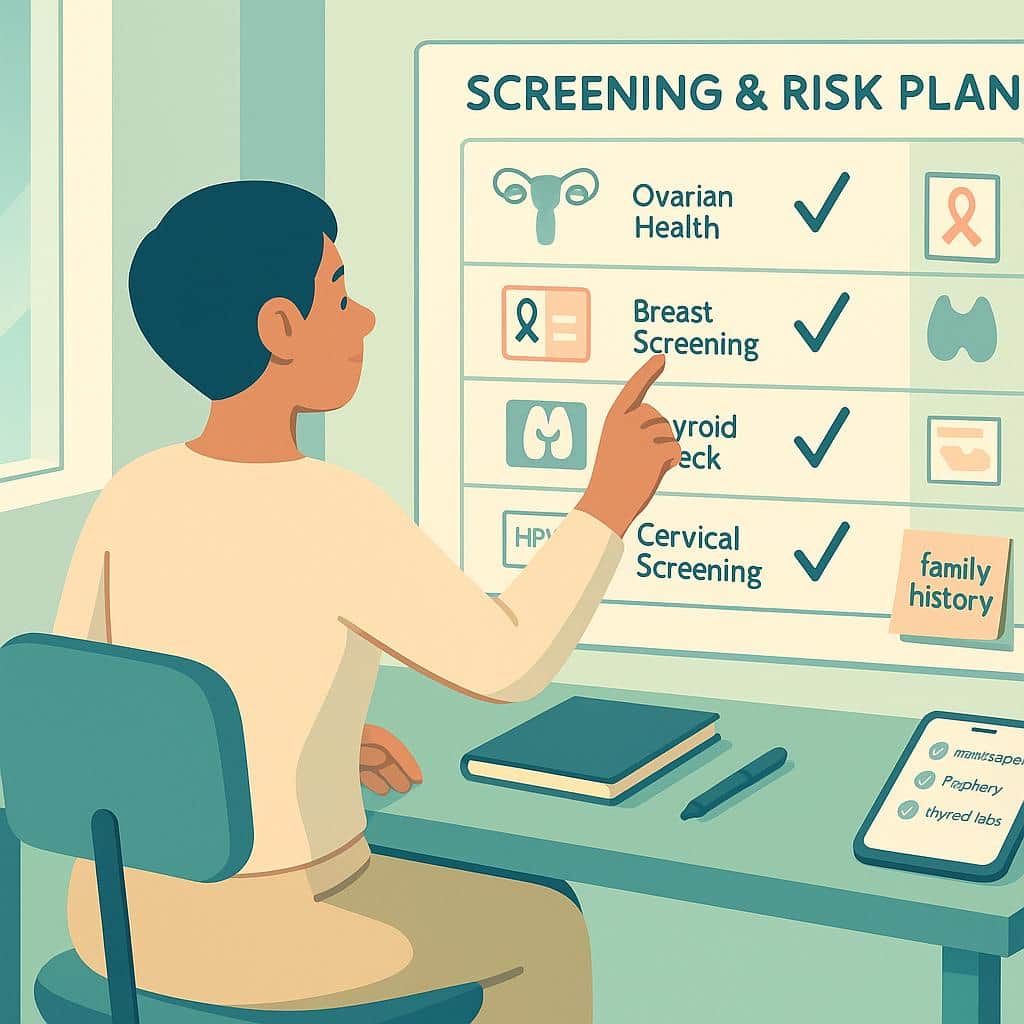
Understand how endometriosis affects ovarian, breast, thyroid, and cervical cancer risk, plus symptoms to watch, screening guidance, and ways to lower risk.
Does Endometriosis Cause Cancer? What Research Actually Shows
Explore the link between endometriosis and cancer risk. Get reliable insights based on recent research for informed health decisions.
Do I Really Need Excision Surgery? Endometriosis & Adenomyosis Insights
Explore whether surgery is necessary for your endometriosis or adenomyosis. Understand the latest research and options for managing your condition.