Fertility
How does endometriosis affect fertility, and when to seek help?
The short answer
Endometriosis can affect fertility through inflammation and scarring, but many people do conceive. In general, evaluation is recommended after 12 months of trying without success, or 6 months if you’re 35 or older; earlier evaluation is reasonable with severe pain or other risk factors.
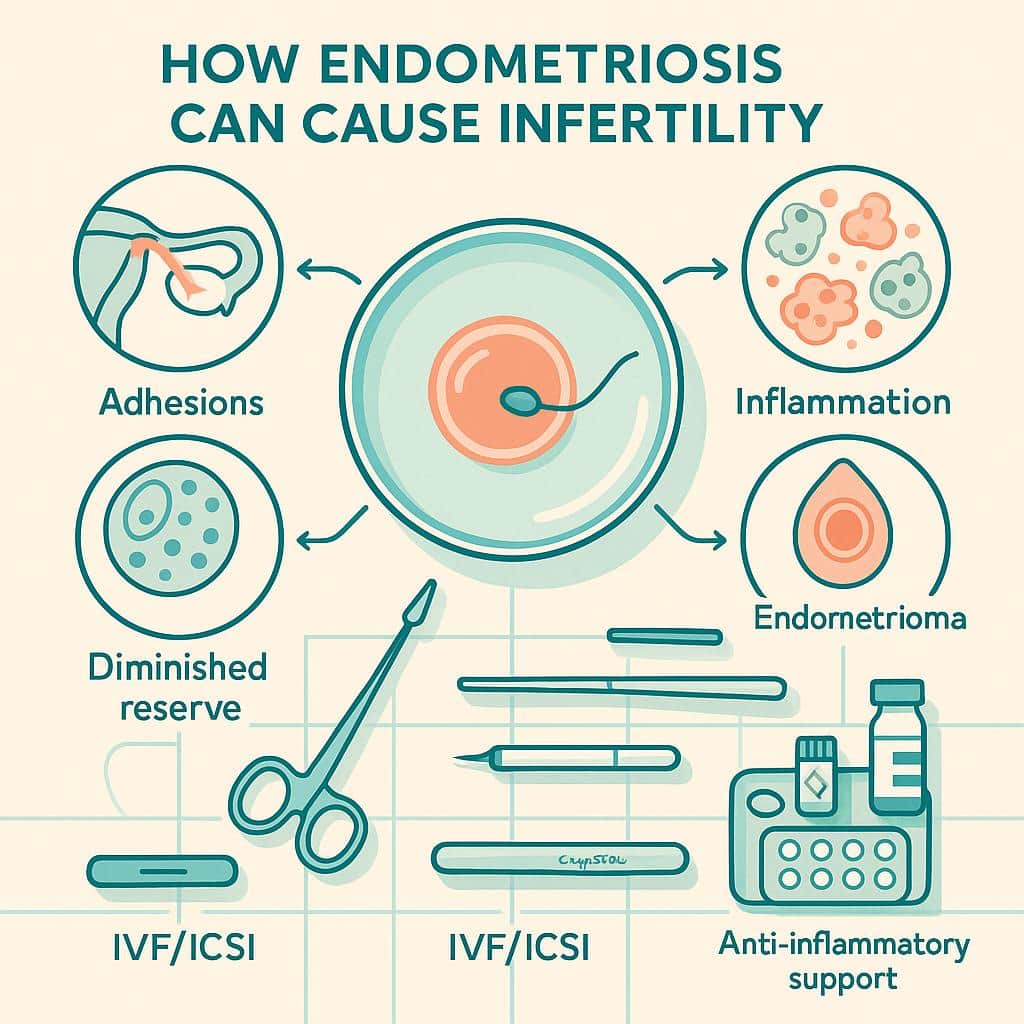
Endometriosis can affect fertility in several ways, including inflammation around the ovaries and tubes, changes that can interfere with egg quality or ovulation, and scarring that can impair tubal pickup and transport. It may also affect implantation, and some patients take longer to become pregnant or experience pregnancy loss. Importantly, many people with endometriosis do conceive. The effect on fertility varies widely by disease location, severity, age, and overall reproductive health.
In general, we recommend a fertility-focused evaluation if you’ve been trying to conceive for 12 months without success (or after 6 months if you’re 35 or older). It’s also reasonable to contact our team sooner if you have severe pain, known or suspected ovarian endometriomas, prior pelvic surgery, irregular cycles, or a history that suggests tubal factor issues. Depending on your goals and findings, next steps may include clarifying anatomy and ovarian reserve, planning targeted excision when endometriosis is distorting pelvic function, and coordinating with fertility care such as ovulation induction or IVF when appropriate.
Where to go from here
Understand it, compare it with what you're feeling, then talk it through with us.
Understand
Understand the condition
Compare
Symptoms it can relate to
Speak with Us
Struggling to Conceive with Endometriosis?
Our specialists understand how endometriosis can impact fertility and tailor treatments to your unique needs. Reach out to explore your fertility options and get personalized care today.
Questions people ask next
All fertility questionsWhat should I ask about endometriosis-related infertility?
Ask for a plan that specifically evaluates endometriosis or adenomyosis, including imaging, whether your tubes are open, and ovarian reserve. Ask how treatments affect your timeline, when an excision-focused surgical evaluation makes sense, and how pain care can support your fertility goals.
Can endometriosis surgery improve my chances of conceiving?
Excision surgery can improve the chances of conceiving for some patients with endometriosis, particularly when removing superficial disease helps restore more normal pelvic anatomy. Outcomes vary, and surgery on the ovaries can affect ovarian reserve.
Do endometriomas affect fertility or ovarian reserve?
Yes, endometriomas can affect fertility and may be associated with lower ovarian reserve in some patients. Surgery, especially repeat cyst surgery, can also affect ovarian reserve because healthy ovarian tissue can be removed or its blood supply altered.
How do endometriosis stages affect fertility and treatment choices?
Endometriosis stage can influence fertility, but it doesn’t predict it perfectly, and treatment planning is individualized. Depending on age, symptoms, imaging and fertility goals, treatment may involve excision surgery, fertility treatment or both.
Further reading
Making a Fertility Plan: Working with Your Endometriosis Care Team
Learn how to create a patient-centered fertility plan with your endometriosis care team, addressing symptoms, treatment, and desired timelines.
How Endometriosis Contributes to Infertility
How endometriosis leads to infertility: pathogenesis; effects on gametes, tubes, and endometrium; and treatments (expectant care, surgery, and ART).
Surgery and IVF: When Are They Right for Endometriosis?
Explore when surgery or IVF is best for endometriosis. Understand the decision-making process and what to consider for fertility and health.