


You are seeking a diagnosis
How often does imaging miss endometriosis?
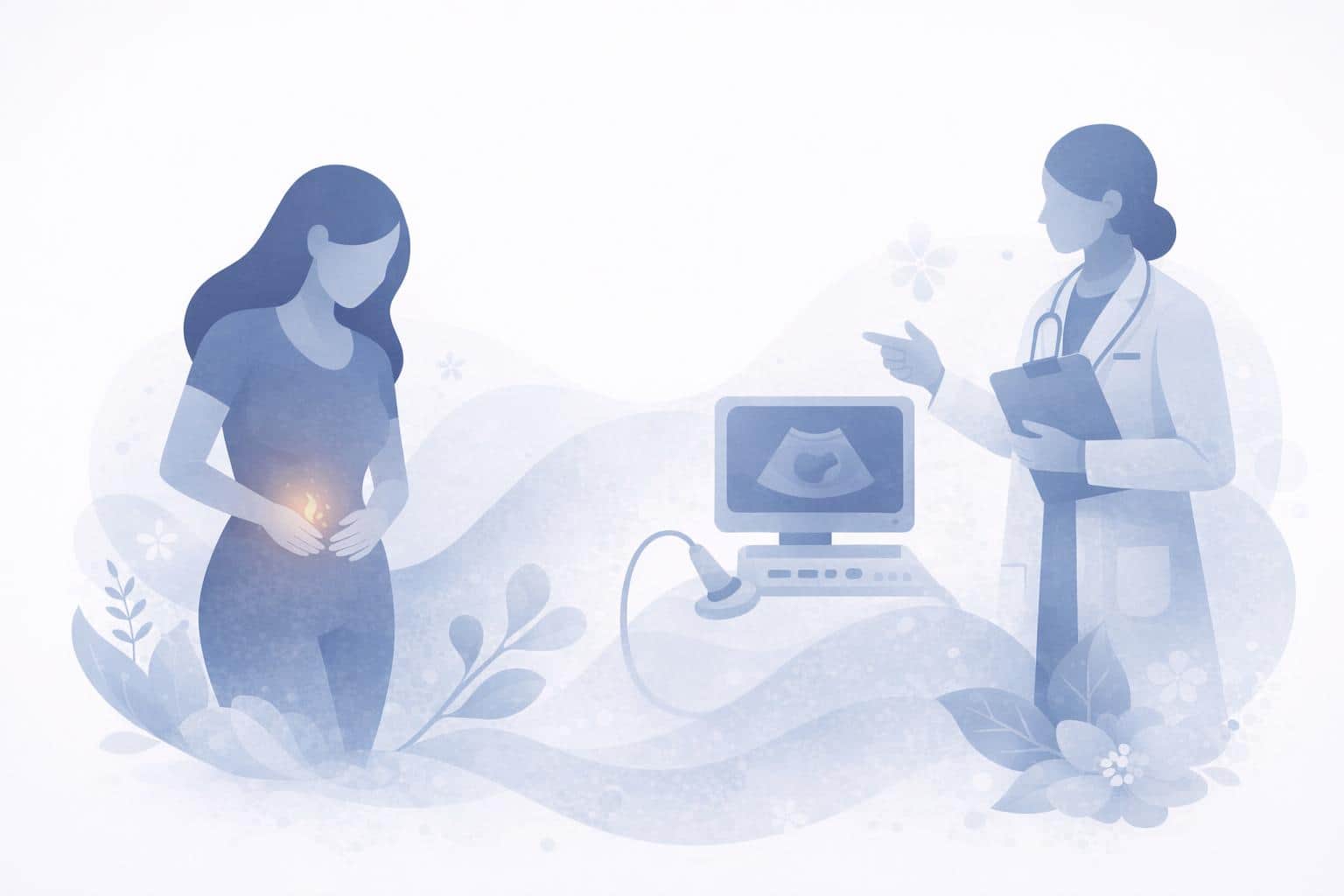
Imaging misses endometriosis more often than most patients are led to believe. Ultrasound and MRI can be very helpful for suggesting endometriosis and for mapping certain patterns of disease (like ovarian endometriomas or some forms of deep disease), but a “normal” scan does not rule endometriosis out—especially superficial peritoneal disease, subtle lesions, or disease hidden in difficult-to-visualize locations.
How often it’s missed depends on what type of endometriosis you have, where it is, the scan protocol, and—crucially—the experience of the person performing and interpreting the study. It’s also common for one modality to see something the other doesn’t, because each has different blind spots (for example, bowel gas can limit MRI in some situations, while ultrasound may miss certain deep sites). That’s why our diagnostic process doesn’t hinge on imaging alone; we combine your symptom story, exam findings, and expert imaging interpretation to decide what’s most likely and what the next step should be.
If your symptoms persist despite “negative” imaging, that isn’t a dead end—it’s a data point. Reach out to schedule a consultation so our team can review your history and prior imaging, consider other conditions that can mimic or coexist with endometriosis, and determine whether advanced imaging, further evaluation, or surgical assessment makes sense for your goals.
Don’t let a “normal” scan stop you
Ultrasound and MRI can miss superficial or hard-to-see endometriosis—even when symptoms are real. Our endometriosis specialists can review your imaging, assess your symptoms, and guide next diagnostic steps and treatment.
Schedule a consultRelated Questions
Related Symptoms
Related Procedures
Learn More

Can Scans and Tests Find Endometriosis? Know the Limits
Discover why ultrasounds may miss endometriosis. Learn about imaging limits and recent research in our latest blog. Find clarity in your diagnosis.

Endometriosis Biopsy: A Definitive Method for Diagnosis
Learn when a biopsy is essential for confirming endometriosis or adenomyosis. Explore symptoms, research findings, and options beyond surgery.

What Else Could It Be? Ruling Out Other Causes
Explore essential insights on endometriosis and other causes of pelvic pain. Learn about differential diagnoses and effective treatment options.
Related Pages
Evaluation & Diagnosis
At the Lotus Endometriosis Institute, evaluation begins with listening. Our diagnostic process uncovers the true source of pain and related conditions often missed elsewhere.
Endometriosis
Endometriosis isn't just one disease — it's many. Our team tailors our approach to your unique condition, using evidence-based integrative support and world-class excision for lasting results.