Treatment Challenges
Why do doctors recommend different treatments for the same symptoms?
The short answer
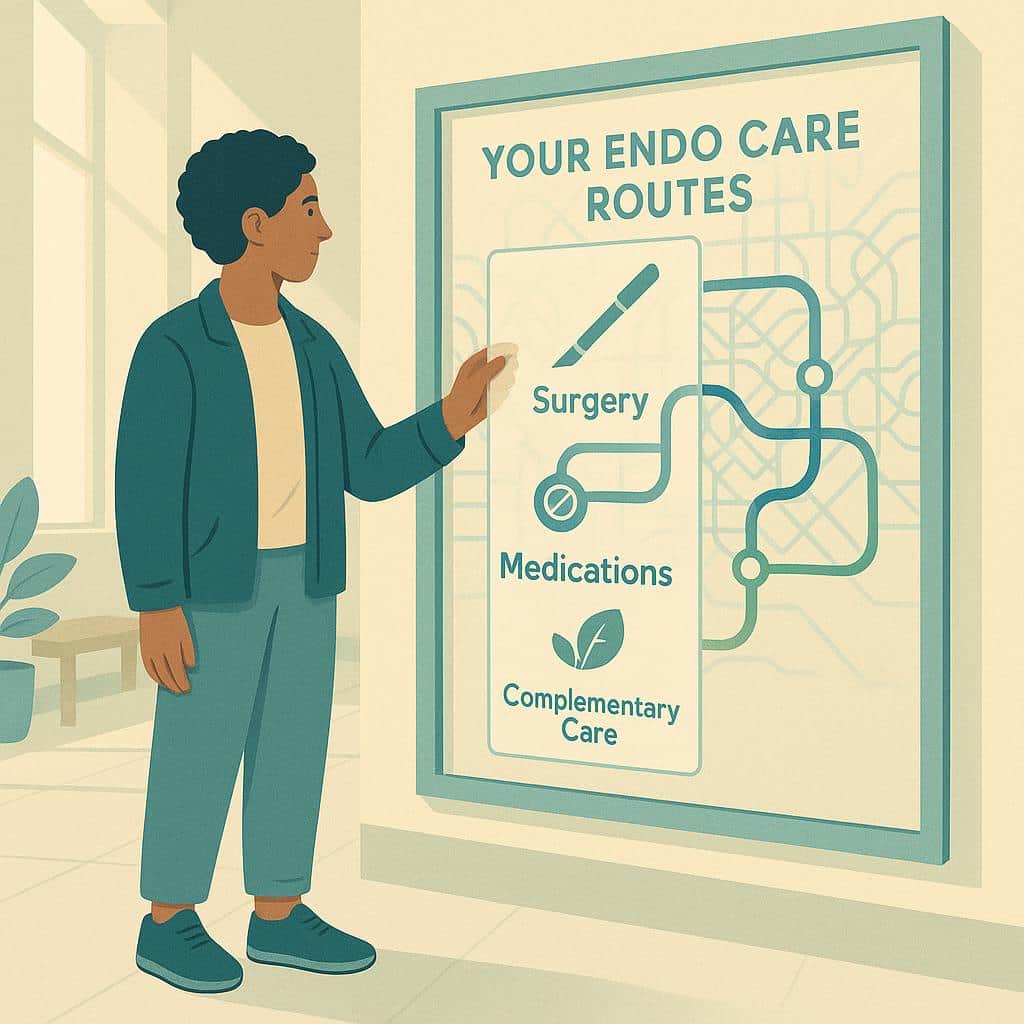
Doctors recommend different treatments because similar pelvic pain symptoms can have different underlying causes. Their training, available tools, and your goals, such as pain relief or fertility planning, can also shape their recommendations.
It’s common to hear different treatment recommendations for the same symptoms because pelvic pain conditions like endometriosis and adenomyosis can look similar on the surface but have very different underlying drivers. The location and depth of disease, the presence of adhesions or ovarian cysts, and whether symptoms are more cyclic, constant, or related to specific organs can all change which approach makes the most sense. Research also doesn’t always compare options directly in a way that clearly fits an individual patient’s situation.
Recommendations also vary because clinicians are trained in different frameworks: some focus primarily on medical suppression of symptoms, while others emphasize identifying and removing disease. The tools available to them, including the quality of imaging and their comfort interpreting it, and your goals (pain relief, fertility planning, medication tolerance, or wanting a definitive diagnosis) can reasonably lead to different best next steps. If you’re getting mixed messages, our team can help you make sense of the possibilities and build a plan that matches your symptoms, priorities, and long-term goals.
Where to go from here
Understand it, compare it with what you're feeling, then talk it through with us.
Compare
Symptoms it can relate to
Speak with Us
Confused By Mixed Treatment Advice?
We know how frustrating it is to get different treatment recommendations for similar symptoms. Our specialists tailor care specifically to your unique condition and needs, helping you get the right treatment plan.
Questions people ask next
All treatment challenges questionsWhen should I get a second opinion for endometriosis?
A second opinion is worth pursuing when symptoms persist despite treatment, your pain is minimized, or you face a major decision without a clear plan. It’s also important if imaging is normal but symptoms track with your cycle, or surgery gave incomplete relief.
What is tried first for endometriosis pain, and how is it chosen?
Many patients start with hormonal suppression, such as continuous combined hormonal contraception, a progestin-only medication, or a levonorgestrel IUD. The choice depends on pain, bleeding goals, migraine history, clot risk, prior hormone side effects, and fertility timing.
Why doesn’t one medication fix all my pelvic pain?
Pelvic pain can come from menstrual cramps, inflammation, pelvic floor muscle guarding and nerves, so one medication often can’t cover every type of discomfort. Pain relief often works best when treatments are matched to the main sources of your pain.
How is endometriosis different from adenomyosis?
Endometriosis involves tissue similar to the uterine lining growing outside the uterus; adenomyosis involves that tissue growing into the uterus's muscle wall. They can occur together, and when they do, symptoms may feel more severe and fertility can be affected.
Further reading
Clearing Up Confusion in Endometriosis Care (Part 1)
Part 1 clarifies myths in endometriosis care: where surgery helps, what medical management can and can’t do, and how complementary therapies fit into a plan.
Different Types of Endometriosis Pain and What Helps
Learn how endometriosis pain can feel, what may drive each pattern, and which assessment and treatment options to discuss with your doctor.
Do I Really Need Excision Surgery? Endometriosis & Adenomyosis Insights
Explore whether surgery is necessary for your endometriosis or adenomyosis. Understand the latest research and options for managing your condition.