Diagnosis
Can endometriosis become cancer?
The short answer
Yes, endometriosis can rarely become cancer, but for the vast majority of people it does not. Endometriosis itself is not cancer, and the best-supported link is with certain ovarian cancers. The risk appears highest when the ovaries are involved.
Yes, endometriosis can rarely undergo malignant transformation, but for the vast majority of people it does not turn into cancer. Endometriosis itself is not cancer, even though it can behave in cancer-like ways (invading tissues, scarring, and spreading beyond the pelvis). The best-supported association in research is with certain ovarian cancer subtypes, especially clear cell and endometrioid ovarian cancers. The risk appears highest when the ovaries are involved, such as with endometriomas.
What matters most is context: your age, family history/genetics, imaging findings, and whether a cyst or mass is changing over time. If you’re worried about an endometrioma, deep disease, or persistent symptoms that don’t fit your usual pattern, our team can evaluate the full picture and help you understand what’s reassuring and what deserves closer workup. If surgery is appropriate, strategic minimally invasive excision can treat disease and allow tissue diagnosis when needed, so you’re not left guessing. Reach out to schedule a consultation if you’d like a personalized risk discussion and a clear plan.
Where to go from here
Understand it, compare it with what you're feeling, then talk it through with us.
Compare
Symptoms it can relate to
Speak with Us
Worried about cancer risk?
Endometriosis rarely becomes cancer, but anxiety is real—especially with ovarian cysts or endometriomas. Our specialists can review your history, imaging, and risk factors and guide the right next diagnostic steps.
Questions people ask next
All diagnosis questionsDoes endometriosis increase cancer risk?
Yes, endometriosis is associated with increased ovarian cancer risk, especially clear cell and endometrioid types. The increase is relative to people without endometriosis; absolute risk remains low, and most people with endometriosis never develop cancer.
Does endometrioma removal or excision surgery reduce cancer risk?
Removing an endometrioma or excising endometriosis can remove tissue where atypical changes could rarely develop, but surgery is not typically done primarily to prevent cancer. The link with cancer is complex, and the absolute risk for most patients remains low.
What are the risks of leaving an endometrioma untreated?
An untreated endometrioma can grow, increase pelvic pain and inflammation, and in rare cases rupture or cause the ovary to twist. There is also a small increased lifetime risk of certain ovarian cancers, but the absolute risk remains low.
Further reading
Does Endometriosis Cause Cancer? What Research Actually Shows
Explore the link between endometriosis and cancer risk. Get reliable insights based on recent research for informed health decisions.
Endometriosis vs. Cancer: How to Tell The Symptoms Apart
Compare endometriosis vs. ovarian cancer symptoms: pain patterns, bleeding, GI signs, and red flags. Know when to see a gynecologist or gynecologic oncologist.
Evaluating Cancer Risk in Endometriosis
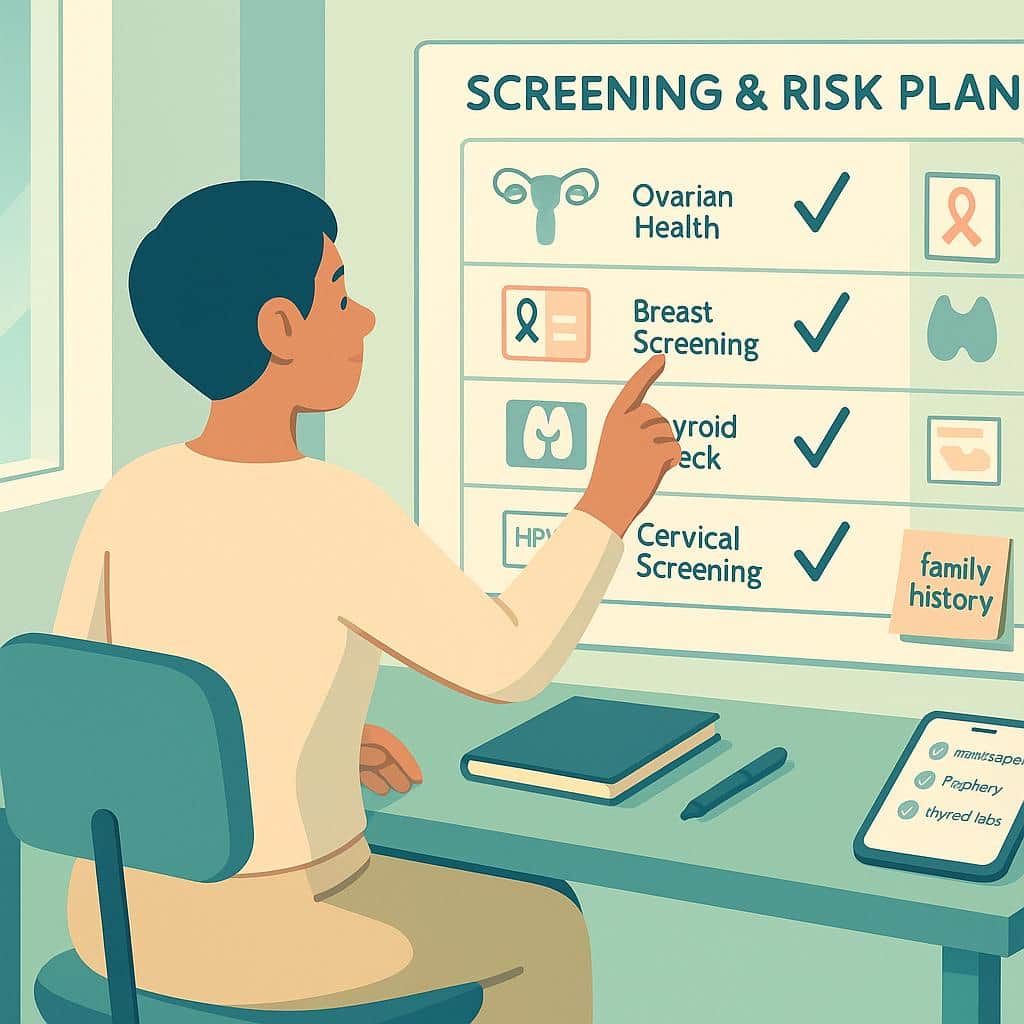
Understand how endometriosis affects ovarian, breast, thyroid, and cervical cancer risk, plus symptoms to watch, screening guidance, and ways to lower risk.