Diagnosis
Endometriosis or herniated disc—how can I tell?
The short answer
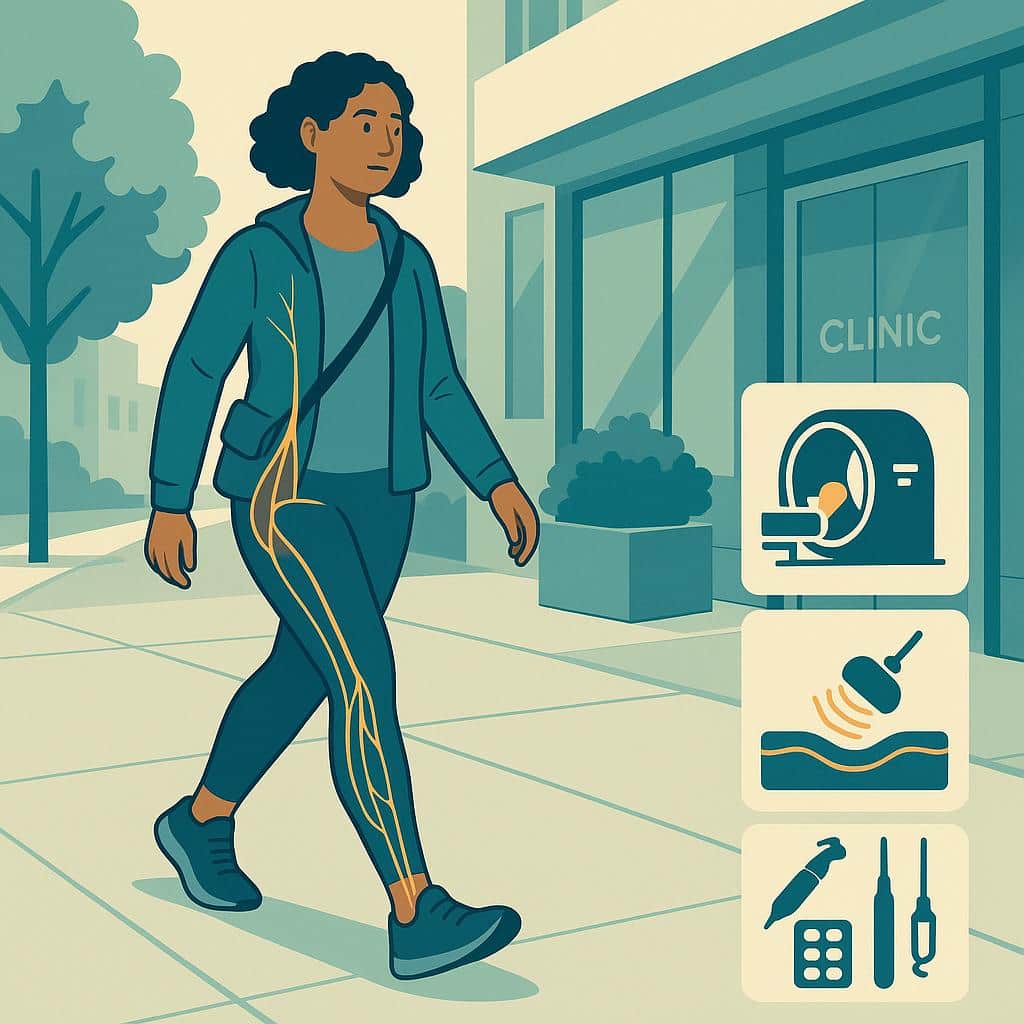
Endometriosis pain often flares with your cycle, while a herniated disc more commonly causes back or leg pain that changes with posture. Because endometriosis can mimic sciatica and both can coexist, a careful history, targeted exam and appropriate imaging help sort them out.
Endometriosis pain often follows a pelvic rhythm: it flares with your cycle, deepens around periods, and may come with symptoms like pain with sex, bowel movements, or urination, bloating, or a heavy pelvic ache. A herniated disc more commonly behaves like a spine or nerve problem: low back pain that travels into the buttock or leg, burning or tingling, or pain that changes with posture (sitting, bending, coughing) rather than with bleeding or ovulation. That said, endometriosis can irritate pelvic nerves and mimic sciatica, and it’s also common for endometriosis and a true disc issue to coexist.
The most reliable way to sort this out is a careful history of your pain patterns and a targeted exam, followed by the right imaging interpreted with your symptoms in mind: sometimes pelvic MRI or ultrasound to look for pelvic disease, and sometimes spine imaging if the story fits. Our team focuses on distinguishing endometriosis from look-alikes and finding coexisting causes like pelvic floor dysfunction or hernias so you’re not stuck treating the wrong problem. If you’re dealing with overlapping pelvic and back or leg pain, reach out to schedule an evaluation. Bringing a symptom timeline (cycle days, triggers, where pain travels, numbness or weakness) can make your visit far more useful.
Where to go from here
Understand it, compare it with what you're feeling, then talk it through with us.
Compare
Symptoms it can relate to
Speak with Us
Is Your Pain Endometriosis or a Disc?
Understanding your pain pattern is key to diagnosis. Our specialists can help distinguish endometriosis from spine issues and guide your next steps.
Questions people ask next
All diagnosis questionsIs my leg pain from endometriosis or a back/disc problem?
There is no perfect at-home test, but endometriosis-related leg pain often tracks with your cycle, while back or disc pain is more likely to change with spine movements. These conditions can overlap, and a pelvic and musculoskeletal evaluation can help sort them out.
When should I see an endometriosis specialist for leg pain?
It’s worth considering an endometriosis specialist if leg pain keeps coming back, is disabling, follows a monthly pattern, or flares with pelvic symptoms. Concern is also higher if sciatica treatments haven’t found a clear cause or brought meaningful improvement.
Can endometriosis irritate or entrap pelvic nerves?
Yes, endometriosis can irritate, inflame, or tether pelvic nerves, especially when it grows deeply into tissues. When lesions are near nerves, symptoms can include cyclical sciatica-like leg pain, genital burning, or sharp shooting pain in the rectum or vagina.
Why do I get low back and leg pain during my period?
Low back and leg pain during your period can happen when pelvic inflammation irritates pain pathways that send pain into your back and legs. In some patients, endometriosis can play a role, but pain can also come from the spine, hips, or muscles.
Further reading
Sciatic Nerve Endometriosis: Diagnosis and Treatment
Sciatic nerve endometriosis explained: key symptoms, how it's diagnosed (exam, MRI), and effective treatments including medication, PT, and surgical excision.
What Else Could It Be? Ruling Out Other Causes
Explore essential insights on endometriosis and other causes of pelvic pain. Learn about differential diagnoses and effective treatment options.
Different Types of Endometriosis Pain and What Helps
Learn how endometriosis pain can feel, what may drive each pattern, and which assessment and treatment options to discuss with your doctor.