

Surgery
What happens to excised tissue, and does pathology matter?
The short answer
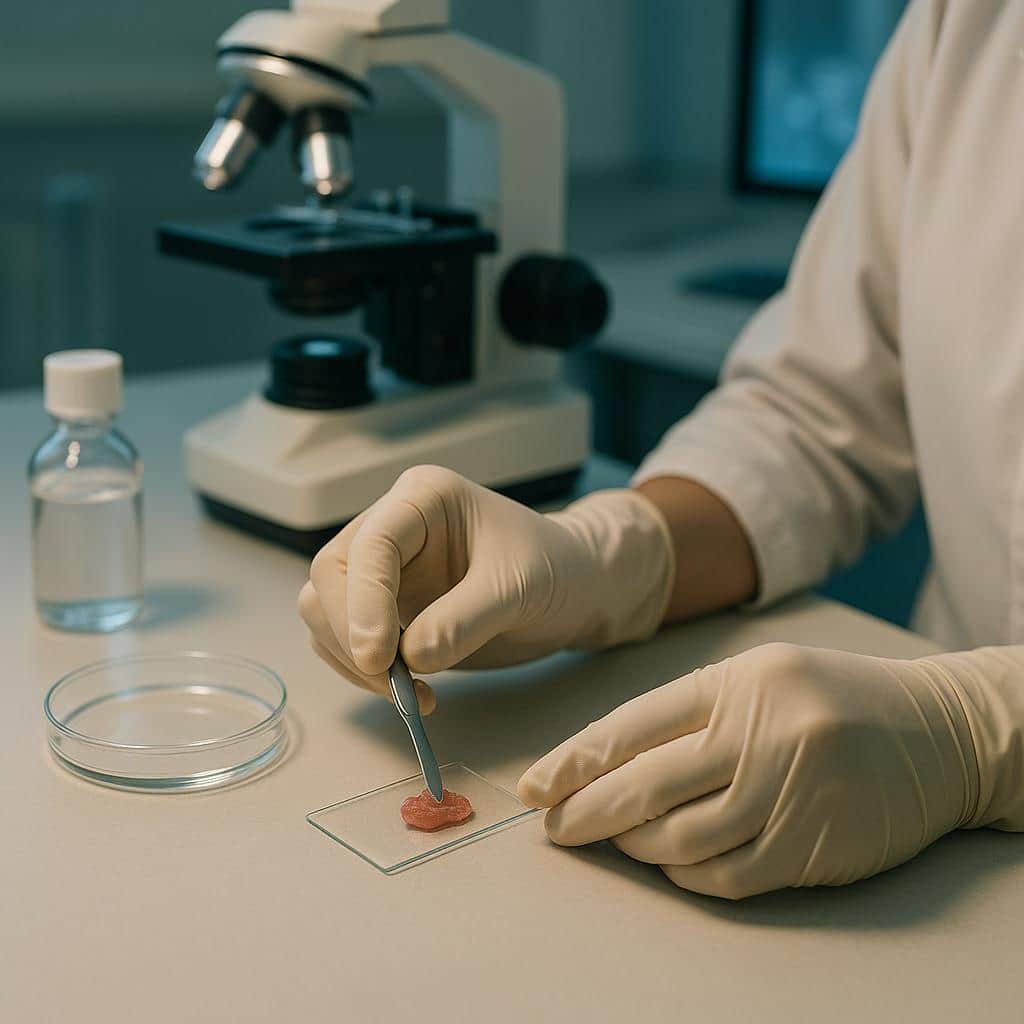
Removed tissue is typically sent to a pathology lab to help confirm endometriosis and rule out rare but important concerns. Pathology is helpful, but reports only reflect the samples submitted and can miss microscopic disease or disease in areas that weren’t sampled.
During surgery, the tissue we remove is typically sent to a pathology lab. Pathology can confirm whether the sample contains endometriosis and can describe findings such as an endometrioma, scarring/fibrosis, or other tissue changes. It also helps us rule out rare but important concerns, especially when removing ovarian cysts or complex-appearing tissue.
Pathology is helpful, but it isn’t the whole story: the report reflects only the specific samples submitted, and endometriosis can be missed if the disease is microscopic or in areas that weren’t sampled. Symptom improvement depends most on complete, careful removal of visible disease and addressing contributing factors as part of a coordinated plan. If you have questions about your pathology results or what they mean for next steps, our team can review the report with you and tailor follow-up to your goals.
Where to go from here
Understand it, compare it with what you're feeling, then talk it through with us.
Understand
Understand the condition
Speak with Us
Understand Your Surgery Results
We know surgery can be overwhelming, and knowing what happens to tissue helps you feel more in control. Our specialists use pathology insights to confirm diagnoses and tailor your ongoing care for endometriosis and adenomyosis.
Questions people ask next
All surgery questionsCan pathology be negative even if I have endometriosis?
Yes, pathology can be negative even when endometriosis is present because a biopsy may miss tiny, patchy, or hidden lesions. A negative result does not automatically rule out endometriosis; your history, exam, imaging, and surgical findings help put it in context.
Does endometrioma removal or excision surgery reduce cancer risk?
Removing an endometrioma or excising endometriosis can remove tissue where atypical changes could rarely develop, but surgery is not typically done primarily to prevent cancer. The link with cancer is complex, and the absolute risk for most patients remains low.
What is endometriosis excision surgery?
Endometriosis excision surgery removes lesions by cutting them out at their roots, rather than burning or cauterizing the surface. The goal is to fully remove visible disease while preserving healthy tissue and restoring normal anatomy as much as possible.
Further reading
Endometriosis Biopsy: A Definitive Method for Diagnosis
Learn when a biopsy is essential for confirming endometriosis or adenomyosis. Explore symptoms, research findings, and options beyond surgery.
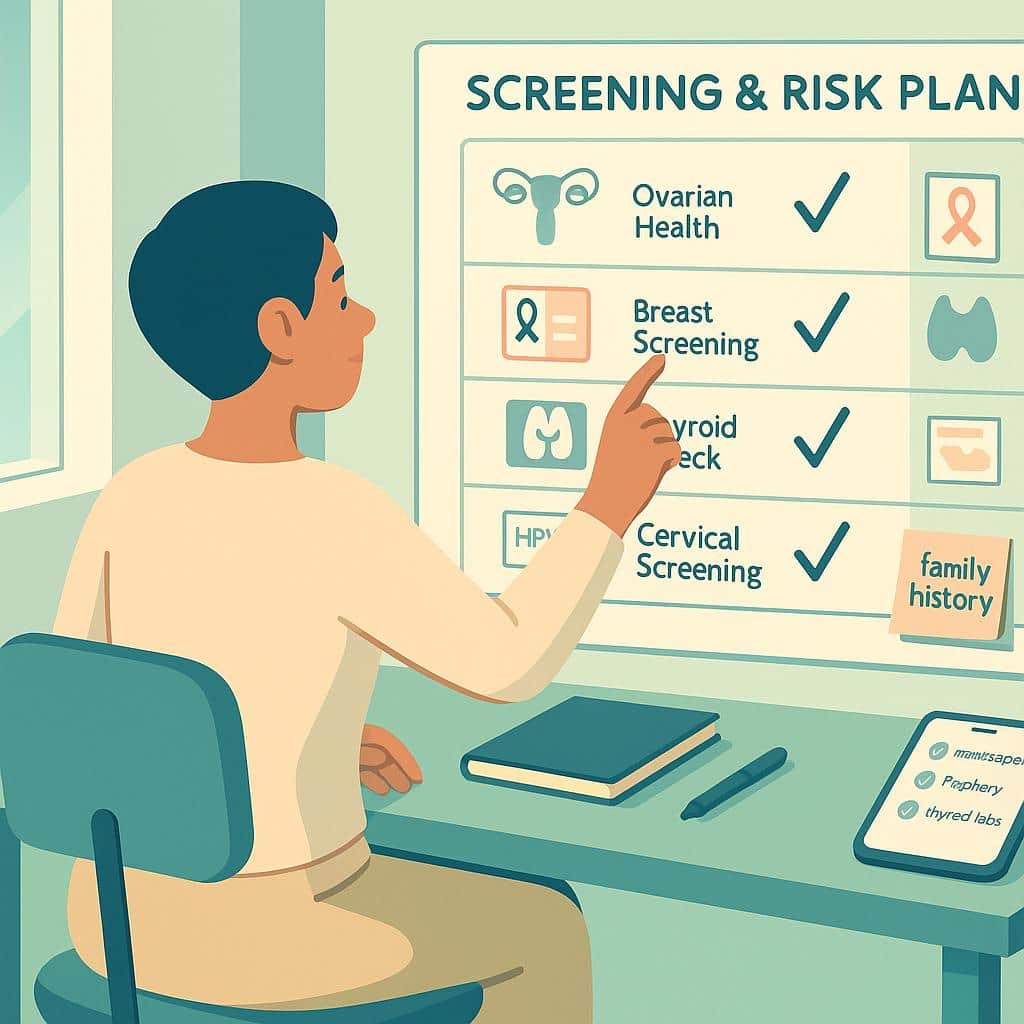
Evaluating Cancer Risk in Endometriosis
Understand how endometriosis affects ovarian, breast, thyroid, and cervical cancer risk, plus symptoms to watch, screening guidance, and ways to lower risk.
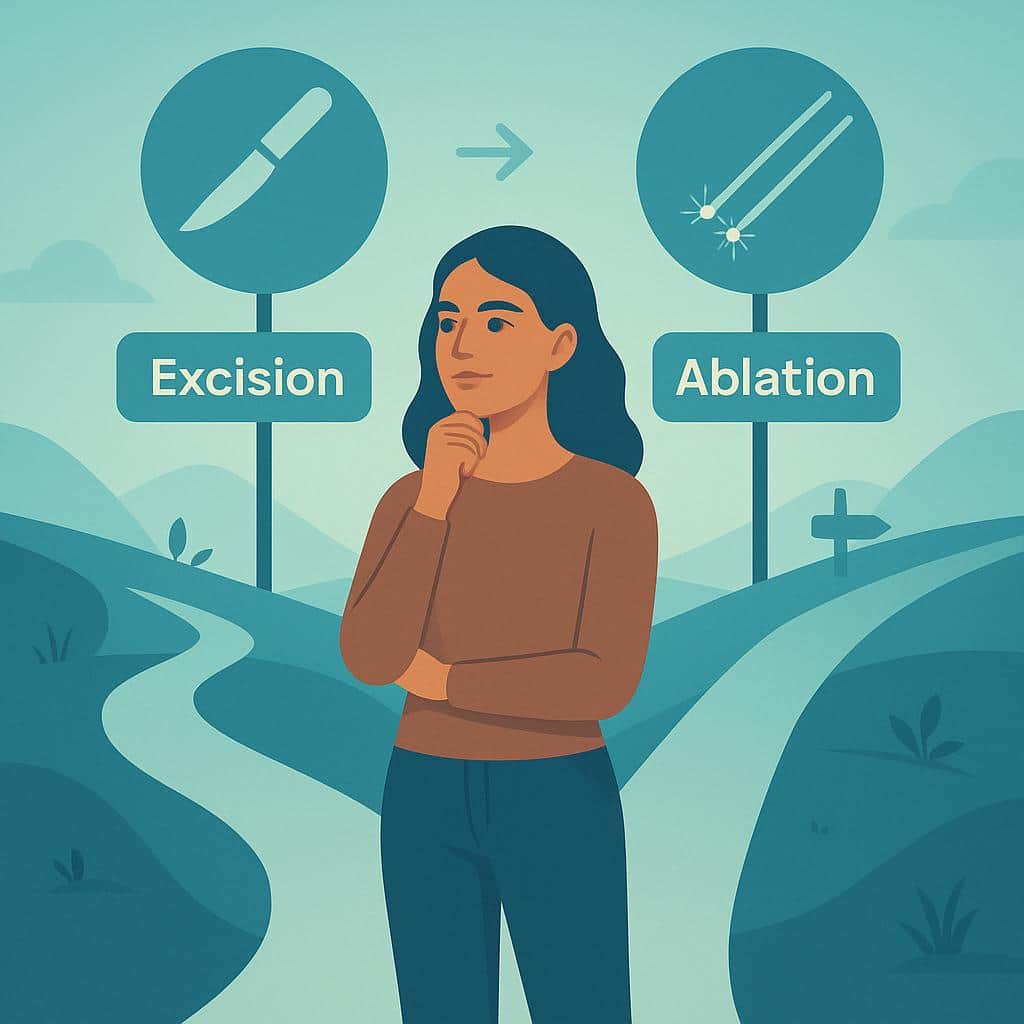
Excision vs Ablation: Understanding Endometriosis Surgery Options
Explore excision vs ablation for endometriosis. Learn about surgery options, pain relief, and making informed choices based on your fertility goals.