Fertility
Is laparoscopy necessary for infertility from endometriosis?
The short answer
Laparoscopy is not always necessary for infertility from endometriosis, but surgical tissue removal is needed for a definitive diagnosis. The key question is whether surgery is likely to improve your barriers to conception, such as tubal damage or an endometrioma.
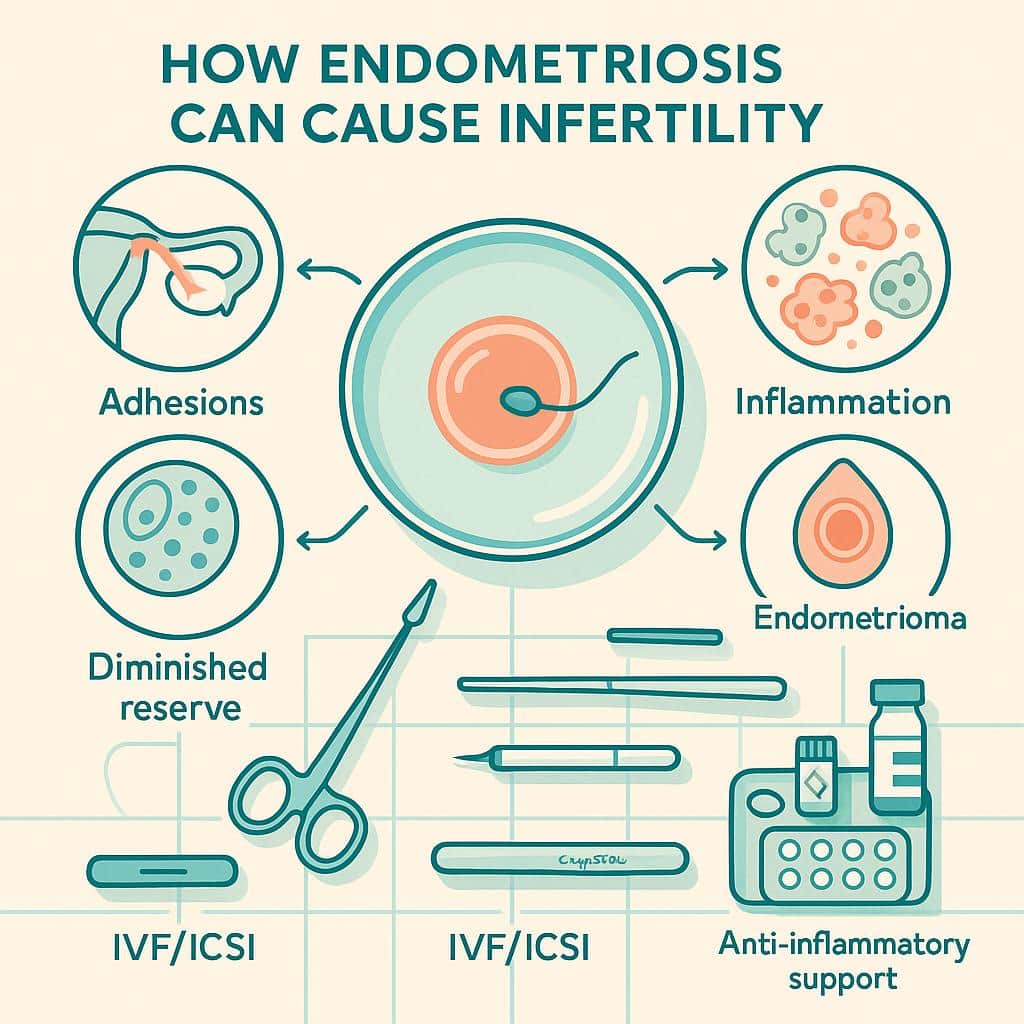
Not always, but laparoscopy (surgery) is often the step that brings clarity when endometriosis is a suspected cause of infertility. Endometriosis can reduce fertility through inflammation, endometriomas, scarring and adhesions that distort the ovaries and tubes, and changes that interfere with egg pickup, embryo transport, or implantation. Imaging and clinical evaluation can strongly suggest disease in some patients, but endometriosis still can’t be definitively diagnosed without surgically removing tissue for confirmation.
When infertility is the main concern, the question is usually whether surgery is likely to help with your specific barriers to conception, such as a suspected endometrioma, tubal damage, or deep disease affecting pelvic anatomy. In those cases, our team typically focuses on complete excision (rather than burning lesions), because leaving disease behind can mean persistent inflammation and ongoing fertility challenges. If you’re trying to decide whether surgery belongs in your fertility plan, we can review your full history, imaging, and goals and map out a strategy that fits, whether that means moving toward excision, coordinating with fertility treatment, or first ruling out other common contributors that can resemble or coexist with endometriosis.
Where to go from here
Understand it, compare it with what you're feeling, then talk it through with us.
Step 1 · Understand
Understand the condition
Step 2 · Compare
Symptoms it can relate to
Step 3 · Speak with Us
Struggling to Conceive?
Our specialists understand how endometriosis impacts fertility and can guide you through effective treatment options, including when laparoscopy might be needed. Let us help clarify your diagnosis and improve your chances of conception.
Questions people ask next
All fertility questionsCan you get pregnant with endometriosis without surgery?
Yes, many people with endometriosis get pregnant without surgery, either naturally or with fertility treatment. Whether this is a good plan for you depends on your age, ovarian reserve, how long you’ve been trying, other fertility factors, and whether you have endometriomas or deep disease.
How is infertility from endometriosis treated?
Treatment depends on how endometriosis is affecting your fertility. Excision surgery can remove disease and restore anatomy when fertility is physically blocked. Fertility treatment is sometimes the next step after surgery and sometimes the first step.
Can endometriosis surgery affect fertility?
Yes, endometriosis surgery can affect fertility in both positive and negative ways, depending on where the disease is and what surgery involves. Removing disease can improve the chances of conception, but surgery on the ovaries can reduce ovarian reserve.
Can endometriosis surgery improve my chances of conceiving?
Excision surgery can improve the chances of conceiving for some patients with endometriosis, particularly when removing superficial disease helps restore more normal pelvic anatomy. Outcomes vary, and surgery on the ovaries can affect ovarian reserve.
Further reading
Surgery and IVF: When Are They Right for Endometriosis?
Explore when surgery or IVF is best for endometriosis. Understand the decision-making process and what to consider for fertility and health.
How Endometriosis Contributes to Infertility
How endometriosis leads to infertility: pathogenesis; effects on gametes, tubes, and endometrium; and treatments (expectant care, surgery, and ART).
Making a Fertility Plan: Working with Your Endometriosis Care Team
Learn how to create a patient-centered fertility plan with your endometriosis care team, addressing symptoms, treatment, and desired timelines.