

Bladder & ureter endometriosis
Endometriosis that grows into the bladder wall or around the ureters, the tubes that carry urine from the kidneys to the bladder.
Medically reviewed by Dr. Steven Vasilev, MD
Board-Certified Gynecologic Oncologist & Integrative Medicine Diplomate, Advanced Robotic Endometriosis Excision Surgeon, Director of Lotus Endometriosis Institute · Updated Nov 2026
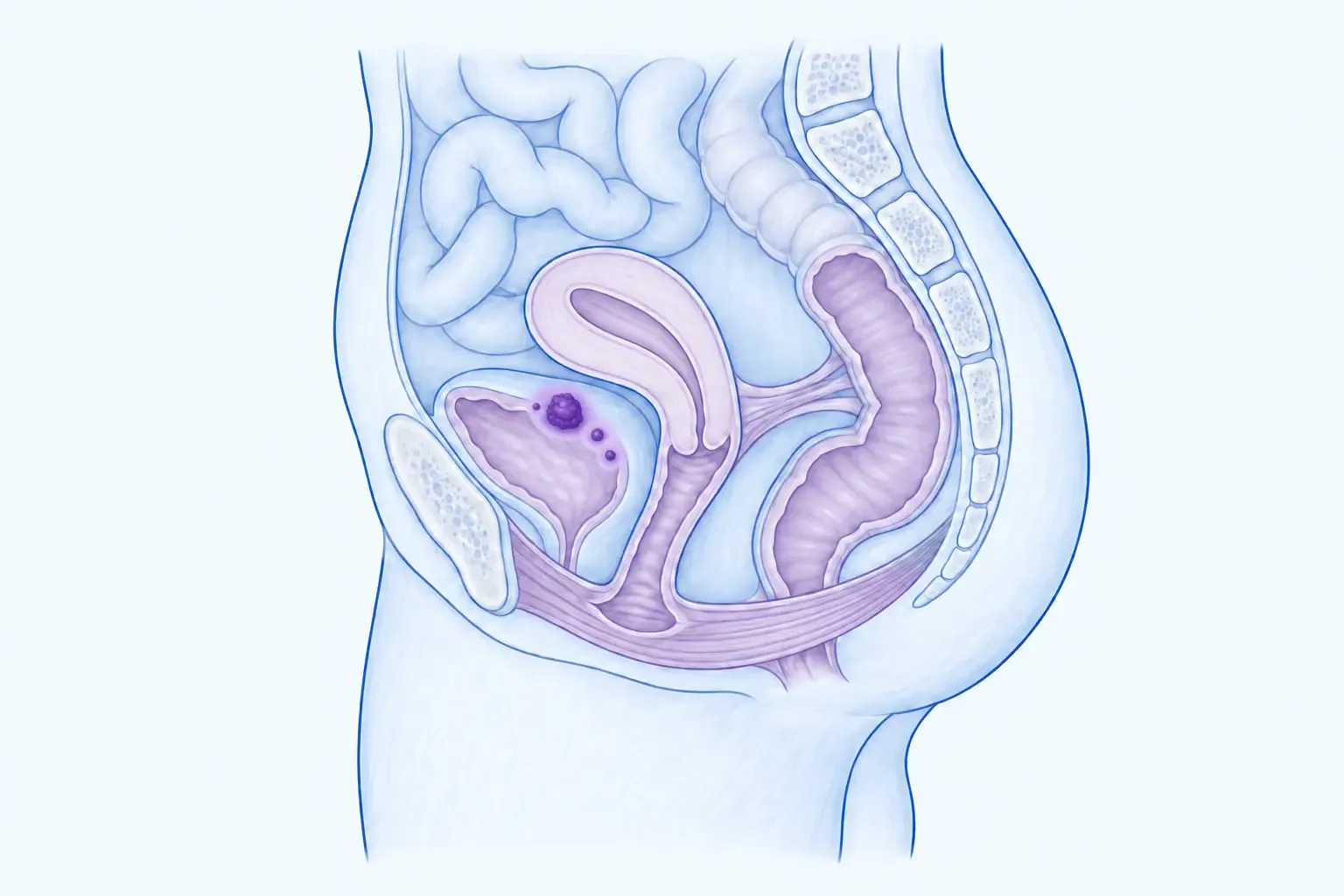
- The bladder wallHere on the back of the bladder, where the uterus rests on it
- The bladderLow in front of the uterus, just behind the pubic bone
- The uterusJust behind, and often stuck to the bladder by the disease
- About 1 in 10
- with deep endometriosis have it in the urinary tract
- Often silent
- a narrowed ureter can cause no pain at all
- Normal urine tests
- don't rule it out: it grows from the outside in
The basics
What is it?
Endometriosis that grows into the muscle of the bladder wall, or around a ureter, usually as part of deep disease. Around a ureter, scar tissue can narrow it and back urine up into the kidney.
Three things to know
- The ureters matter most
In expert-center series, a ureter is involved more often than the bladder alone. A narrowed ureter can cause no pain while it backs urine up into the kidney, so the kidneys are always checked.
- It grows from the outside in
A bladder nodule starts on the bladder's outer surface and works into the muscle. That's why urine tests, and even a look inside the bladder, are so often normal.
- Not every bladder symptom means bladder disease
Burning and urgency can come from a sensitized bladder or pelvic floor, with no lesion to remove. Imaging and a consultation tell you which.

Symptoms
How does it show up?
Often like a UTI that keeps coming back: burning, urgency and pressure, with negative urine cultures, typically worse around a period. A narrowed ureter may cause no symptoms at all.
Many people are treated for infections again and again before anyone looks at the bladder wall. Symptoms that follow the menstrual cycle are the clue worth raising. More on the urinary symptoms you didn't expect.
- Painful urinationBurning or pain when you pee, worse around a period
- Urgency and frequencyNeeding to go often, or suddenly, with little to show for it
- Bladder pain or pressureLow, central pain that builds as the bladder fills
- Blood in the urineWith a period: uncommon, but a strong clue
- Pain in your side or backOne-sided, from a ureter backing urine up into the kidney
- Painful periodsSevere cramps the usual measures don't touch
- Pain during intercourseDeep pain with sex, from disease elsewhere in the pelvis
- Pelvic painPain between periods, not only during them
A blocked ureter can harm a kidney. Fever with pain in your side or back, being unable to pass urine, or severe one-sided pain needs urgent care.
Diagnosis
How is it diagnosed?
Expert imaging maps it before surgery and checks the kidneys. Normal urine tests or a normal cystoscopy don't rule it out, because the disease starts outside the bladder.
- Urine testsAt the first visitRule out an infection. They're often normal in bladder endometriosis, and blood in the urine isn't needed for the diagnosis.
- Expert ultrasoundThe first mapWith a partly full bladder, an experienced sonographer can see a nodule in the bladder wall. A kidney ultrasound checks for swelling, a sign that a ureter is narrowed.
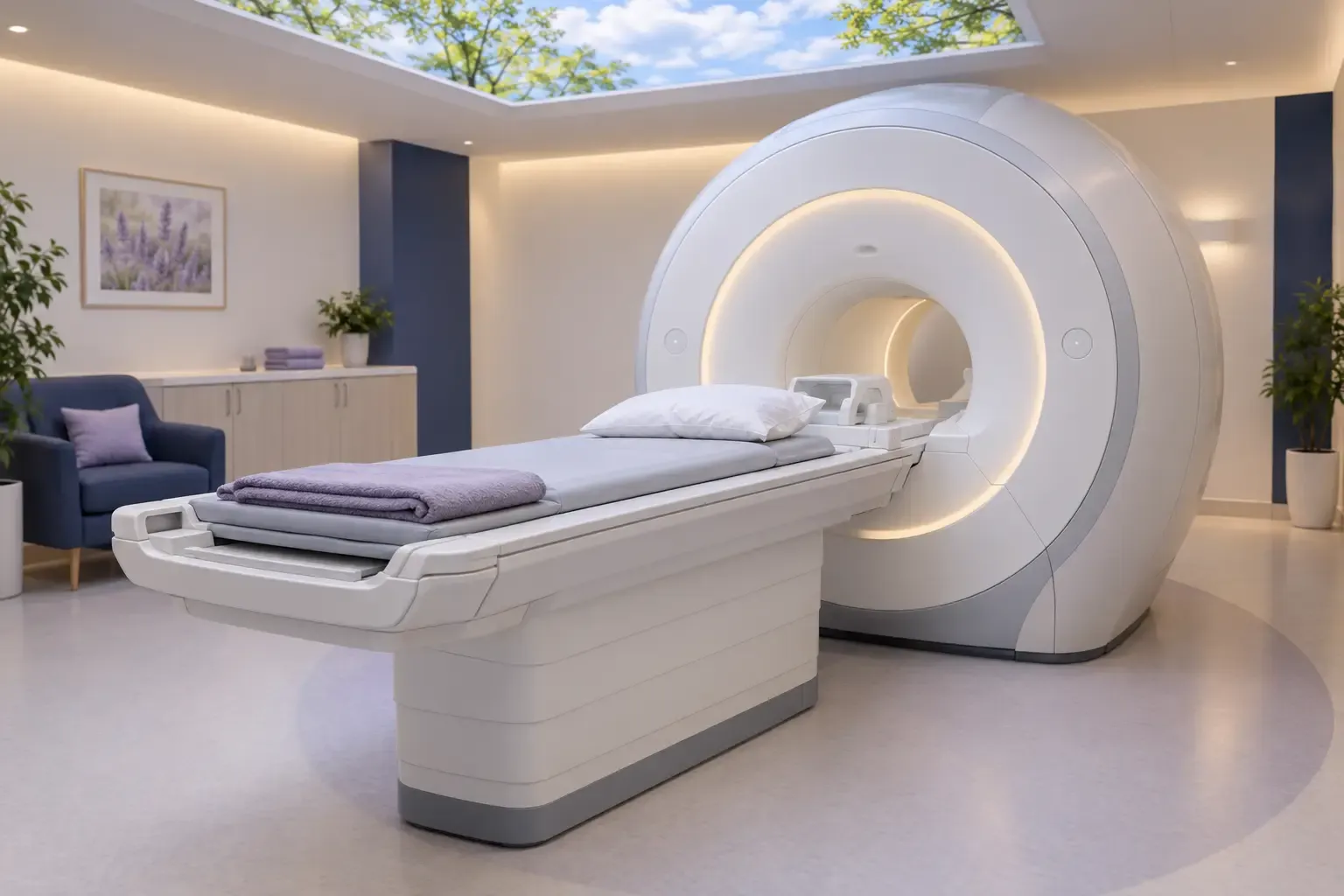
- MRITo plan surgeryShows how deep a bladder nodule goes, how close it sits to where the ureters enter the bladder, and the rest of the pelvic disease.
- CystoscopyIn some casesA look inside the bladder, useful when there's blood in the urine. Because the disease grows from the outside in, it's often normal.
- SurgeryConfirms and treats itSees the disease directly, confirmed by a pathologist, and removes it in the same planned operation.
Sometimes it's found only at surgery, which is often too late to have the right surgeons present. Knowing beforehand means the technique, and a urologist if needed, are planned in advance, and your consent covers them.
Treatment
What are the options?
Medication can calm symptoms when the kidneys aren't at risk. Surgery removes the nodule from outside the bladder and frees a narrowed ureter.
Excision surgery
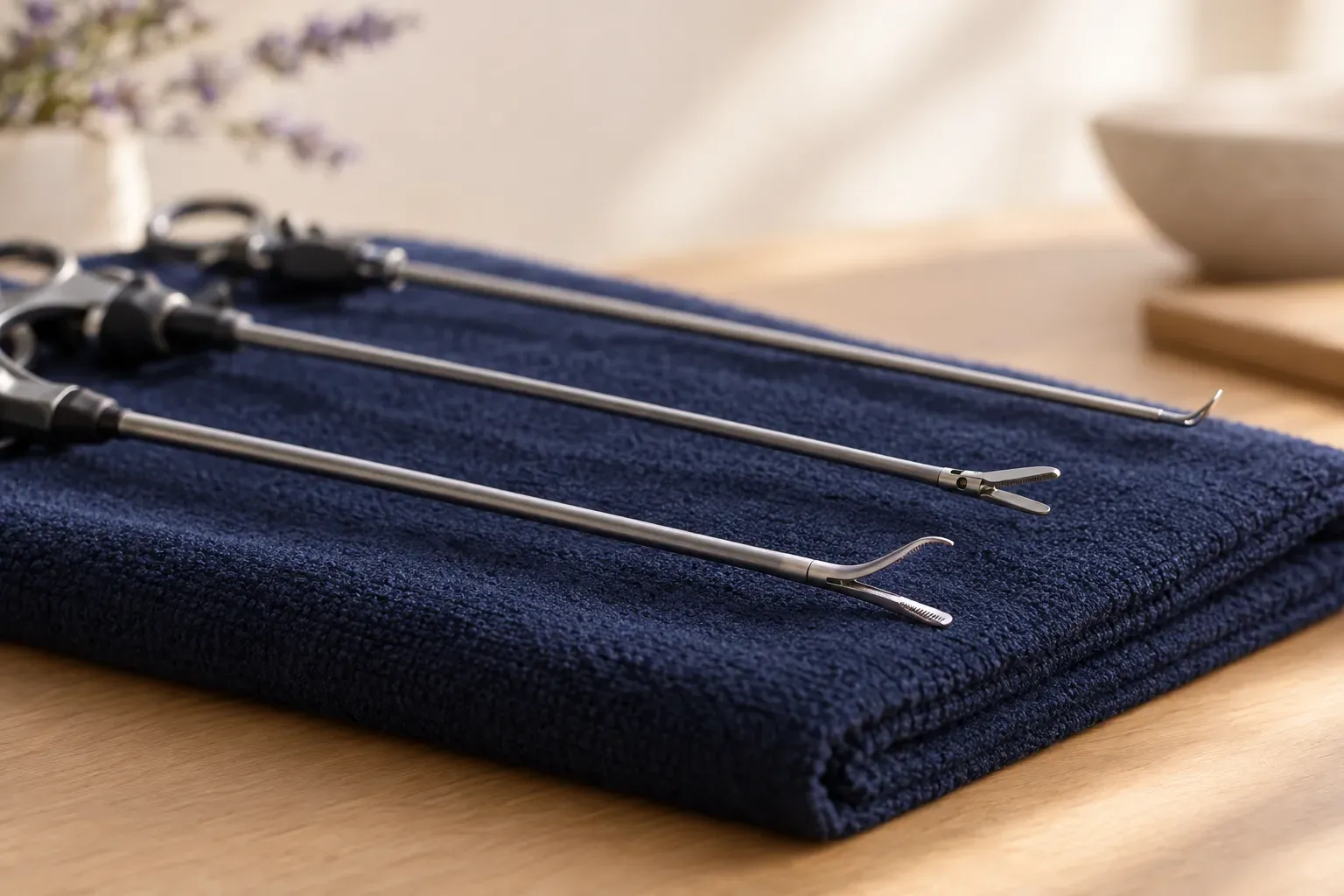
Removes the nodule from outside the bladder: shaved off, or a small piece of bladder wall removed and repaired. A narrowed ureter is freed in the same operation.
- Removes the nodule
- Yes
- Protects a narrowed ureter
- Yes, freed in the same operation
Hormonal medication
Calms inflammation and eases urinary symptoms for many, and is often used after surgery. Symptoms tend to return when it stops.
- Removes the nodule
- No, it stays in the bladder wall
- Protects a narrowed ureter
- No, the kidney still needs checking
Removal from inside the bladder
A scope through the urethra trims what shows inside the bladder. The deeper part of the nodule, where it started, usually stays, so it isn't recommended on its own.
- Removes the nodule
- Only the inner part
- Protects a narrowed ureter
- No, it doesn't reach the ureters
Bladder symptoms with no lesion: why bladder pain can persist
Who treats it
Dr. Steven Vasilev, MD
Board-Certified Gynecologic Oncologist & Integrative Medicine Diplomate, Advanced Robotic Endometriosis Excision Surgeon, Director of Lotus Endometriosis Institute
The bladder and ureters are where many surgeons stop. Dr. Vasilev is a gynecologic oncologist, trained to work around them, so he can remove the nodule, repair the bladder and free the ureters in one planned operation, with a urologist alongside when needed.
Patients often ask
Bladder endometriosis vs UTI vs IC: how can I tell the difference?
Bladder endometriosis often flares before or during your period despite negative urine cultures, while a UTI is more likely when testing shows infection and antibiotics help. IC/BPS can cause ongoing bladder pain and urgency without infection, typically not tightly linked to your cycle.
What symptoms suggest ureter endometriosis?
Ureter endometriosis can cause flank or back pain, sometimes worse around your period, deep pelvic pain, and urinary symptoms that don’t match urine culture results. It may also narrow the ureter and stress the kidney with little to no urinary symptoms at first.
Can bladder endometriosis cause urinary retention?
Yes, bladder endometriosis can contribute to urinary retention in some patients, especially when it involves the bladder wall muscle. Retention can come and go around your cycle or feel like incomplete emptying, hesitancy, or needing to strain to urinate.
Will I need a catheter after bladder endometriosis surgery?
Often, yes, at least briefly, but it depends on what is needed to fully remove the bladder lesion. If surgery involves a full-thickness excision and bladder repair, a catheter is more commonly used to keep the bladder empty and protect healing.