


Endometrioma
Endometriosis that forms a cyst inside the ovary, filled with thick, old blood: the reason it's often called a chocolate cyst.
Medically reviewed by Dr. Steven Vasilev, MD
Board-Certified Gynecologic Oncologist & Integrative Medicine Diplomate, Advanced Robotic Endometriosis Excision Surgeon, Director of Lotus Endometriosis Institute · Updated Nov 2026
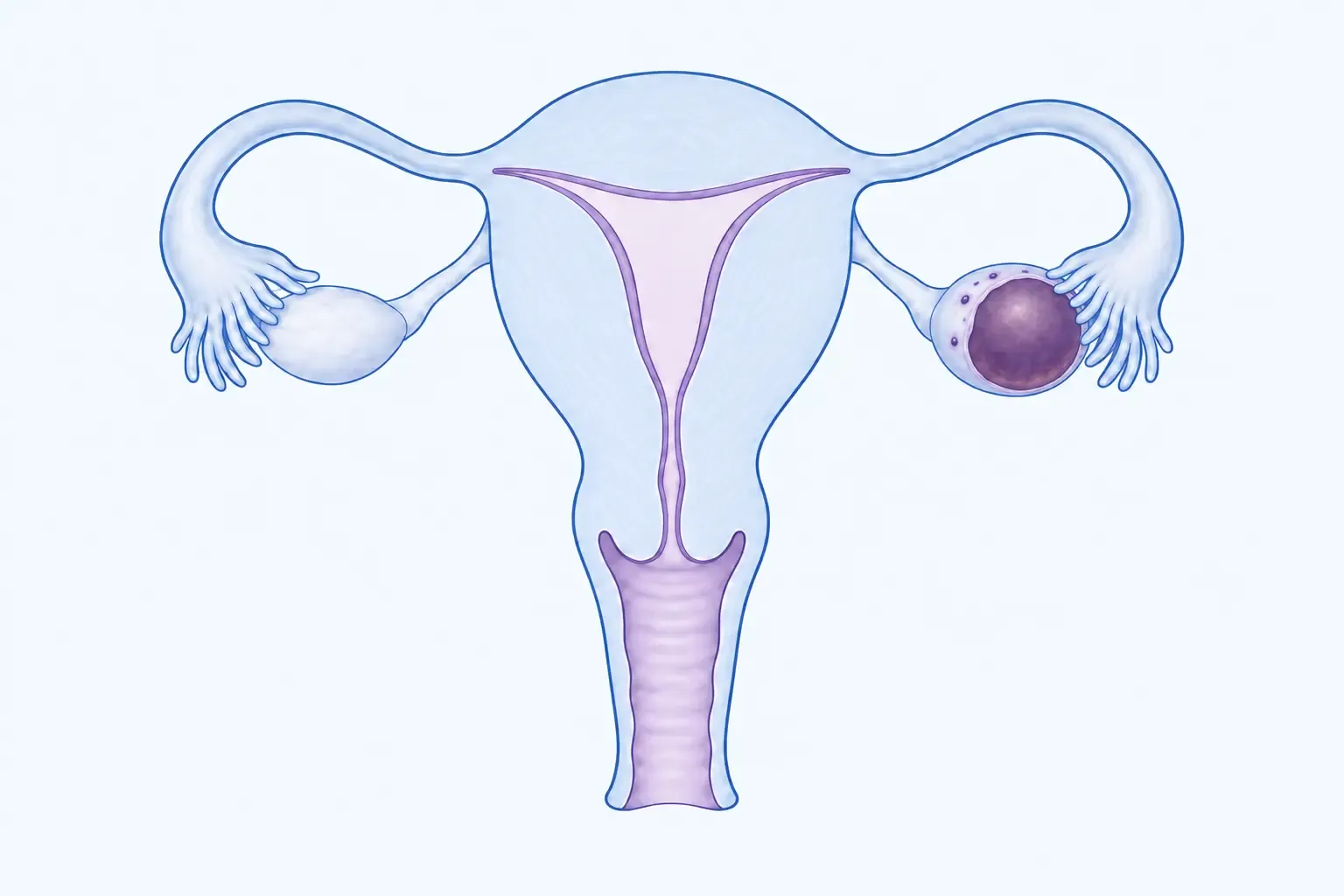
- The endometriomaA cyst of old, dark blood inside the ovary
- The other ovaryClear here, but an endometrioma can form in both ovaries
- The uterusEndometriosis usually grows elsewhere in the pelvis too
- Ultrasound
- finds most endometriomas, in expert hands
- Rarely alone
- most come with endometriosis elsewhere in the pelvis
- Ovarian reserve
- is checked before surgery: removal can lower it
The basics
What is it?
A cyst inside the ovary, formed by endometriosis and filled with thick, old blood that looks like chocolate. Unlike cysts from ovulation, which come and go, it tends to stay and can grow.
Three things to know
- It's rarely the only disease
The chance of an endometrioma with no other endometriosis in the pelvis is very small. Most come with disease and scar tissue elsewhere, so treating only the cyst treats only part of the problem.
- It can affect one ovary or both
When both ovaries have a cyst, ovarian reserve needs extra care: surgery on both lowers it more often, so the plan is weighed before anything is removed.
- Not every ovarian cyst is an endometrioma
Cysts from ovulation can look similar on a scan, and often go away within weeks. An endometrioma tends to stay, so a repeat scan often tells them apart.

Symptoms
How does it show up?
Often with pain: painful periods, pelvic pain that can be one-sided, and pain with sex. Some cause no symptoms at all and are found on a scan.
Because cysts from ovulation are so common, an endometrioma can be taken for one that will go away on its own. A cyst still there on a later scan, or pain that follows your cycle, is worth raising. More on what the ultrasound shows, and when to treat.
- Pelvic painOften on one side, from the cyst or the disease around it
- Painful periodsSevere cramps the usual measures don't touch
- Pain during intercourseDeep pain with sex, during or after
- Ovulation painMid-cycle pain, often on the side of the cyst
- PressureA heavy, full feeling low on one side as the cyst grows
- InfertilityTrouble getting pregnant, sometimes the first sign
Rarely, an endometrioma bursts or twists the ovary. Sudden, severe pain, especially with fever, vomiting or feeling faint, needs urgent care.

Diagnosis
How is it diagnosed?
An expert transvaginal ultrasound finds most endometriomas, often without surgery just to confirm it. Before any surgery, an AMH blood test and a follicle count check your ovarian reserve.
- Your history and an examAt the first visitYour periods, where the pain is and when, and your plans for pregnancy, now or later, which shape every decision after.
- Expert transvaginal ultrasoundThe first and best testUsually recognizes an endometrioma by its hazy, ground-glass look, checks the other ovary, and looks for deep disease. A cyst from ovulation can look similar, so a repeat scan sometimes settles it.
- MRIWhen it's unclearHelps when the ultrasound is unclear or limited, tells an endometrioma from other cysts, and maps deep disease before surgery.
- AMH and follicle countBefore surgeryA blood test (AMH) and an ultrasound count of the small follicles in each ovary estimate your ovarian reserve, so the plan can protect it.
- SurgeryConfirms and treats itRemoves the cyst, confirmed by a pathologist, with endometriosis elsewhere treated in the same planned operation.
Most endometriomas are benign. A cyst with solid parts, blood flow inside it, or fast growth gets a closer look first, and the reason for any surgery, whether pain, fertility or the diagnosis, is agreed before the day.
Treatment
What are the options?
Watching it, with or without medication, can be reasonable when the scan looks typical and pain is manageable. Surgery removes the cyst while keeping as much healthy ovary as possible.

Excision surgery
The cyst is separated from the healthy ovary and removed whole, keeping as much normal ovary as possible. Endometriosis elsewhere is excised in the same operation, which usually gives the most lasting relief.
- Removes the cyst
- Yes, with its lining, confirmed by pathology
- Effect on ovarian reserve
- Can lower it: careful technique limits that
Hormonal medication
Can ease pain, calm inflammation and reduce bleeding into the cyst, and is often used after surgery to lower the chance it returns. It may shrink a cyst a little, but doesn't remove it.
- Removes the cyst
- No, the cyst wall stays
- Effect on ovarian reserve
- Nothing is removed from the ovary
If you want to get pregnant
An endometrioma, and surgery on it, can lower ovarian reserve. Depending on AMH, follicle counts, pain and your timeline, IVF may come first, or surgery may, sometimes after freezing eggs or embryos.
Draining instead of removal: is ethanol sclerotherapy the fertility-friendly answer?
Who treats it
Dr. Steven Vasilev, MD
Board-Certified Gynecologic Oncologist & Integrative Medicine Diplomate, Advanced Robotic Endometriosis Excision Surgeon, Director of Lotus Endometriosis Institute
An endometrioma is often stuck tightly to the ovary, inside inflamed tissue, and keeping the ovary working takes precision, with as little burning as possible. Dr. Vasilev is a gynecologic oncologist, used to telling a typical endometrioma from a cyst that needs a closer look, and removes the cyst and the endometriosis around it in one planned operation.
Patients often ask
What are the risks of leaving an endometrioma untreated?
An untreated endometrioma can grow, increase pelvic pain and inflammation, and in rare cases rupture or cause the ovary to twist. There is also a small increased lifetime risk of certain ovarian cancers, but the absolute risk remains low.
Can an endometrioma rupture?
Yes, an ovarian endometrioma can rupture, although it’s not the most common course. Its contents can spill into the pelvis and cause sudden, severe pain and irritation, which needs prompt evaluation because other urgent problems can feel similar.
Endometrioma removal vs draining: what’s the difference?
Draining an endometrioma removes the fluid but leaves the cyst wall behind, so symptoms and the cyst often come back. Ovarian cystectomy is designed to peel the capsule off the ovary and remove the lining, which typically offers a more durable result.
Does endometrioma surgery reduce AMH or ovarian reserve?
Yes, endometrioma surgery can lower AMH and ovarian reserve by unintentionally removing or damaging healthy ovarian tissue, especially with cystectomy. Surgical technique and energy use matter when treating the disease while protecting ovarian tissue.